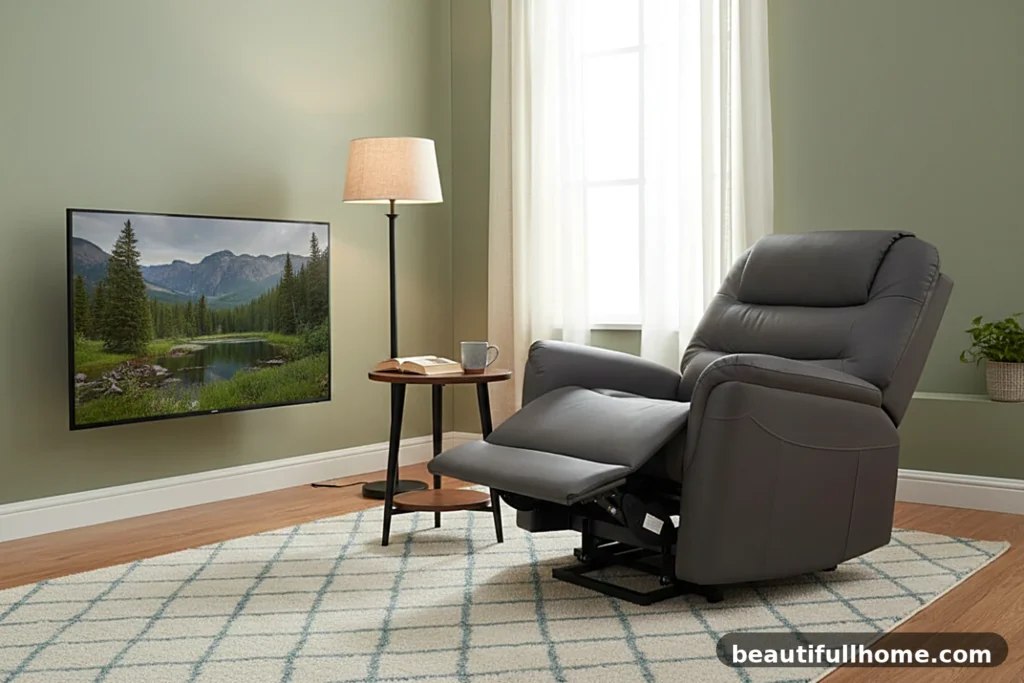
Small Living Room Ideas With Recliners: 12 Ways That Fit
A recliner fits a small living room when you pick a wall-hugger or zero-wall model 28 to 32 inches wide, leave 3 to 6 inches behind it and 20 to 24 inches in front for the footrest, and keep a 30 to 36 inch walkway clear. One recliner plus a loveseat seats four without the bulk of a reclining sofa, and a swivel recliner does two jobs in one chair. Measure the door first: most recliners are 30 to 33 inches wide and the back usually comes off for delivery.
What size recliner fits a small living room
| Recliner type | Width | Clearance behind | Footrest room in front | Price range | Best for |
|---|---|---|---|---|---|
| Wall-hugger | 28-32 in | 3-6 in | 20-24 in | $150-$400 | Against any wall |
| Zero-wall | 28-32 in | 0 in | 20-24 in | $350-$600 | Flush against the wall, electric only |
| Swivel glider | 28-32 in | 6-12 in | 20-24 in | $170-$450 | Corners and multi-use rooms |
| Push-back | 27-33 in | 12-18 in | 20-24 in | $150-$350 | Open floor, no wall behind |
| Power recliner | 30-33 in | 3-6 in | 20-24 in | $280-$550 | One-button recline, USB and heat |
| Lift recliner | 28-32 in | 6-12 in | 20-24 in | $300-$600 | Help standing up |
| Reclining loveseat | 48-60 in | 3-6 in | 20-24 in | $400-$900 | Two seats, one piece |
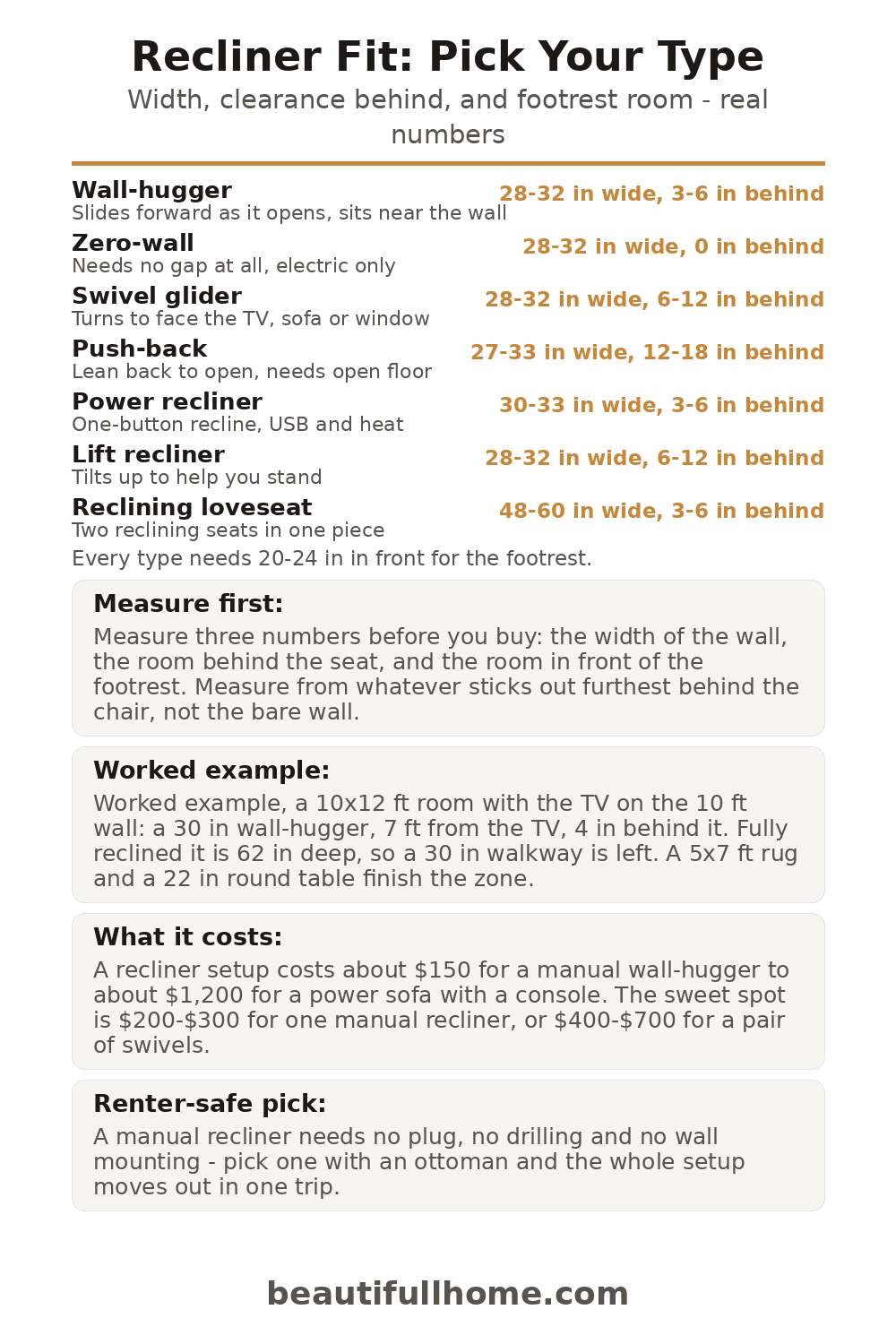
A standard recliner needs 12 to 18 inches of open space behind it to fully recline, which is a lot of floor to give up in a small room. A wall-hugger slides forward as it opens, so it needs only 3 to 6 inches behind it and can sit nearly flat against the wall. A zero-wall model needs no gap at all, but it only comes electric, so it costs more and needs a plug nearby. Before you buy, measure three numbers: the width of the wall where the chair will sit, the room behind the seat, and the room in front of the footrest. Our Small Living Room Layout: 7 Layouts With Measurements guide has the walkway and rug numbers this post builds on.
Small living room ideas with recliners: the rules
- Pick the recliner first, then the rest of the seating. The recliner is the biggest piece, so it sets the layout.
- One focal point only. Every seat points at the TV, the fireplace or the window, never at two things at once.
- Protect one clear walking path of 30 to 36 inches from the door to the far side of the room.
- Match the recliner to the sofa. A 30 inch recliner next to a 84 inch sofa looks wrong; a loveseat next to it looks right.
- Keep the footrest clear. Nothing sits in the 20 to 24 inches in front of the chair, not even a coffee table leg.
- Light colours and visible legs make a big chair look smaller. Dark leather and a solid skirt make the same chair look twice as heavy.
- Check the TV distance. About 7 feet between the recliner and the TV is comfortable for most screens; the table below gives the exact number by TV size.
1. Wall-hugger against the longest wall
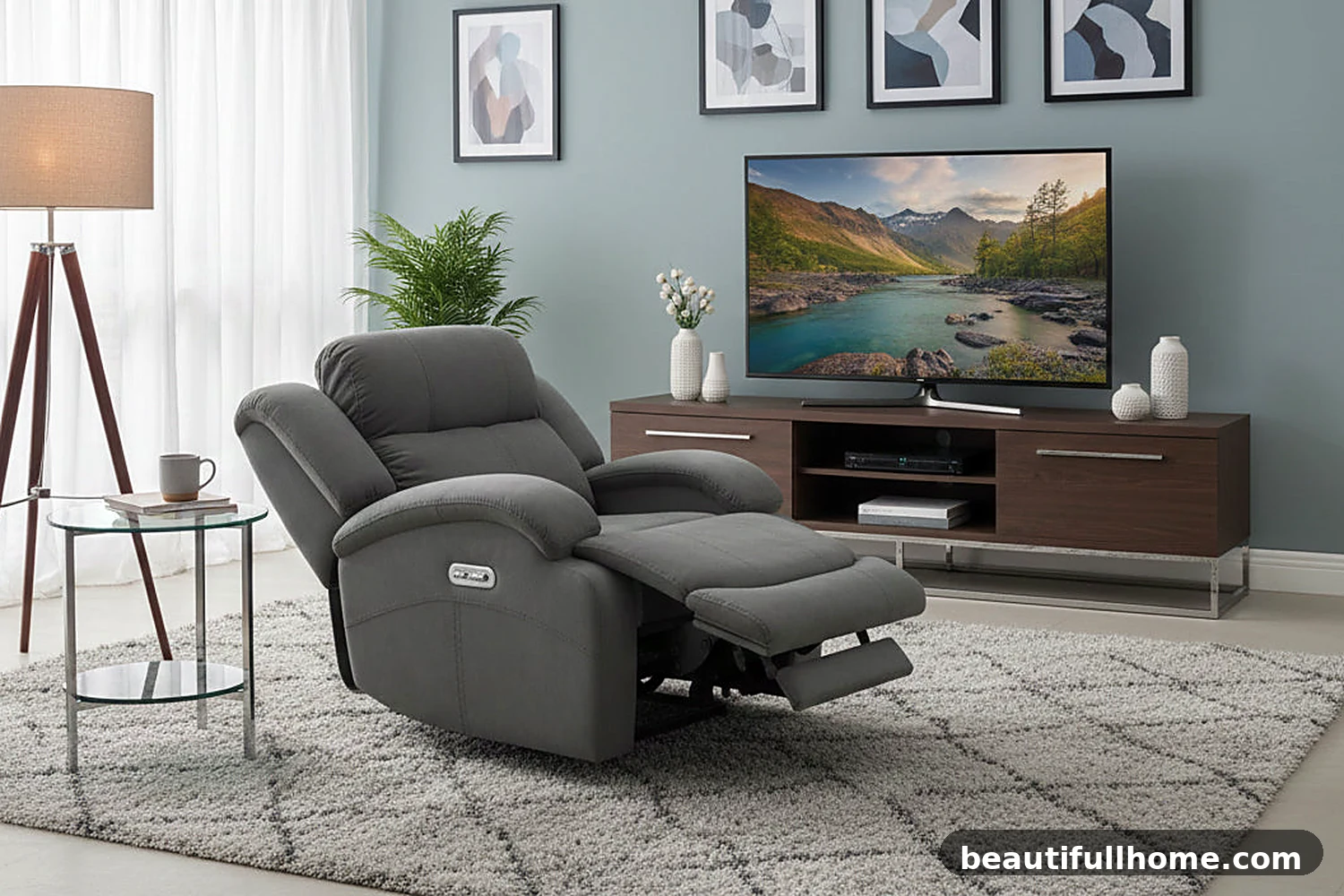
Put one wall-hugger recliner flat against the longest wall and let the rest of the room breathe. Because the chair slides forward instead of tipping back, you lose only 3 to 6 inches behind it, which is the difference between a walkway and a wall of furniture. Face it at the TV and put a small round side table on the side away from the walkway, so the table never blocks the path.
Cost: $150-$400, sweet spot $200-$300. Watch out: measure from whatever sticks out furthest behind the chair, like a curtain, a window ledge or a baseboard heater, not from the bare wall.
2. One recliner plus a compact loveseat
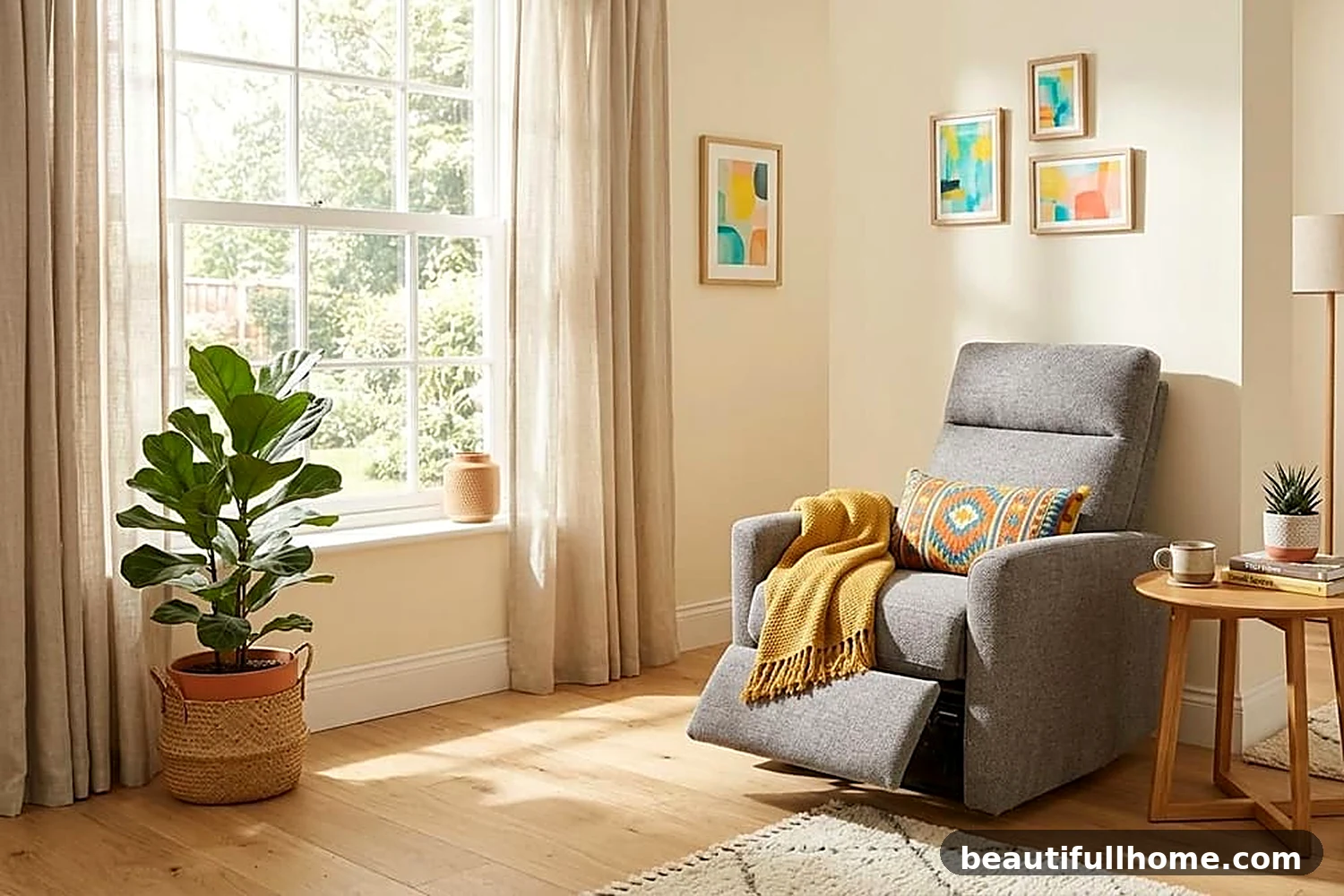
Two recliners plus a full sofa is usually too much furniture for a small living room, but one recliner plus a compact loveseat seats four and still leaves room to walk. Put the loveseat across from the TV and the recliner opposite or slightly angled toward it, keeping every piece in the same scale range. A reclining loveseat works the same way if you want two reclining seats in one piece, but it is 48 to 60 inches wide, so check the wall first.
Cost: $250-$600 for the recliner, $300-$700 for the loveseat, sweet spot $500-$800 for the pair. Watch out: a loveseat and a recliner in different fabrics look like two rooms; match the colour family even if the fabric is different.
3. Swivel recliner that does two jobs
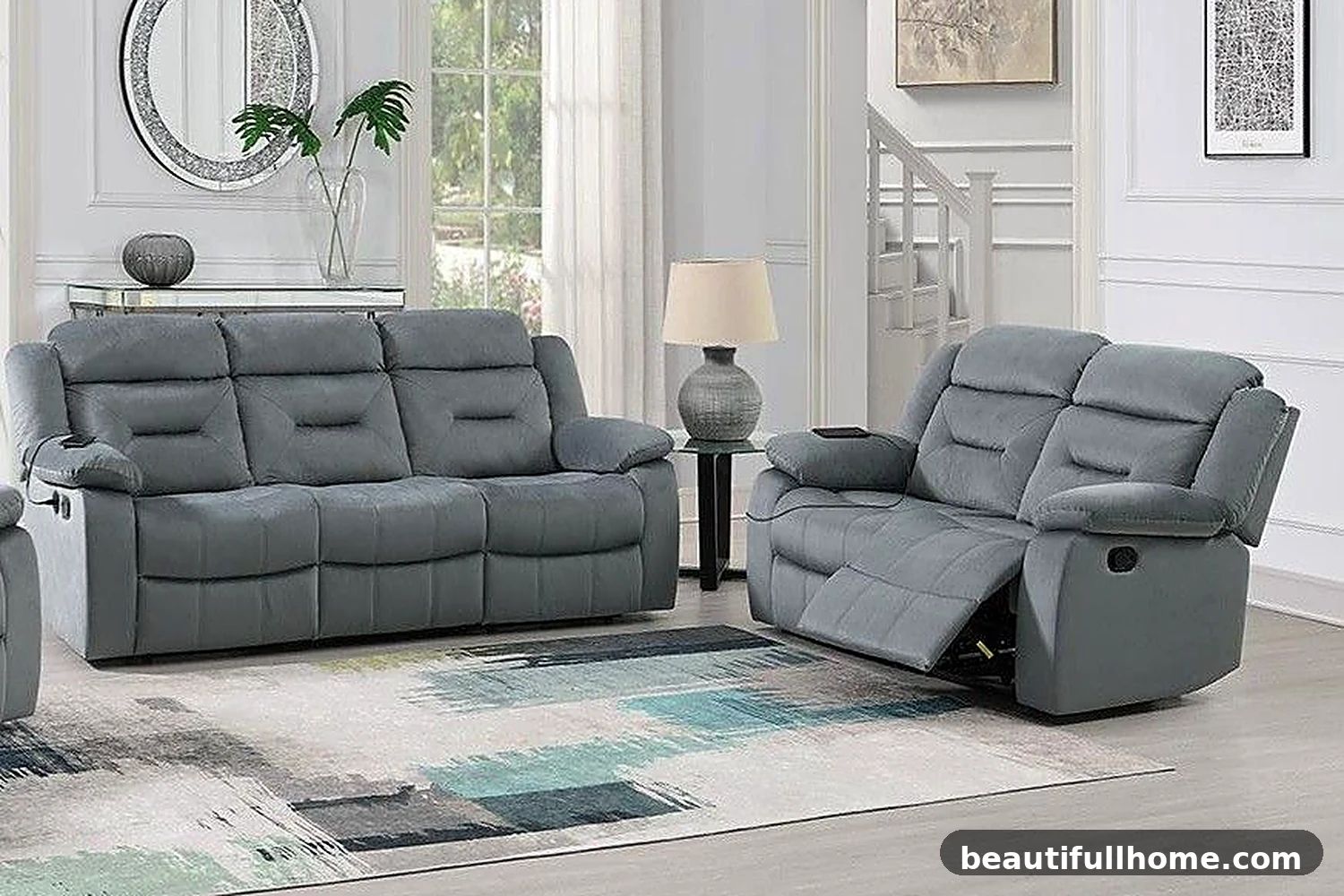
A swivel recliner is the hardest-working seat in a small living room. Turn it toward the TV for a film, turn it toward the sofa for a conversation, and turn it toward the window for a book, all without moving the chair. Pair it with a round nested side table, which slides under the arm when you do not need it. This is the best pick when the room does more than one job, because the chair changes direction instead of the furniture changing place.
Cost: $170-$450, sweet spot $200-$350. Watch out: a swivel base needs a flat floor and a rug that does not bunch under it; a thick shag rug can stop the swivel.
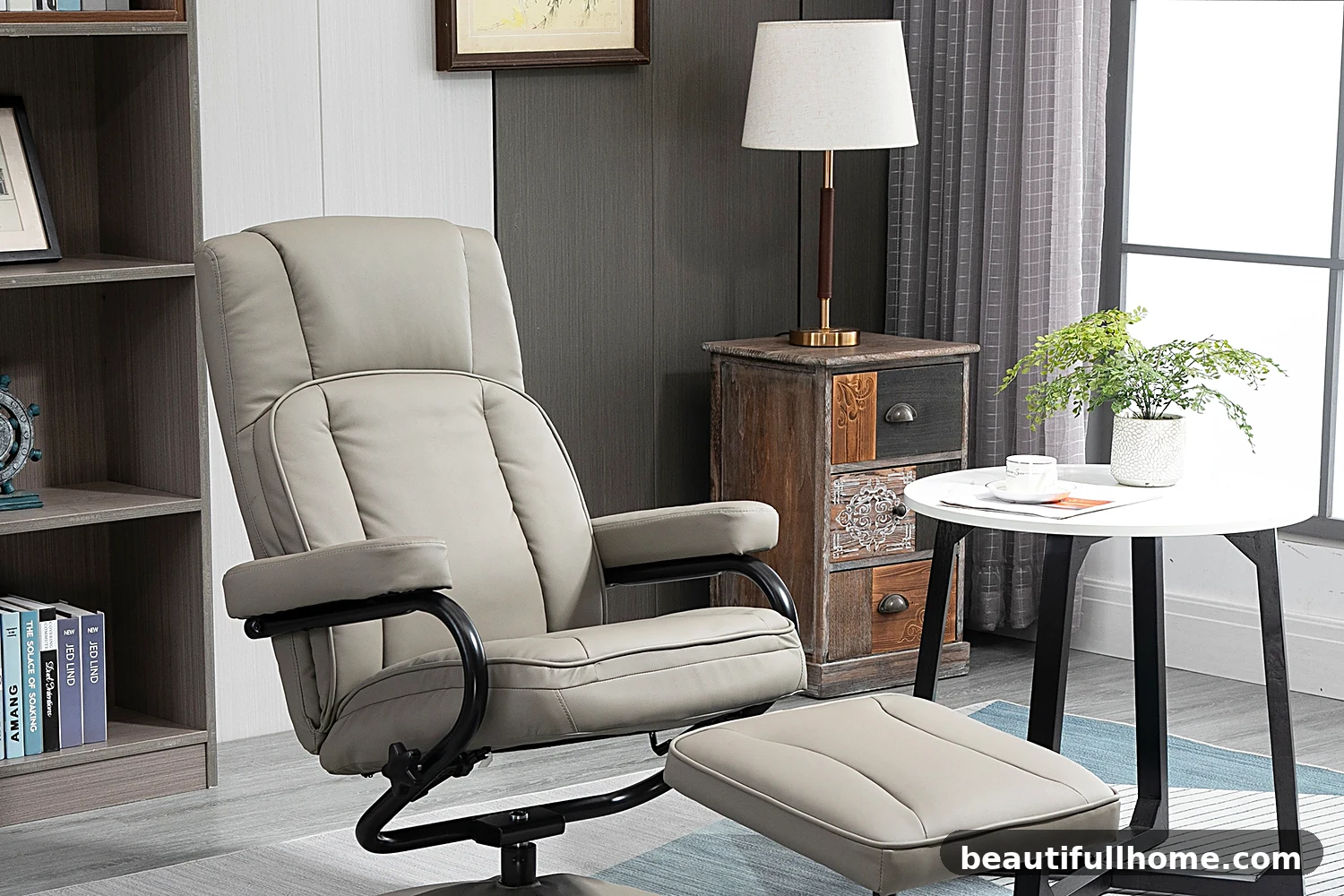
4. Diagonal angle toward the TV
Angling one recliner diagonally toward the TV breaks up the straight lines of a boxy room and makes it feel more relaxed. The diagonal also leaves a triangle of floor behind the chair, which is the perfect spot for a floor lamp or a tall plant. Keep the angle small, about 30 degrees off the wall, so the chair still reads as part of the seating group and not as a chair that drifted away.
Cost: $150-$400, sweet spot $200-$300. Watch out: a diagonal chair eats more floor than a straight one, so check the walkway behind it stays 30 inches clear.
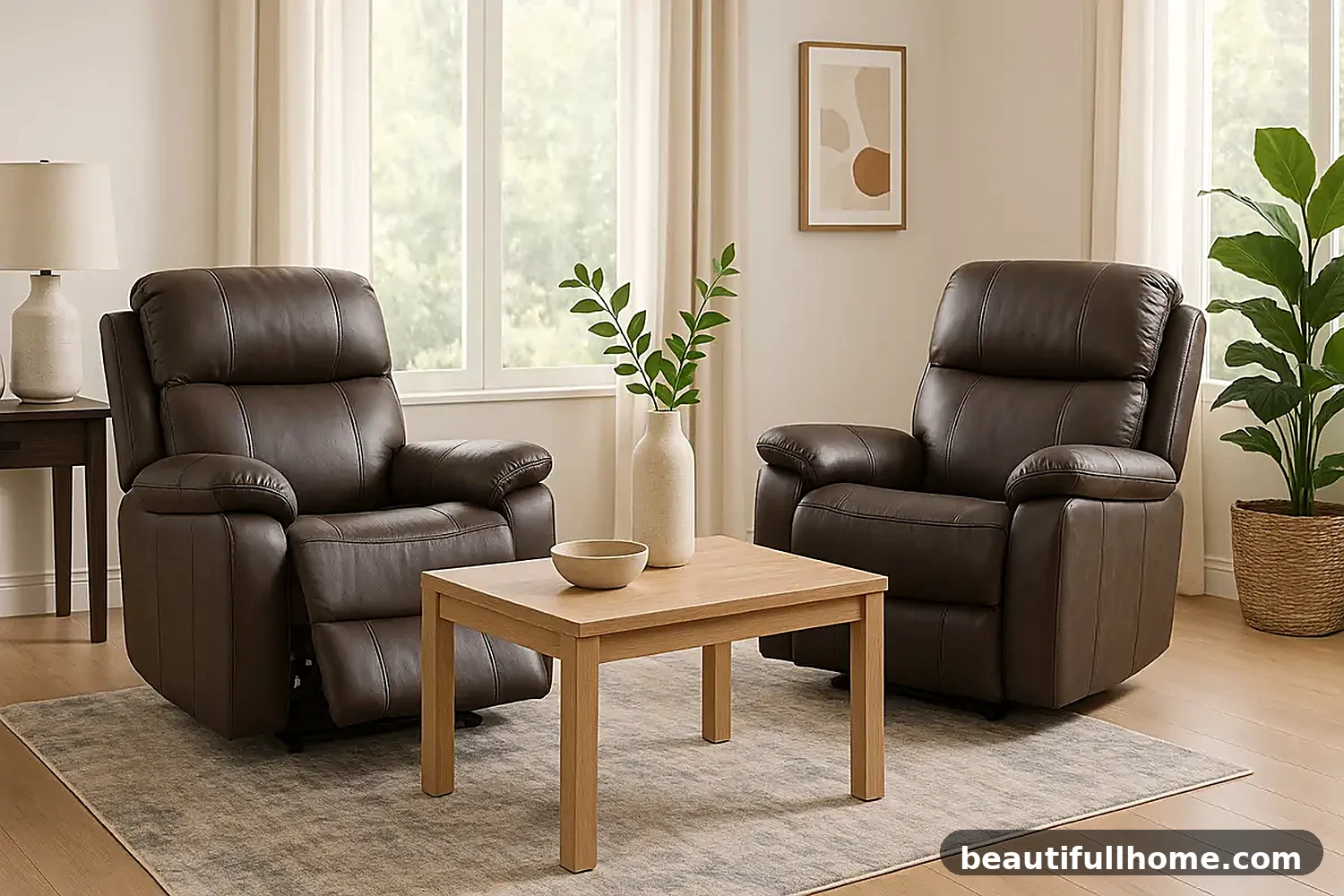
5. Two recliners facing each other
Put two recliners facing each other with a compact coffee table between them and the room becomes a conversation room instead of a TV room. This works best when the TV is on a side wall or in another room, because two chairs facing each other cannot both face a screen. Keep the table small, about 22 inches across, so the footrests have room to open on both sides.
Cost: $300-$800 for the pair, sweet spot $400-$600. Watch out: two recliners facing each other need 20 to 24 inches of footrest room on both sides, so the table must be narrow and the chairs must not be too close together.
6. L-shape with a sofa and one recliner
An L-shaped layout is one of the most reliable small living room recliner arrangements. Put the sofa on the long wall and the recliner on the short wall, at a right angle, and the corner becomes the seating zone while the rest of the floor stays open. The recliner should be the same height as the sofa arms or a little lower, so the L reads as one group. Our Sofa Ideas for Small Living Room: 12 Picks That Fit guide has the sofa sizes that pair with a 30 inch recliner.
Cost: $150-$400 for the recliner, the sofa is separate. Watch out: do not push the recliner tight into the corner; leave 3 to 6 inches behind it even in the corner, or the back will scuff the wall.
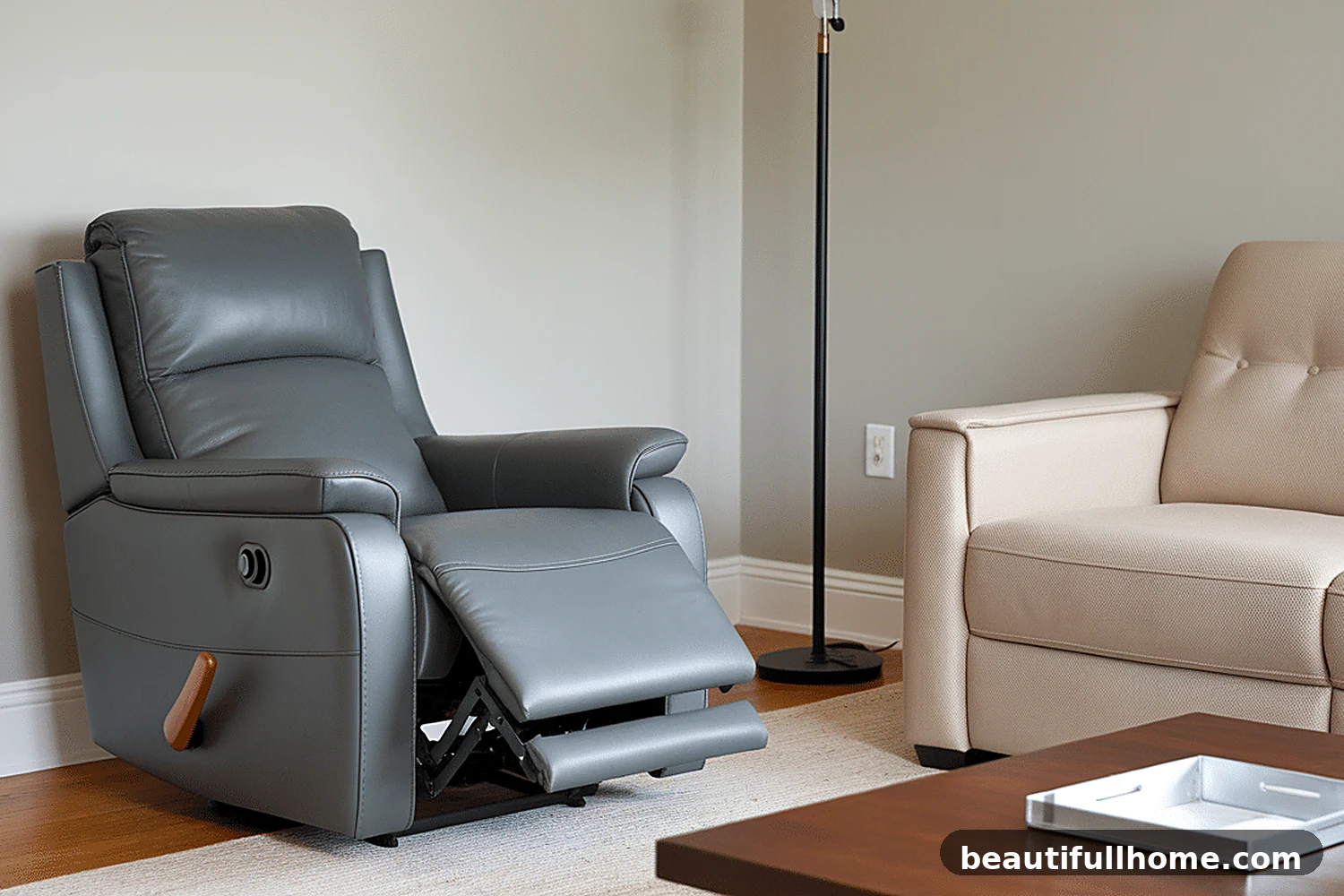
7. Tuck a recliner into an awkward corner
Every small living room has a corner that fits nothing: too small for a sofa, too dark for a plant. A compact recliner fills it exactly. Angle the chair about 45 degrees out of the corner so it faces the room, add a floor lamp behind it, and the dead corner becomes the reading corner. A swivel base helps here, because you can turn the chair out of the corner when you want to join the room.
Cost: $150-$350, sweet spot $180-$280. Watch out: a corner chair needs a lamp or the corner stays dark; a chair in a dark corner looks like storage, not seating.
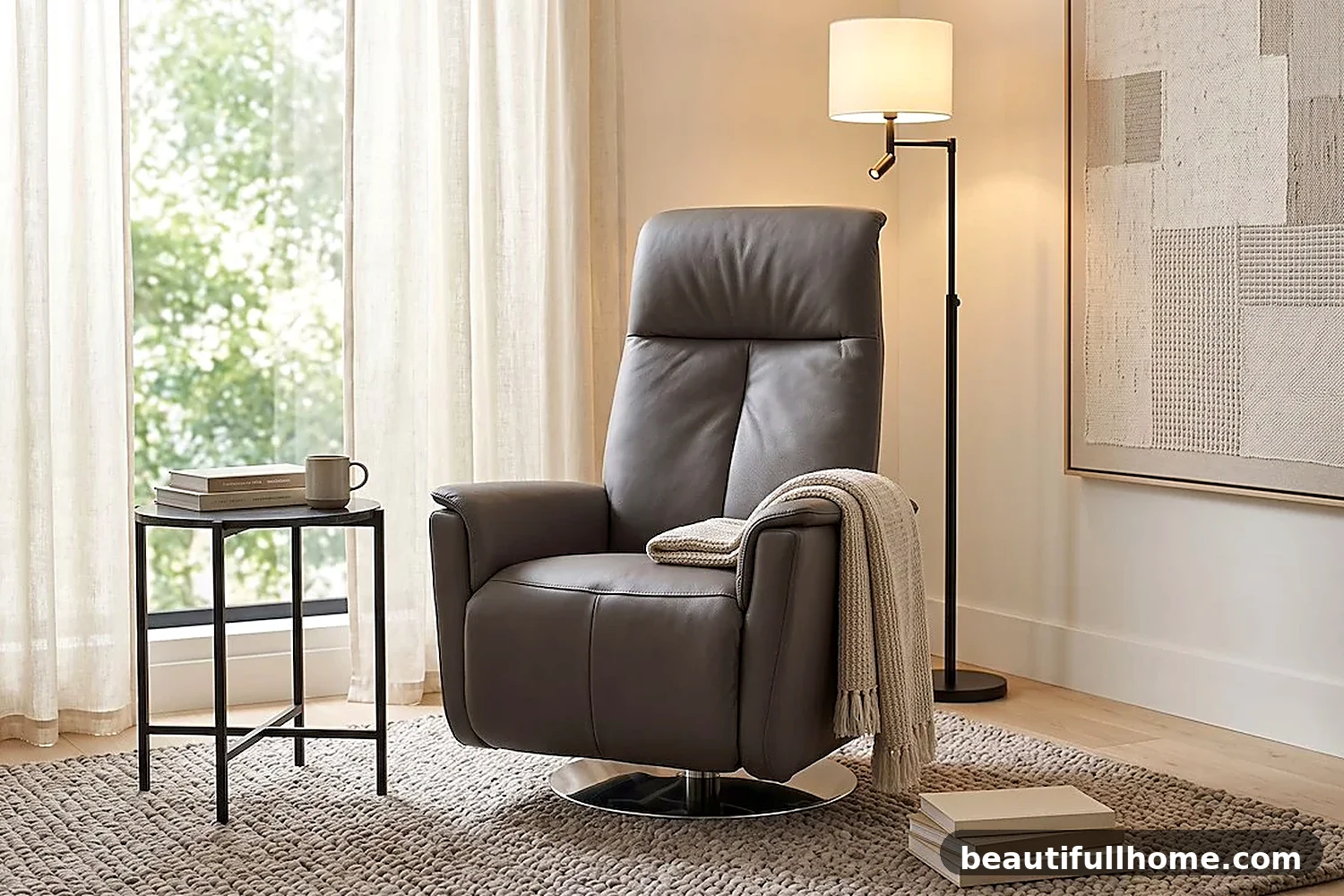
8. Recliner by the window
Put the recliner by the window and it becomes the brightest seat in the room, which is where everyone wants to sit. A wall-hugger works here because the chair can sit close to the wall under the window without blocking the light. Keep the curtains light and short of the chair back, so the fabric does not catch in the mechanism. If the window is a bay, our Small Living Room Bay Window Ideas: 12 Ways That Work guide shows how the seat and the recliner share the same bay.
Cost: $150-$400, sweet spot $200-$300. Watch out: direct sun fades leather and fabric fast; a sheer curtain or a UV film on the glass protects the chair.
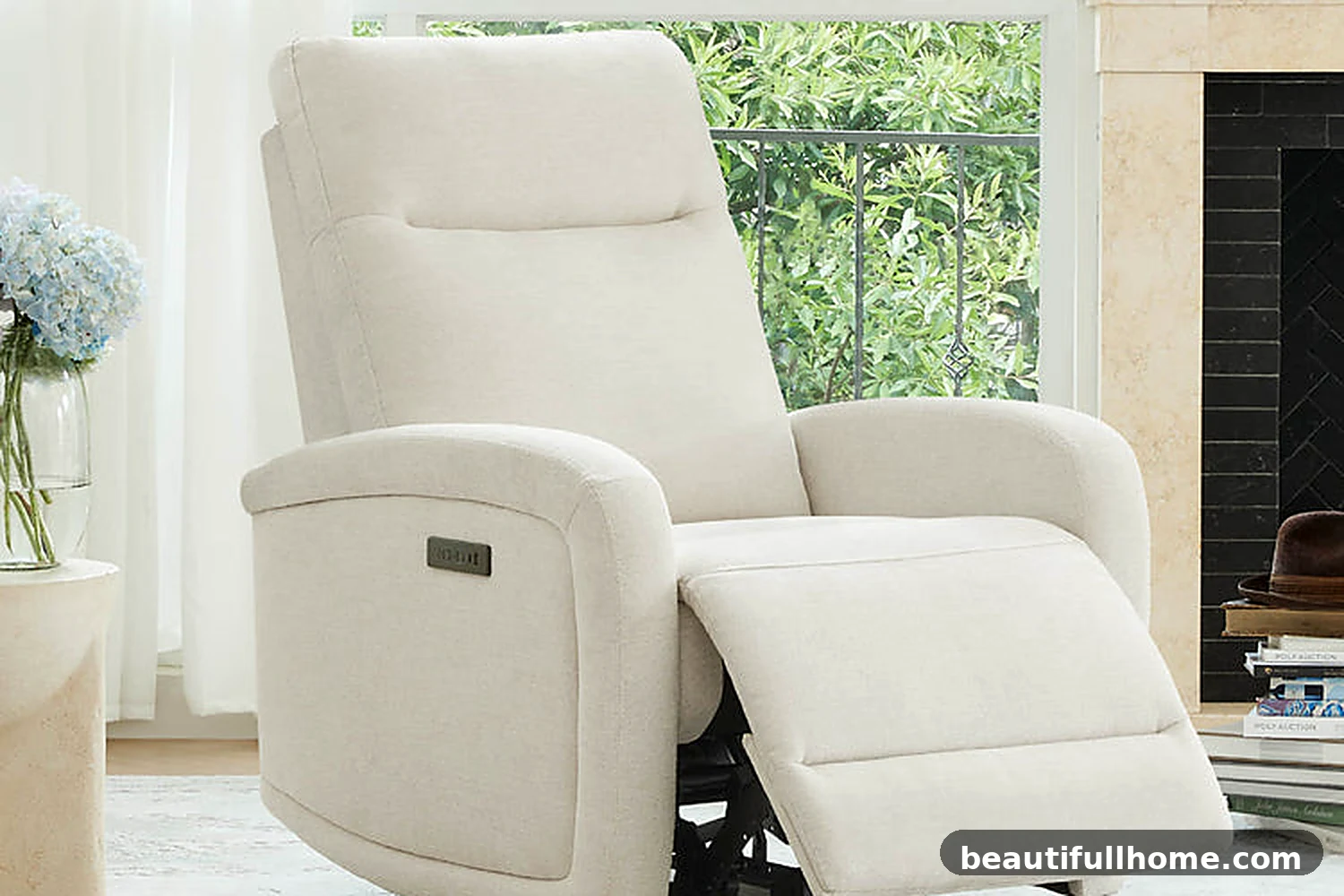
9. Recliner plus a small round side table
A recliner without a side table is a chair you have to get up from every time you want a drink or a book. A small round side table, about 16 to 18 inches across, fits the gap between the recliner and the sofa without blocking the footrest. A C-shaped table is even better, because the base slides under the chair and the top hangs over the arm. Keep the table on the side away from the walkway.
Cost: $40-$120 for the table, sweet spot $60-$90. Watch out: a square table with sharp corners at knee height is a bruise waiting to happen next to a recliner; round is safer.
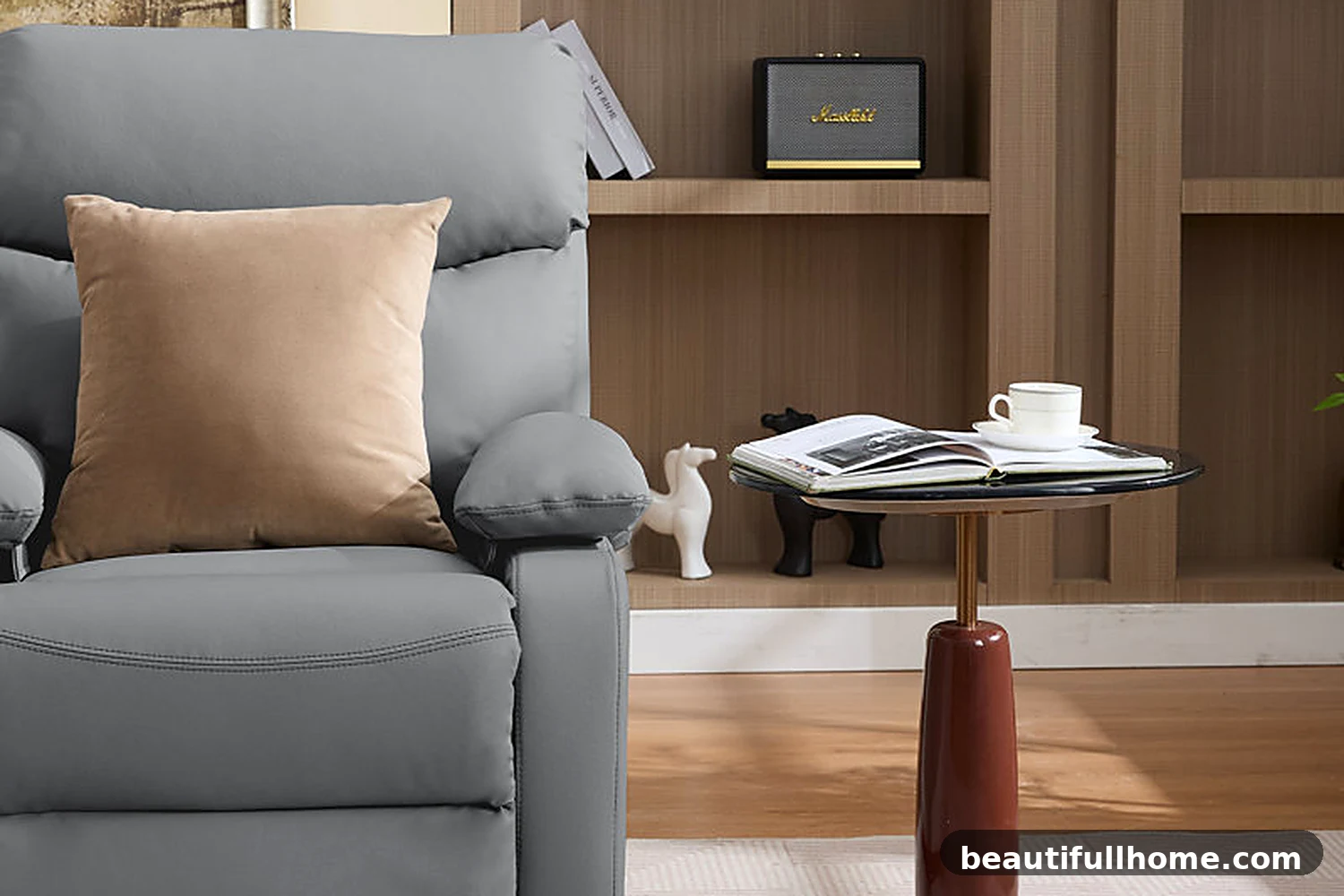
10. Power recliner with a console
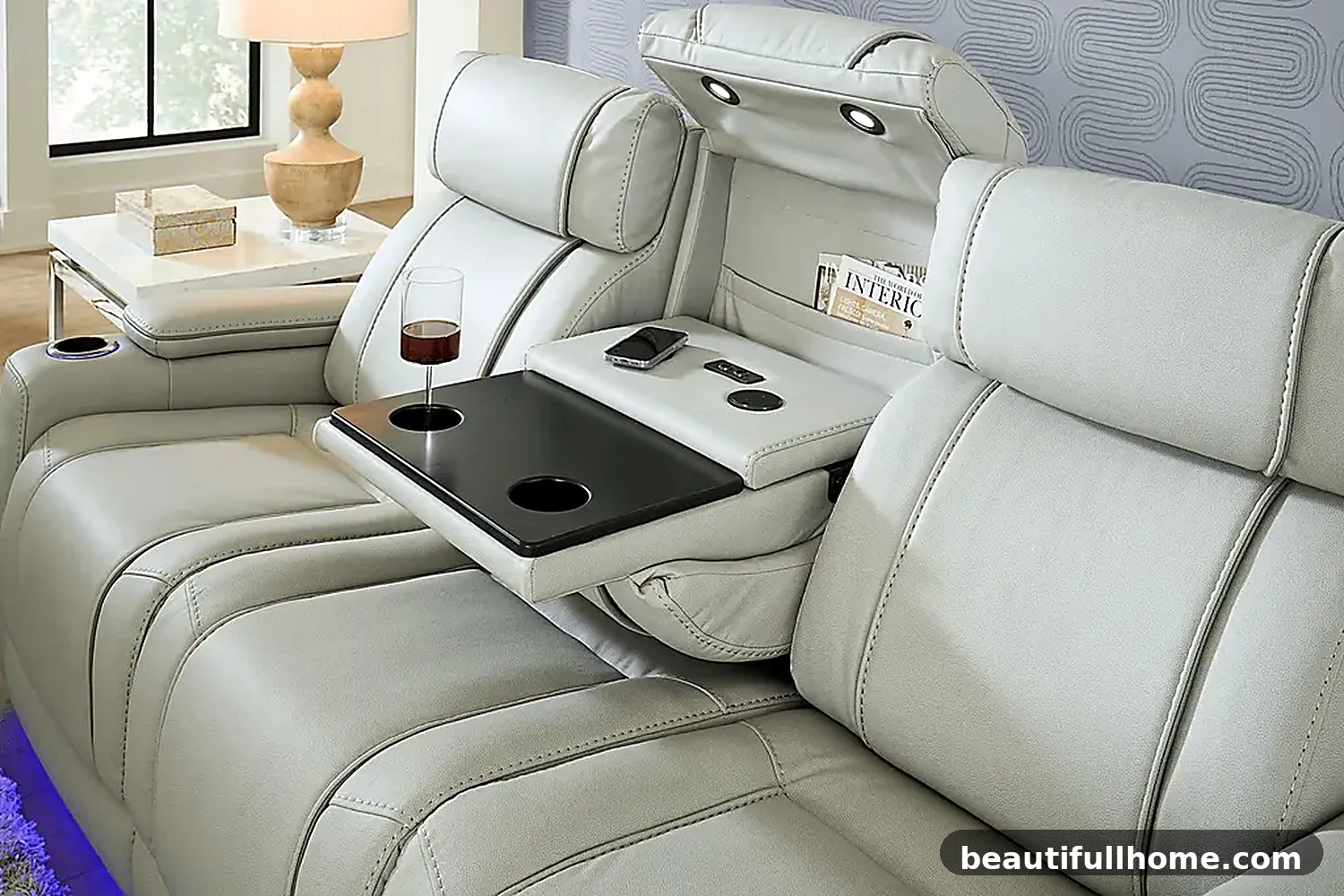
A power reclining sofa with a built-in center console does double duty as storage and a mini side table, which is why it works in small rooms. The console holds the remotes, the cup holders hold the drinks, and the USB ports charge the phone, so you do not need a side table at all. A single power recliner with the same features costs less and takes less floor than the sofa version, so pick the single chair when the room seats three or fewer.
Cost: $280-$550 for a single power recliner, $600-$1,200 for a power reclining sofa with console. Watch out: a power recliner needs a plug within reach of the cord, and the cord must not cross the walkway; a power strip behind the sofa is the usual fix.
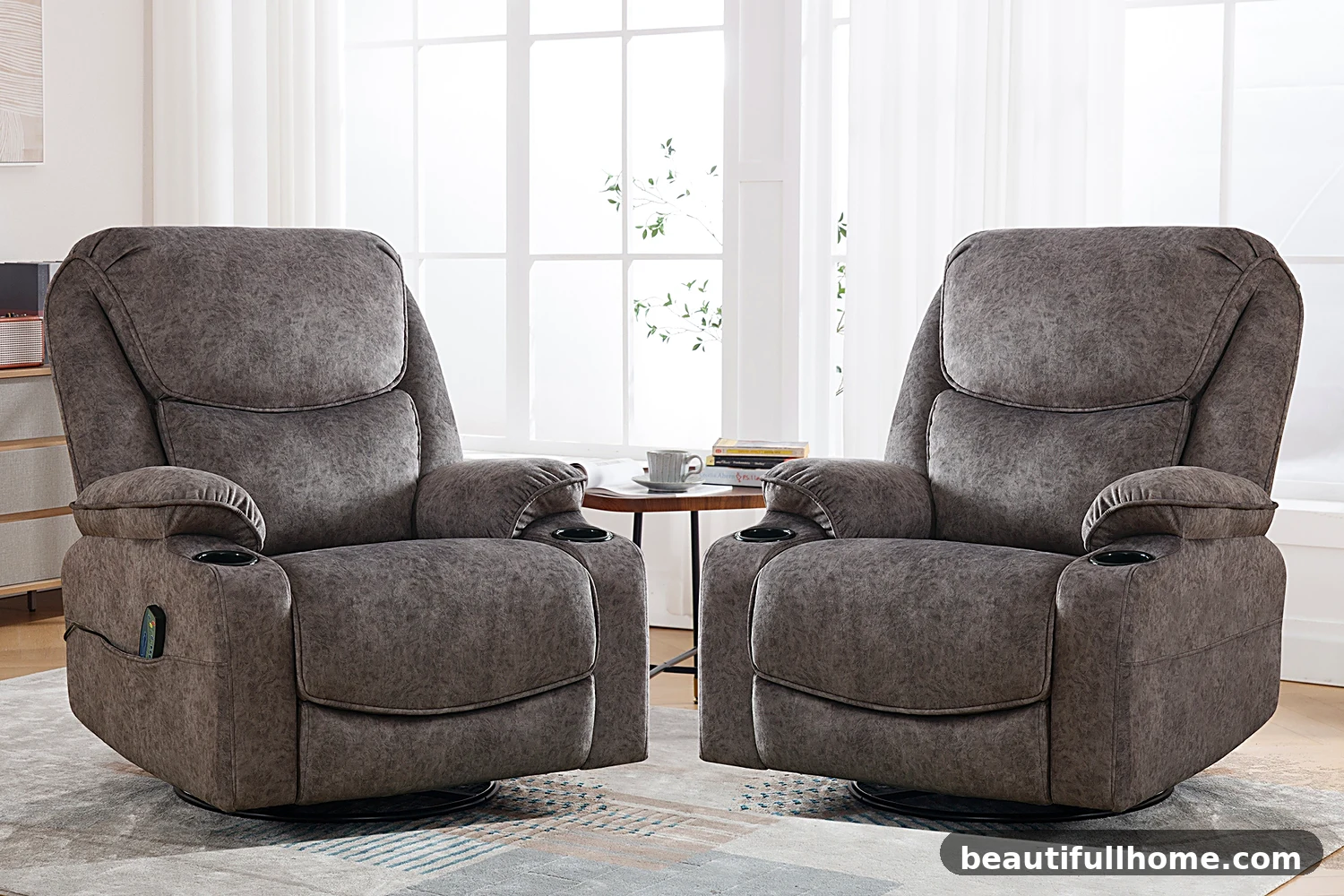
11. Two swivel recliners instead of a sofa
Skip the sofa completely and use two swivel recliners instead. Two chairs seat two people in comfort, they can turn to face each other or the TV, and they take less floor than a sofa plus a chair. This is the best layout for a really tiny living room, a studio, or a room where the sofa would block the door. Add a small round coffee table between them and a floor lamp behind one chair, and the room is finished.
Cost: $340-$900 for the pair, sweet spot $400-$700. Watch out: two chairs and no sofa means no place to lie down, so this layout suits a second seating area better than a main family room.
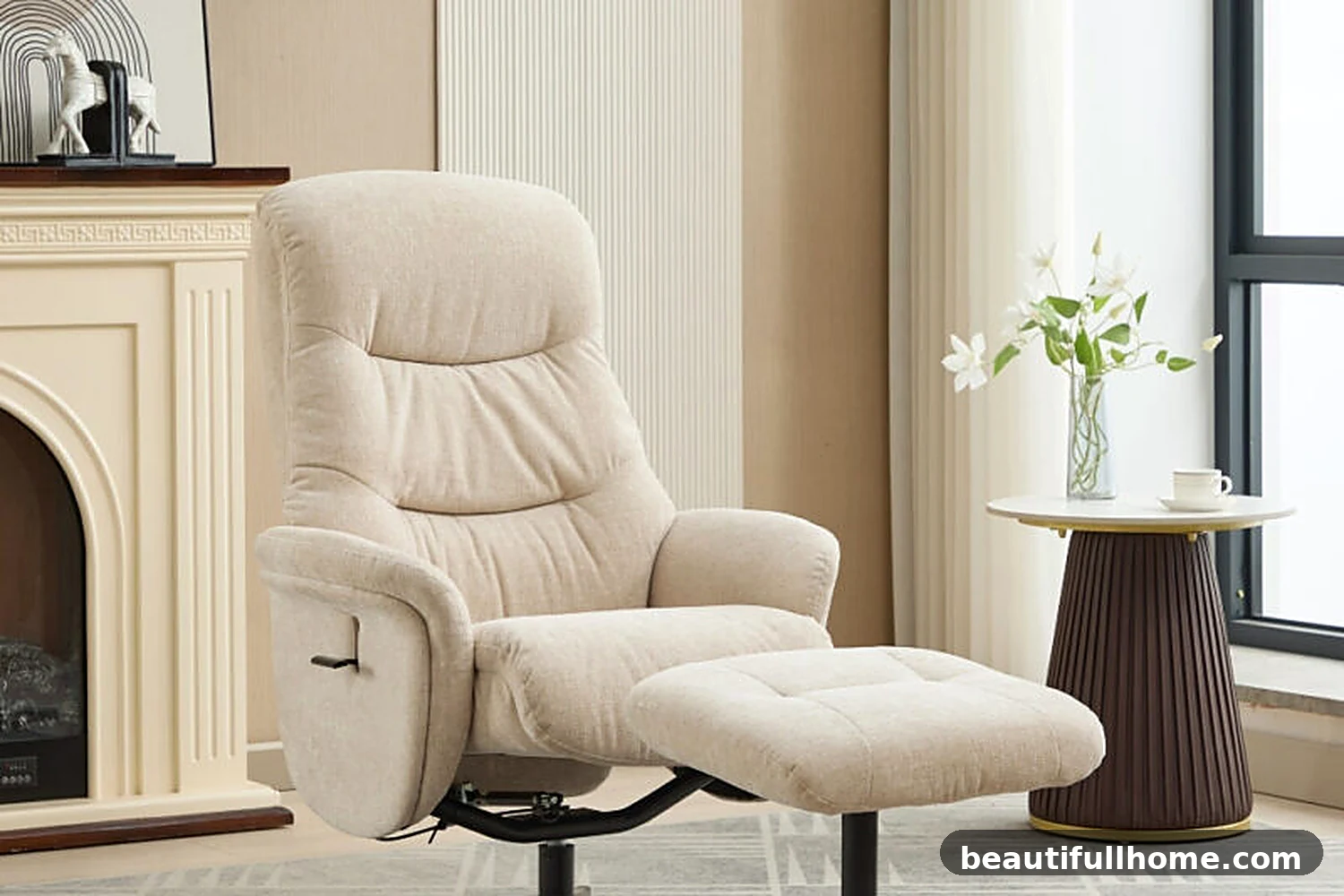
12. Renter-friendly manual recliner with an ottoman
Renters can have a recliner without touching the walls, because a manual recliner needs no plug, no drilling and no wall mounting. Pick a manual push-back model with an ottoman instead of a built-in footrest, and the ottoman doubles as a footrest, a seat for a guest and a coffee table with a tray on top. Light fabric and visible legs keep the chair looking small, and the whole setup moves out in one trip.
Cost: $150-$350 for the chair, $40-$100 for the ottoman, sweet spot $200-$350 for the pair. Watch out: a push-back recliner needs 12 to 18 inches behind it, so do not push it flat against the wall; a wall-hugger is the better pick if the wall is the only place it fits.
How much does a recliner setup cost
| Item | Price range | Sweet spot |
|---|---|---|
| Manual wall-hugger recliner | $150-$400 | $200-$300 |
| Swivel glider recliner | $170-$450 | $200-$350 |
| Power recliner | $280-$550 | $350-$450 |
| Zero-wall power recliner | $350-$600 | $400-$500 |
| Lift recliner | $300-$600 | $350-$500 |
| Reclining loveseat | $400-$900 | $500-$700 |
| Power reclining sofa with console | $600-$1,200 | $800-$1,000 |
| Two swivel recliners (pair) | $340-$900 | $400-$700 |
| Small round side table | $40-$120 | $60-$90 |
| C-shaped side table | $50-$150 | $70-$110 |
| Ottoman | $40-$100 | $50-$80 |
| Floor lamp for the corner | $40-$150 | $60-$100 |
| 5×7 ft rug under the seating zone | $80-$250 | $120-$180 |
A worked example: one recliner in a 10×12 ft room
Take a 10 by 12 ft living room with the TV on the 10 ft wall and the door on the opposite side. Put a 30 inch wall-hugger recliner on the long wall, 7 feet from the TV, with 4 inches behind it. The chair is 38 inches deep at rest and 62 inches deep when fully reclined, so the footrest reaches 62 inches out from the wall. That leaves a 30 inch walkway between the footrest and the far wall when the chair is open, and a 58 inch open floor when it is closed. A 5×7 ft rug under the chair and a 22 inch round coffee table in front of the loveseat finish the zone, and the door swing stays clear because nothing sits within 36 inches of the door. The numbers come from our Small Living Room Layout: 7 Layouts With Measurements guide, which is the room this example is built in.
How far should a recliner sit from the TV
| TV size | Recliner to TV distance | Best recliner spot |
|---|---|---|
| 43 in | 5-7 ft | Against the wall, straight on |
| 50 in | 6-8 ft | Against the wall, straight on |
| 55 in | 7-9 ft | Diagonal angle, 30 degrees |
| 65 in | 8-10 ft | Diagonal angle, 30 degrees |
| 75 in | 9-11 ft | Opposite wall, straight on |
The 7 foot rule is a good starting point for most rooms: about 7 feet between the recliner and the TV is comfortable for a 50 to 55 inch screen. Sit closer and you turn your head; sit further and the screen feels small. Our Small Living Room Ideas With TV: 12 Smart Layouts guide has the TV size and viewing distance chart this table is drawn from, and our What Size Rug for Living Room guide sizes the rug under the recliner zone.
Will a recliner fit through your door
Measure the door before you order, not after the delivery van arrives. Most interior doors are 30 to 32 inches wide, and most compact recliners are 28 to 33 inches wide, so the fit is close. The back of most recliners comes off with two clips or levers, which takes 4 to 6 inches off the depth and makes the chair much easier to carry. Measure the narrowest point on the delivery path: the front door, the hallway turn, and the living room door. If the chair is wider than the narrowest door, pick a model with a removable back or a smaller width, and tell the delivery team the door width when you book.
Renter rules for recliners
Renters can use every idea in this guide, because none of them needs a drill, a wall mount or a permanent change. Pick a manual recliner so there is no plug to hide and no cord to run. Use a rug under the chair instead of screwing a floor protector down, and use a C-shaped side table instead of a wall-mounted shelf. If the landlord worries about the floor, felt pads under the chair feet cost a few dollars and leave no mark. Keep the original layout photo from move-in day, so you can put the room back exactly as it was. Our Small Apartment Living Room Ideas: 15 Rental-Friendly Ways guide has the full renter checklist this section follows.
Mistakes that make a recliner look wrong
- Buying a full-size recliner for a small room. A 40 inch wide recliner eats the walkway; a 30 inch wall-hugger does not.
- Pushing a standard recliner flat against the wall. It needs 12 to 18 inches behind it, so the back scuffs the wall the first time it opens.
- Putting the coffee table in front of the footrest. The footrest needs 20 to 24 inches, and a table in that space means the chair never fully opens.
- Blocking the door swing. The recliner goes on the wall opposite the door, never beside it.
- Matching nothing. A dark leather recliner next to a light fabric sofa looks like two rooms; match the colour family.
- Forgetting the plug. A power recliner with no plug nearby means a cord across the walkway, which is a trip hazard.
- Two recliners and a sofa. Three big seats in a small room leave no floor; one recliner plus a loveseat seats the same four people.
Which recliner should you buy
Pick a wall-hugger when the chair must sit against a wall. Pick a zero-wall model when the wall is the only place it fits and you have a plug nearby. Pick a swivel glider when the room does more than one job and the chair must turn. Pick a push-back when the floor is open and no wall is behind the chair. Pick a power recliner when you want one-button recline, USB charging or heat. Pick a lift recliner when standing up is hard. Pick a reclining loveseat when two people want to recline and the wall is 48 inches or wider. If you are still choosing the rest of the seating, our Furniture Ideas for Small Living Room: 12 Smart Picks guide covers the chairs, tables and storage that go with the recliner, and our Small Living Room Decor Ideas: 12 Ways That Work guide finishes the room around it.
Frequently asked questions
Can a recliner fit in a small living room?
Yes, when you pick a compact model 28 to 32 inches wide and a wall-hugger or zero-wall mechanism. Measure the wall, the clearance behind the chair and the footrest room in front before you buy, and keep a 30 to 36 inch walkway clear.
How much clearance does a recliner need behind it?
A standard recliner needs 12 to 18 inches behind it. A wall-hugger needs 3 to 6 inches, and a zero-wall model needs none. The footrest needs 20 to 24 inches in front whatever the type.
Is one recliner or two better for a small living room?
One recliner plus a loveseat is the best balance for most small rooms, because it seats four without the bulk of two recliners plus a sofa. Two recliners work when the room has no sofa at all, or when they face each other for conversation.
What size recliner is best for a small room?
A 28 to 32 inch wide recliner with a 19 to 22 inch seat depth fits most small rooms and most people. Shorter users should check the seat depth first, because a seat deeper than 22 inches forces a slouched sitting position.
Do recliners damage the wall?
A standard recliner pushed flat against the wall will scuff it the first time it opens, because the back moves back as it reclines. A wall-hugger slides forward instead, so it needs only 3 to 6 inches behind it, and a zero-wall model touches nothing. Felt pads on the chair feet protect the floor.
Conclusion
A recliner is not too big for a small living room; the wrong recliner is. Pick a wall-hugger 28 to 32 inches wide, leave 3 to 6 inches behind it and 20 to 24 inches in front for the footrest, and the chair disappears into the room instead of filling it. One recliner plus a loveseat seats four, a swivel recliner does two jobs, and a manual model with an ottoman is the renter-friendly pick that needs no plug and no drilling.
If you want more ideas for the same room, read our guides Small Living Room Layout: 7 Layouts With Measurements and Sofa Ideas for Small Living Room: 12 Picks That Fit for the layout and sofa numbers behind the recliner, and our Coffee Table Ideas for Small Living Room: 12 Picks That Fit guide for the table sizes that clear the footrest. Each one covers a different piece of the same room, so you can plan the layout, the sofa, the table and the recliner together.