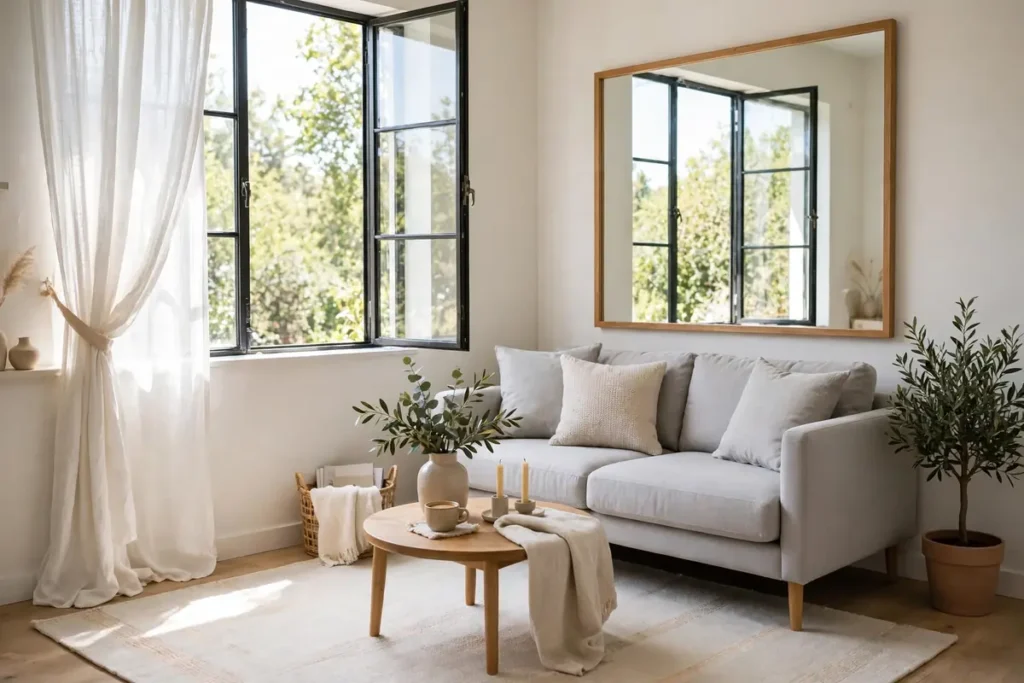
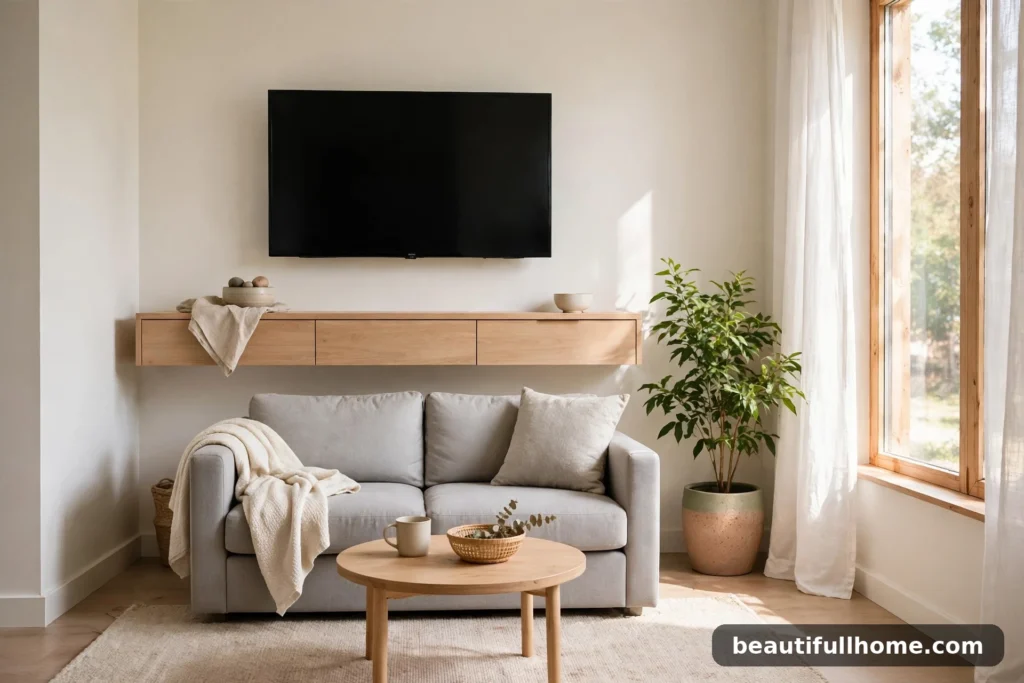
Small Living Room Ideas With TV: 12 Smart Layouts
Quick answer
For a small living room, a 43 to 55-inch TV is best, placed 1.5 to 2.5 times the screen diagonal from the sofa, with its centre about 42 inches from the floor. Wall-mount it with a floating console, keep 30 to 36 inches of walkway, and hide the wires in a paintable raceway. Avoid mounting the TV above the fireplace – heat and neck strain make it the worst spot.
A small living room can fit a comfortable sofa, a properly sized TV, and useful storage without feeling crowded. The secret is choosing the right furniture sizes and placing everything carefully.
For most small living rooms, a 43-55-inch TV is a practical starting point. A wall-mounted TV, floating console, or corner installation can also free up valuable floor space.
Whether you live in a small apartment, rent your home, or have a compact family room, these small living room ideas with TV will help you create a functional and attractive space.
Before buying furniture, measure your room, check your viewing distance, and decide where the TV should go. These three steps can prevent expensive layout mistakes.
12 Small Living Room Ideas With TV
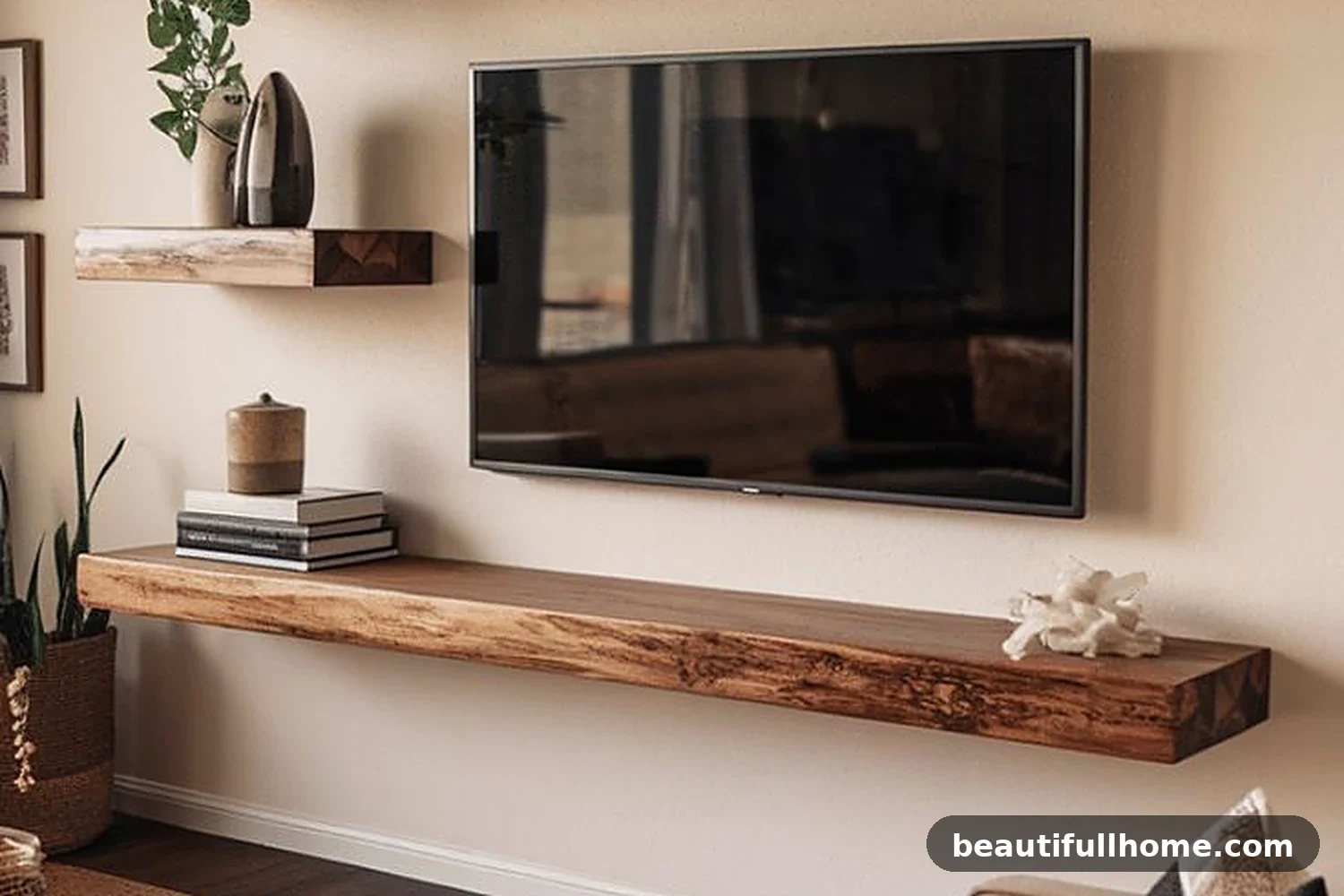
1. Mount the TV on the Wall to Free Up Floor Space
Typical cost: $150-$450 for a professionally installed setup.
A wall-mounted TV removes the need for a traditional television cabinet. It also gives you more freedom when arranging your sofa and other furniture.
Choose a wall with enough width for your screen. Ideally, place the TV directly opposite the main seating area. Keep the screen centre close to seated eye level.
For a small room, consider these measurements:
- TV mounting height: approximately 42-48 inches from the floor to screen centre.
- TV bracket: choose a fixed or tilting mount.
- Space below TV: leave approximately 6-12 inches for a console or soundbar.
- Sofa-to-TV distance: measure before choosing your screen.
A fixed bracket works well when everyone watches from one seating position. A tilting bracket helps reduce reflections and adjust the viewing angle.
Design tip: Keep the wall around your TV simple. One large artwork, a few shelves, or a subtle accent finish can create a balanced focal point.
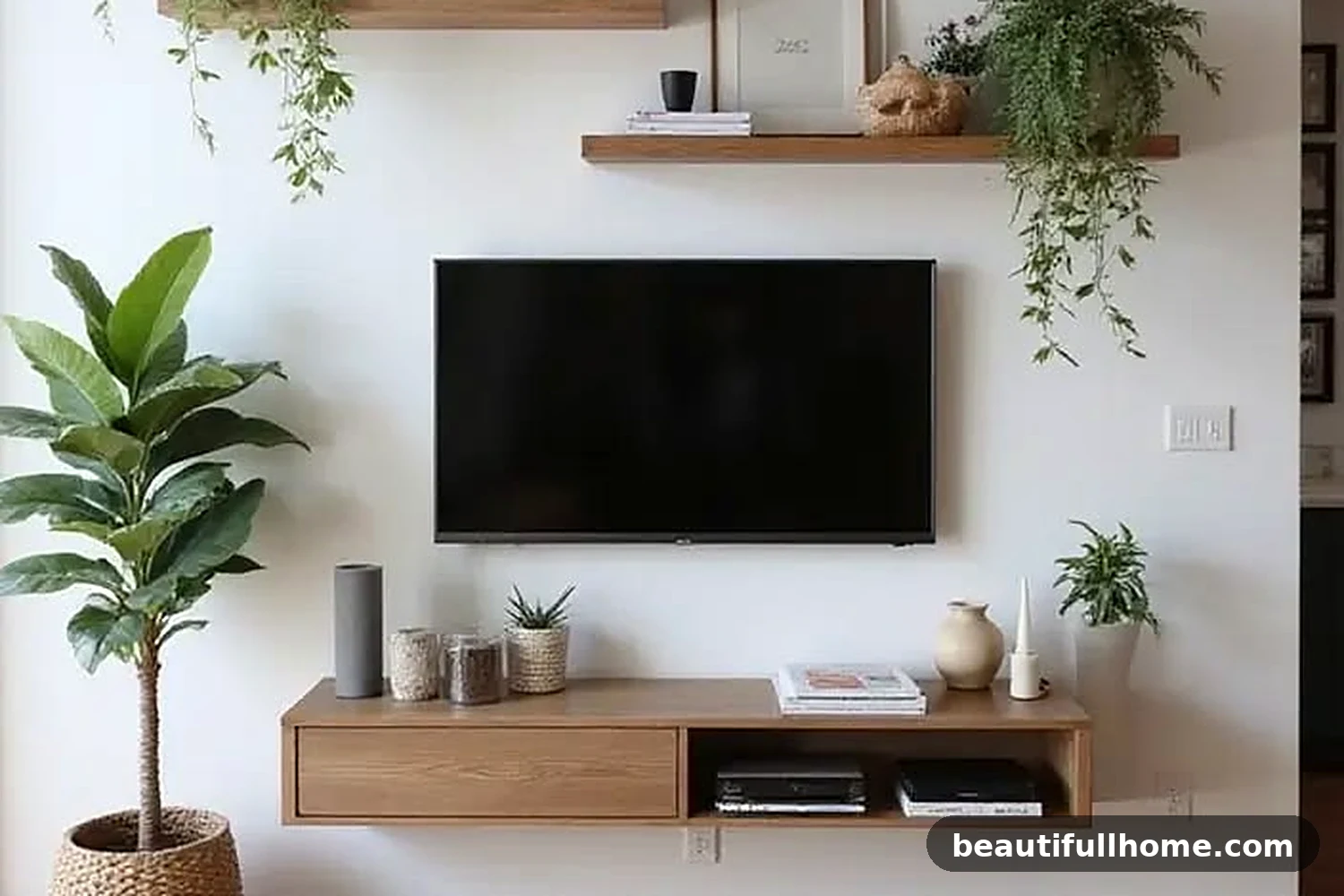
2. Install a Floating TV Console for a Cleaner Look
Typical cost: $150-$700, depending on the console and installation.
A floating console creates storage without taking up floor space. Because the cabinet sits above the floor, the room can also feel more open.
Choose a console between 36 and 60 inches wide, depending on your TV and wall space. A depth of 10-15 inches is usually enough for streaming devices, remotes, and small accessories.
Look for a model with:
- Closed compartments for hiding clutter.
- Open shelves for streaming devices.
- Built-in cable openings.
- A simple finish that matches your furniture.
Mount the console into wall studs or use suitable wall anchors for the wall type and cabinet weight. Never assume ordinary drywall anchors can support a heavy cabinet.
If you own a smaller room, choose a cabinet with sliding doors instead of outward-opening doors. This avoids unnecessary clearance requirements.
Best for: Apartments, modern interiors, and homeowners who want extra storage without a bulky entertainment unit.
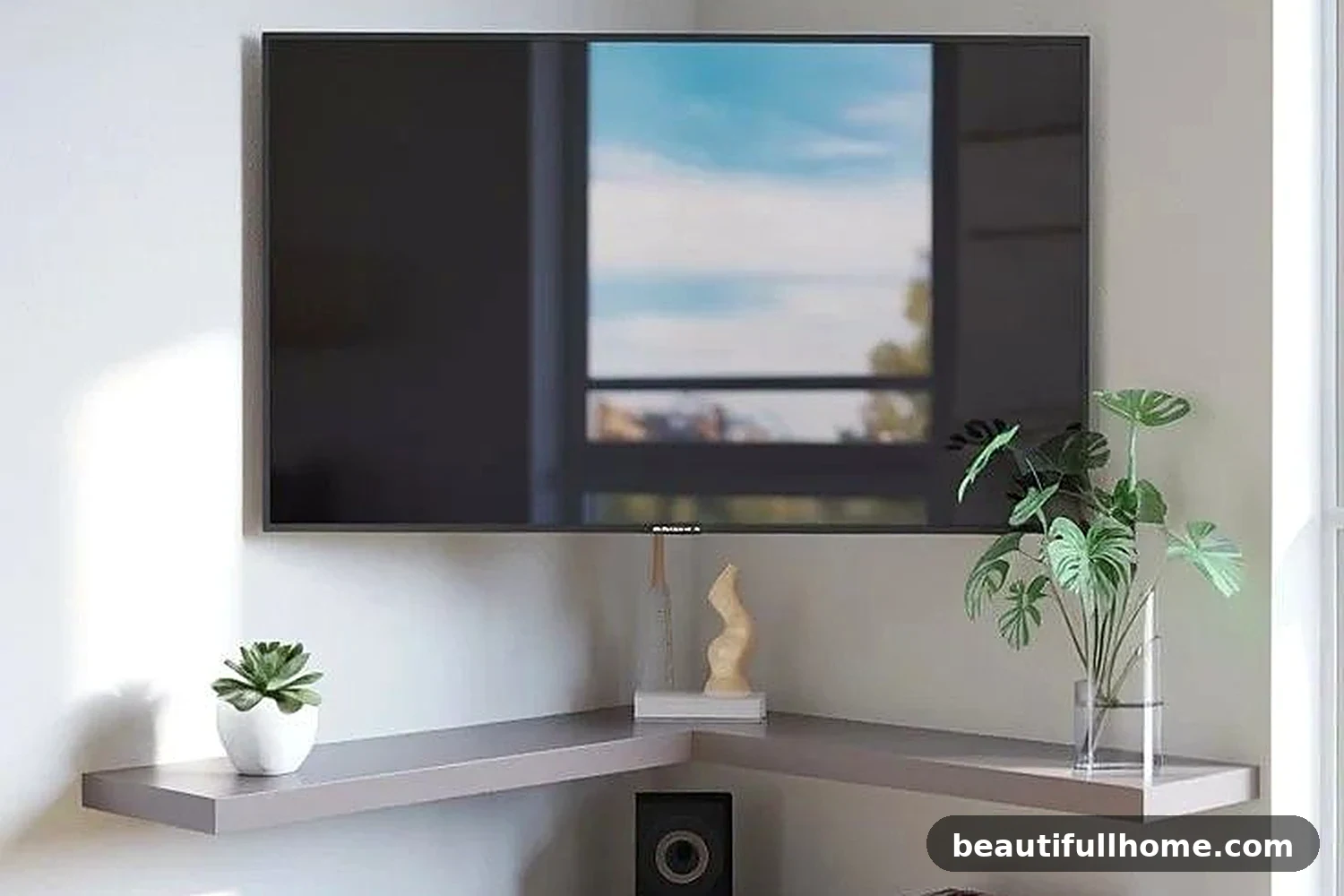
3. Use a Corner TV Swivel Mount
Typical cost: $100-$350 for the mount and basic installation.
Corners are often wasted spaces in small living rooms. A corner TV swivel mount can turn one into a useful entertainment area.
This arrangement works particularly well in narrow rooms. It also helps when your sofa cannot face a traditional flat TV wall.
Choose a full-motion bracket that supports your TV's weight and VESA mounting pattern. Check that the arm extends far enough to position the screen toward your seating area.
Before purchasing, measure:
- The distance between the corner and sofa.
- The available wall space on both sides.
- The bracket's maximum extension.
- The screen's clearance from nearby furniture.
A swivel mount is useful when the living room connects to a dining area. You can turn the screen toward either space when needed.
However, avoid pulling the TV too far away from the wall. A large extended bracket can make a small room feel visually cluttered.
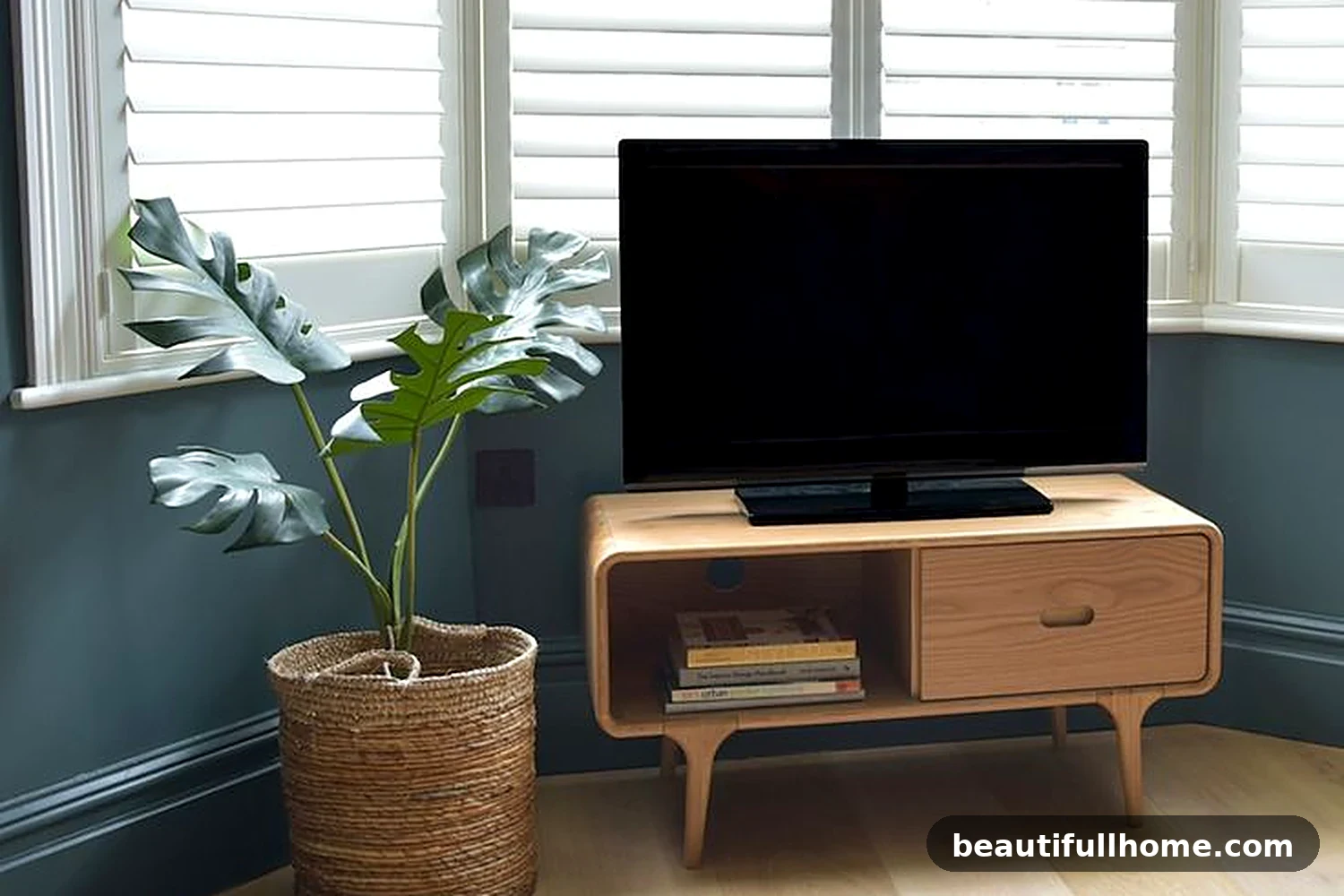
4. Choose a Slim TV Stand With Hidden Storage
Typical cost: $100-$450.
Not every home needs a wall-mounted TV. A slim TV stand is a practical alternative, especially if you cannot drill into walls.
Look for a stand measuring approximately:
- Width: 40-60 inches.
- Depth: 12-16 inches.
- Height: 18-24 inches.
These dimensions offer useful storage without occupying too much floor space.
Choose a unit with closed drawers or sliding doors. This keeps gaming controllers, cables, and other accessories out of sight.
If your room is particularly narrow, avoid deep entertainment centres. A shallow console can provide enough storage while preserving walking space.
Design tip: Match your TV stand with the sofa legs, coffee table, or flooring. Consistent finishes help small rooms look more organized.
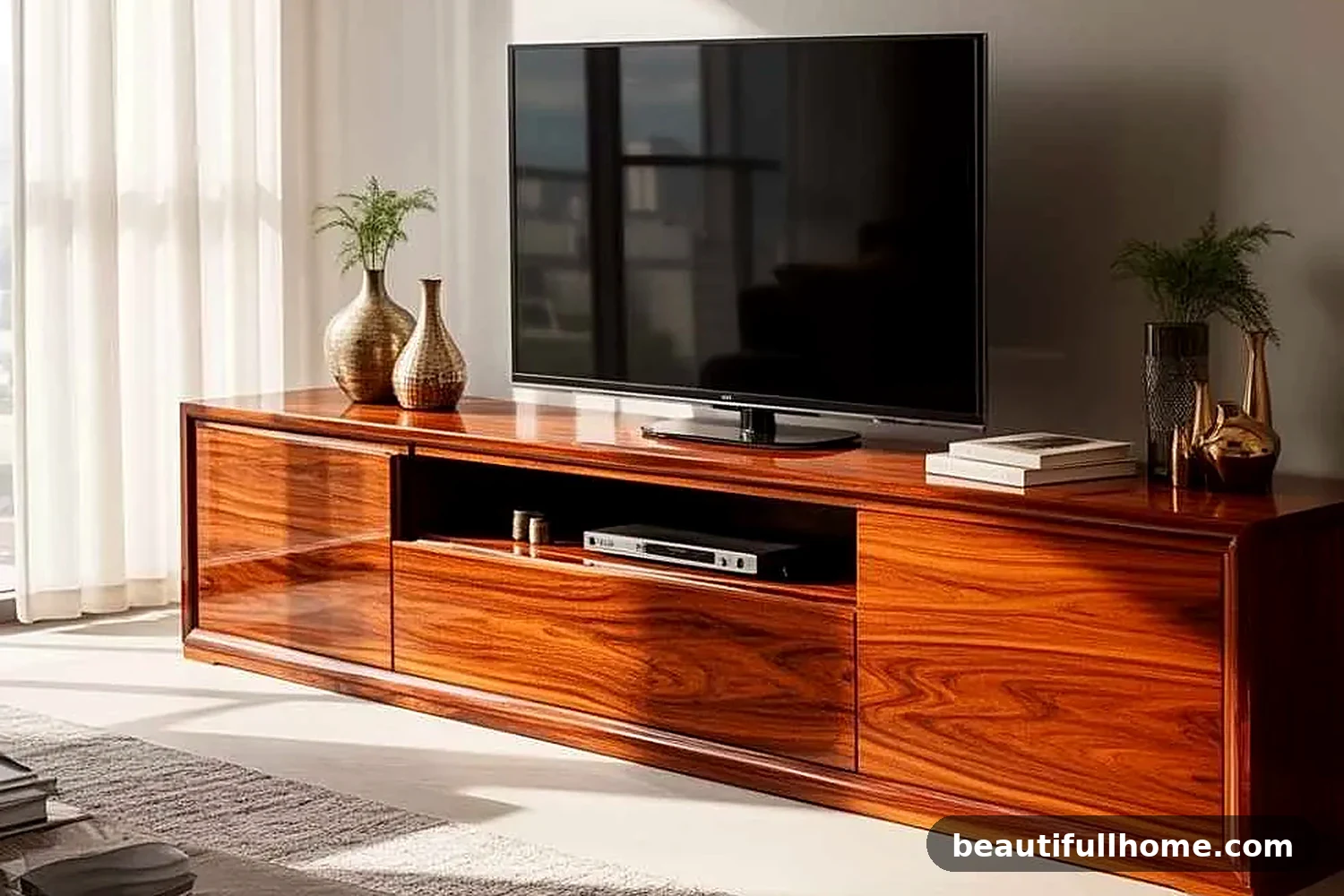
5. Put the TV Above a Low Storage Cabinet
Typical cost: $200-$800.
A low storage cabinet creates a practical entertainment wall. It gives you room for everyday items while keeping the television at a comfortable height.
Instead of choosing a tall entertainment centre, use a cabinet around 48-66 inches wide and 16-20 inches deep.
Place the TV above the cabinet, leaving enough clearance for a soundbar or decorative objects.
You can also use the cabinet to store:
- Board games and books.
- Extra remote controls.
- Gaming accessories.
- Blankets and small electronics.
Choose furniture with legs or a raised base. Seeing more of the floor underneath can make the room feel less crowded.
Avoid filling the entire cabinet surface with decorations. Leave enough space for the equipment you actually use.
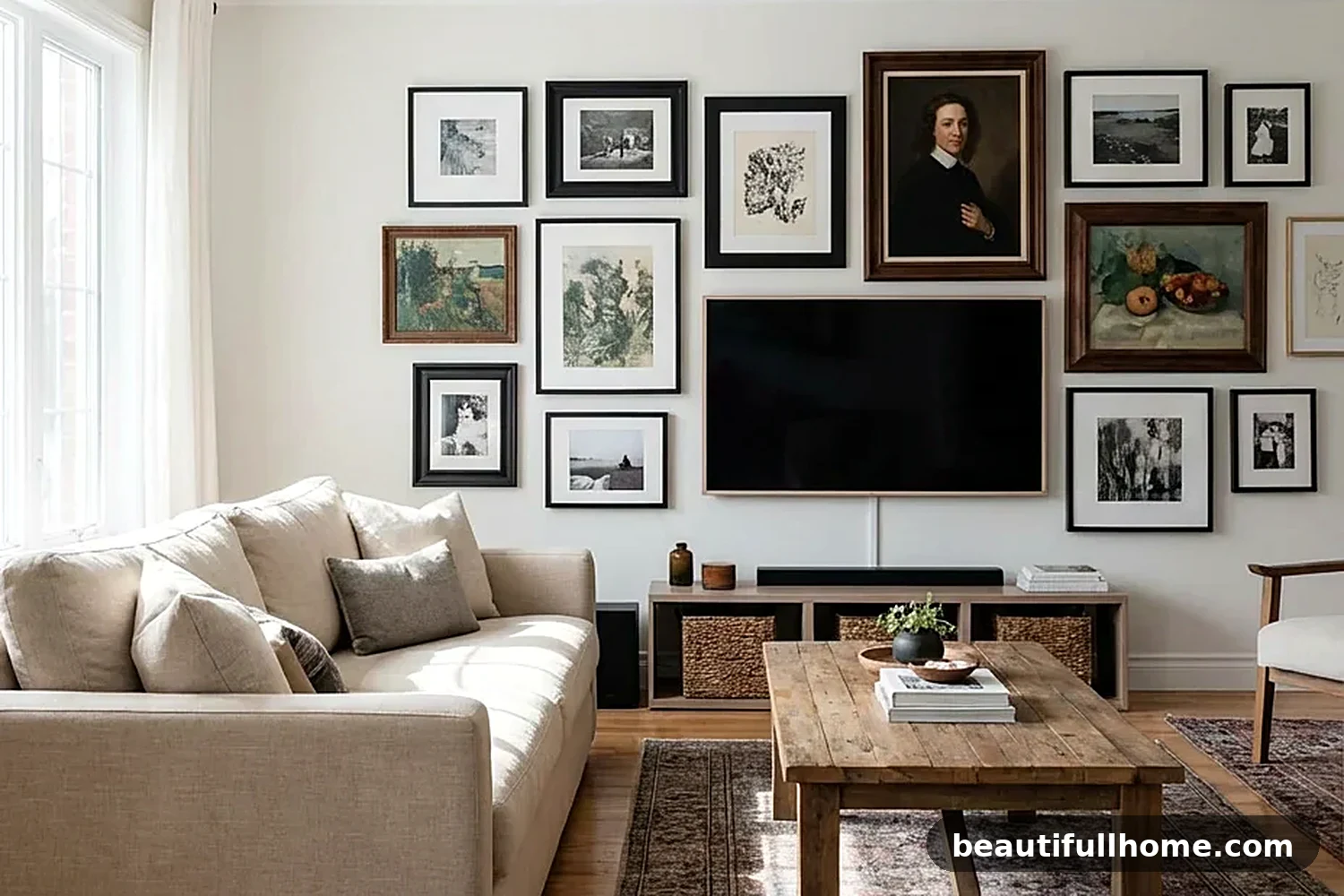
6. Create a TV Gallery Wall
Typical cost: $80-$400.
A television can look like an oversized black rectangle when it sits alone on a plain wall.
A gallery wall helps integrate it into your overall decoration. Arrange framed prints, photographs, and small artwork around the screen.
For a balanced appearance:
- Use three to five smaller frames.
- Keep similar frame finishes.
- Leave approximately 2-4 inches between frames.
- Avoid placing artwork too close to the TV edges.
- Keep the television as the main visual focus.
Choose artwork with simple colours. Too many contrasting patterns can make a small room feel busy.
You can also use a TV with an art display mode. This makes the screen look more like a framed picture when it is not in use.
Rental-friendly option: Use lightweight frames with removable picture-hanging strips. Check their weight limits before installation.
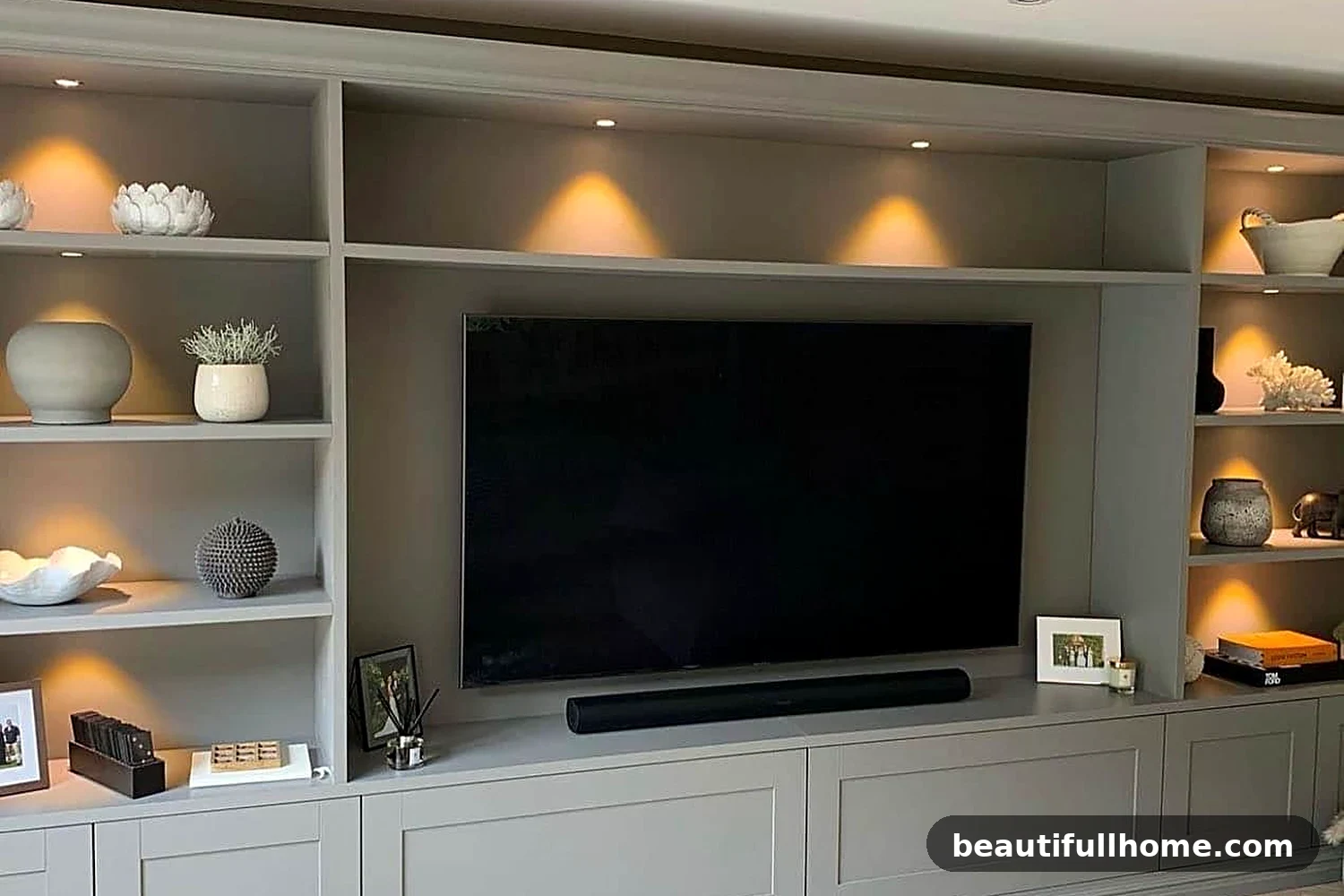
7. Place the TV in a Built-In or Recessed Media Wall
Typical cost: $500-$2,500 or more, depending on customization.
Built-in shelving combines entertainment, storage, and decoration in one place. It works especially well when you have an unused wall or an existing alcove.
Keep the design simple. A small room does not need floor-to-ceiling cabinets on every side.
Consider these measurements:
- Central TV opening: approximately 50-65 inches wide.
- Side shelves: approximately 8-12 inches deep.
- Lower storage: approximately 15-18 inches deep.
- Open shelving: leave enough space for ventilation around electronics.
Use closed cabinets below the screen and open shelves on one side. This creates visual balance without overwhelming the room.
For a lower-cost alternative, combine ready-made bookcases with a separate TV console. You can achieve a similar appearance without paying for fully customized cabinetry.
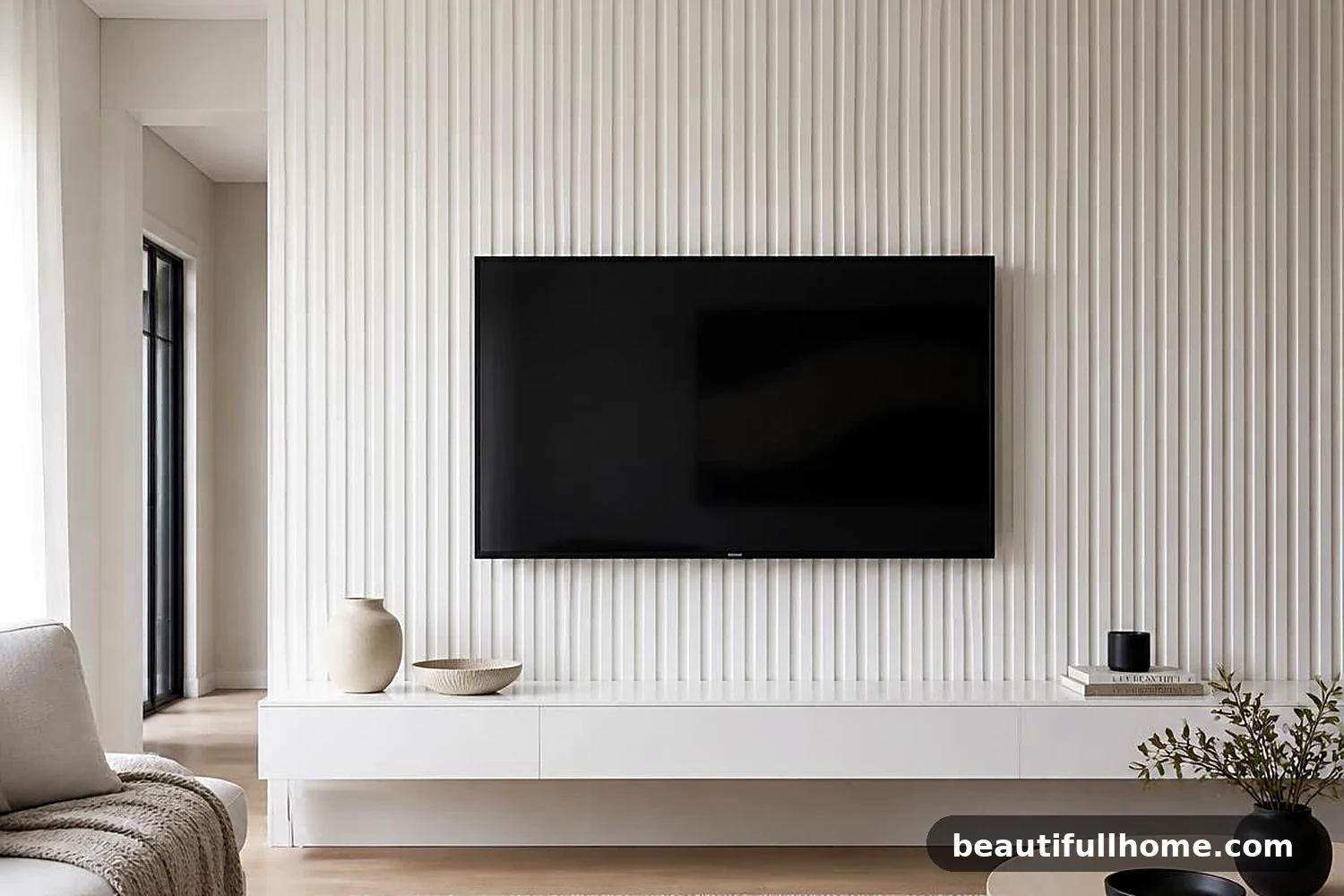
8. Use a Light-Colored TV Wall to Make the Room Feel Bigger
Typical cost: $50-$350 for paint and basic decoration.
Dark walls can look attractive, but a small living room often benefits from lighter colours.
Try warm white, soft beige, pale gray, or light greige. These shades reflect more light and create a calmer background.
You do not need to paint every wall. A single TV accent wall can define the entertainment area.
For a coordinated look:
- Choose a light neutral wall colour.
- Add a wooden floating console.
- Use black or dark bronze details around the screen.
- Keep surrounding furniture in similar colour families.
- Avoid too many small decorative objects.
A light wall also helps prevent the television from visually dominating the room.
If you prefer darker interiors, use a deeper shade only on the TV wall and keep the remaining walls lighter.
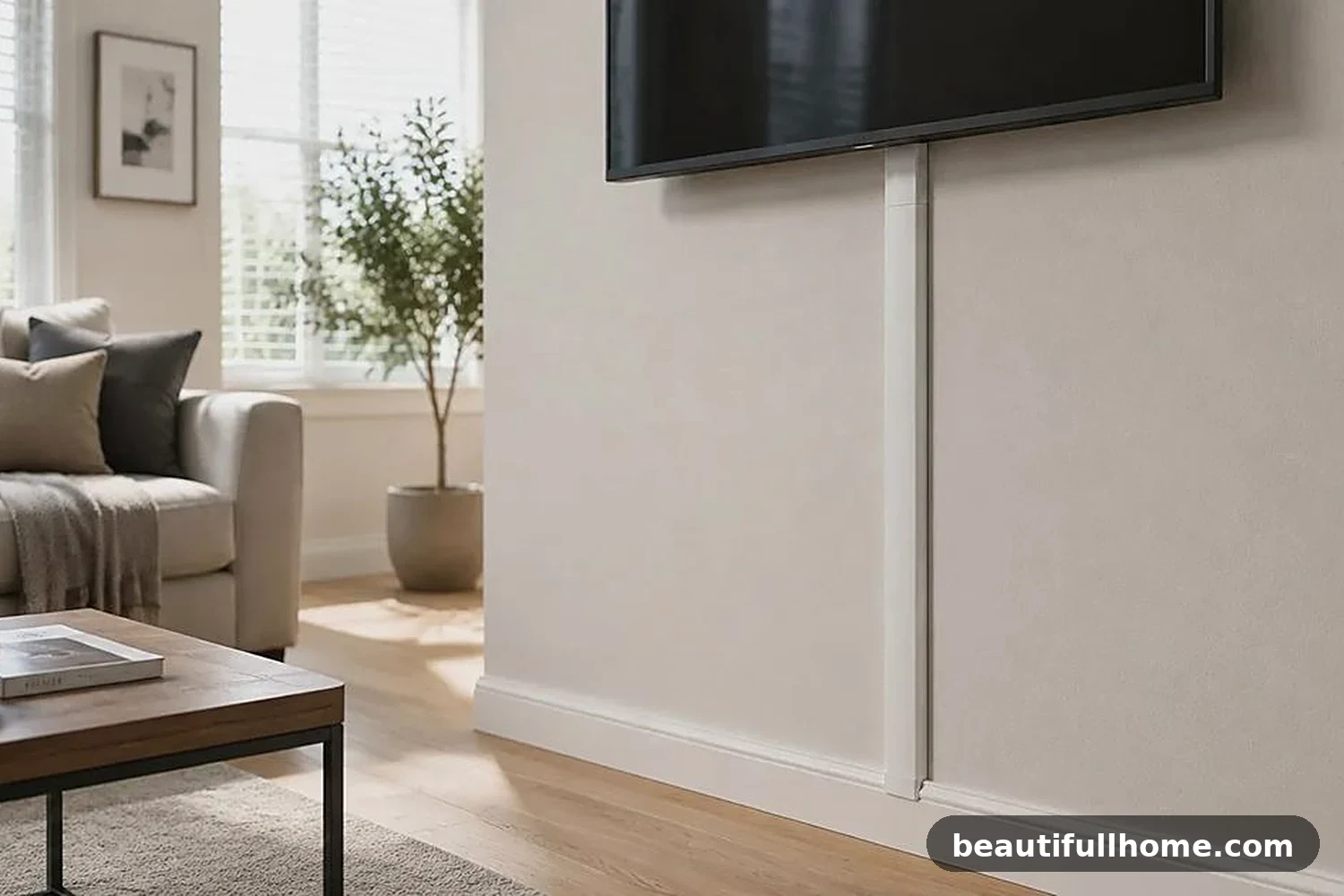
9. Hide TV Wires With a Cable Raceway
Typical cost: $15-$150 for basic cable management; professional concealed wiring can cost more.
Visible wires can make even a beautiful living room look unfinished. Fortunately, you do not always need expensive electrical work to solve this problem.
A cable raceway is a narrow channel that covers wires running along a wall. Many models can be painted to match the wall colour.
You can use it to hide TV wires connecting:
- The television to a streaming device.
- The television to a soundbar.
- The television to a gaming console.
- Other low-voltage entertainment equipment.
For a neat installation, measure the full cable route before buying a raceway. Choose a channel large enough for all the cables without forcing them inside.
Important: Never run an ordinary TV power cord inside a basic cable raceway if it is not designed for that purpose. Use an approved power solution and follow electrical safety requirements.
A professional in-wall power and cable installation is another option. It costs more but creates a cleaner finish.
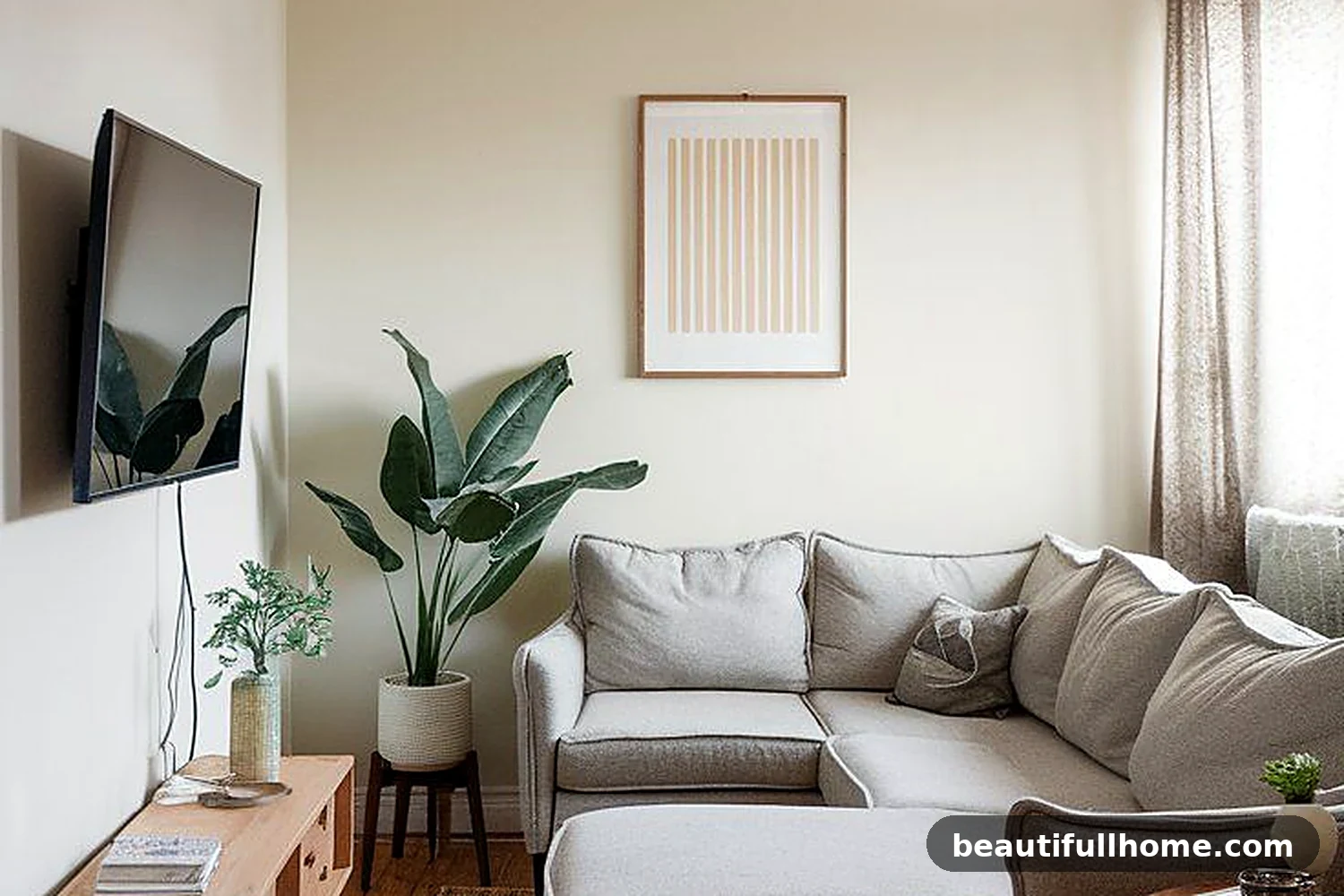
10. Use a Compact Sectional or Loveseat Facing the TV
Typical cost: $400-$1,500 for a compact sofa or loveseat.
Large sofas can consume most of a small living room. Choosing a smaller seating arrangement leaves room for movement and additional furniture.
A loveseat measuring approximately 55-65 inches wide works well in many compact spaces.
You can also choose a small L-shaped sectional measuring around 75-85 inches along its longer side.
Position the main seating directly opposite the TV. Leave approximately 30-36 inches for a main walking route where the layout allows.
Avoid sectionals with oversized arms. Narrow arms and raised legs give you more usable seating without making the room feel heavy.
If you regularly host guests, consider an ottoman with hidden storage. It can serve as a footrest, extra seat, or temporary coffee table.
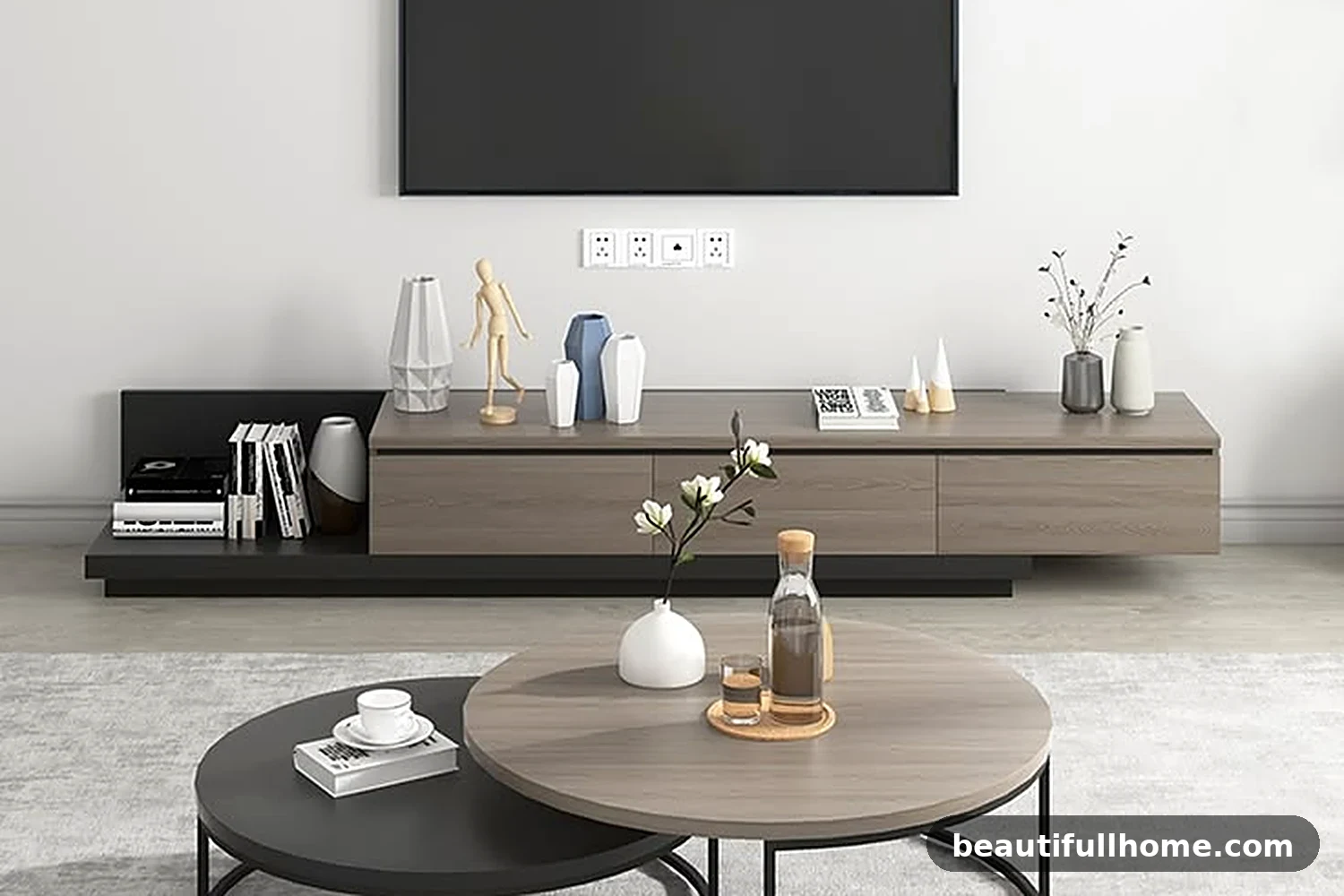
11. Add a Nesting Coffee Table Instead of a Large Table
Typical cost: $60-$250.
A large rectangular coffee table can interrupt movement in a compact living room.
Nesting tables provide a flexible alternative. Keep the smaller table tucked underneath when you need more floor space.
Choose tables with these approximate measurements:
- Main table: 24-30 inches wide.
- Smaller table: 16-22 inches wide.
- Height: 15-18 inches.
- Sofa clearance: approximately 16-18 inches.
Round tables are another good choice. Their curved edges make it easier to move around tight furniture arrangements.
You can also use a small storage ottoman instead of a conventional coffee table.
Best for: Small apartments, narrow walkways, and multipurpose living rooms.
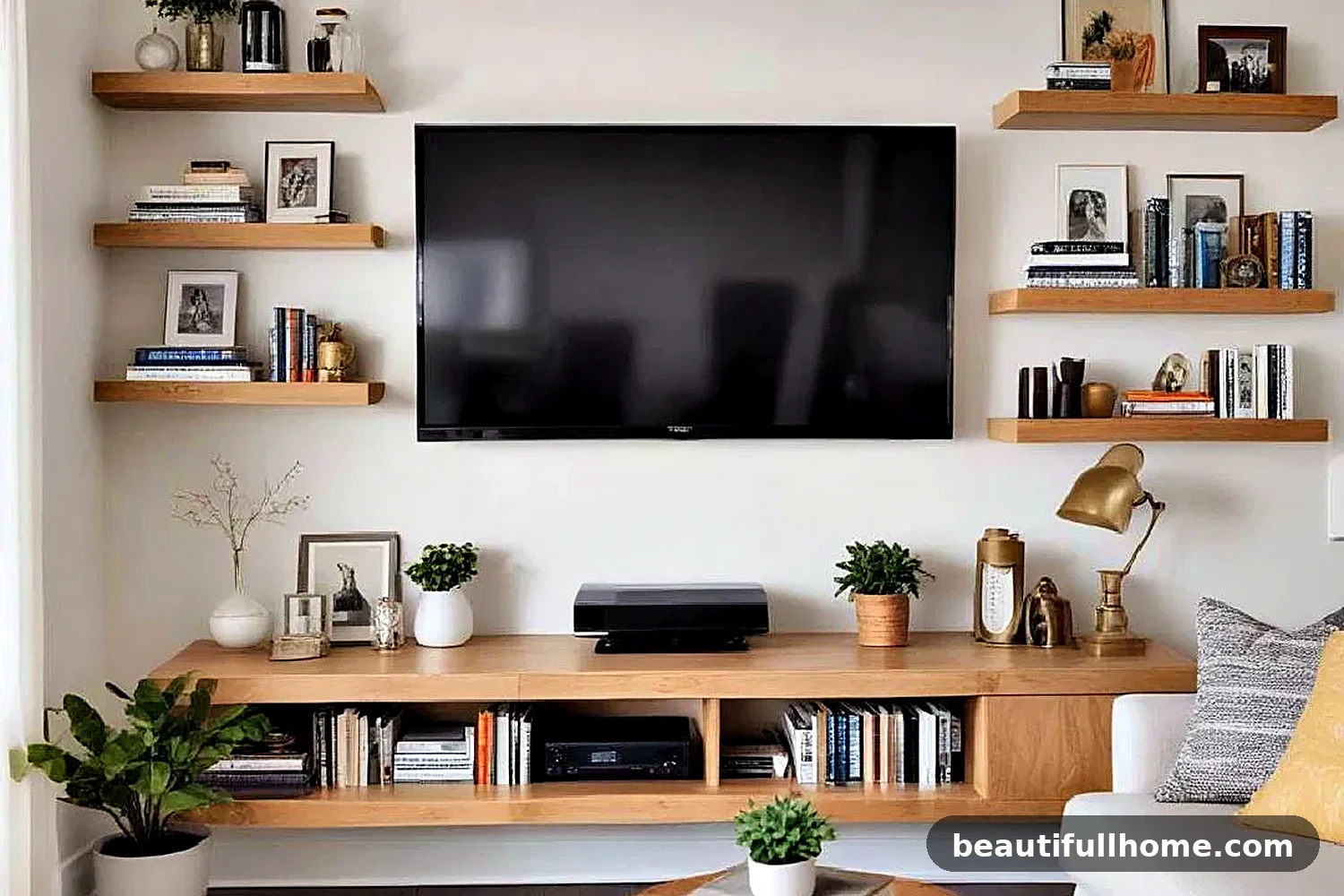
12. Use Vertical Shelving Around the TV
Typical cost: $100-$600.
When floor space is limited, use the wall height instead.
Tall, narrow shelving can provide storage without taking up the width of a traditional bookcase. Place one shelf unit beside the television rather than building cabinets across the entire wall.
Look for shelving around 12-18 inches wide and 10-12 inches deep.
Use it to display a few books, small plants, framed photographs, and decorative accessories.
Keep heavier objects on lower shelves. Avoid overcrowding the space around the television.
For a more balanced appearance, use matching shelves on both sides if your wall has enough width.
What size TV should I get for a small living room?
A 43 to 55-inch TV suits most small living rooms. Sit 1.5 to 2.5 times the screen diagonal away from the screen – for example, a 55-inch TV needs 7 to 11.5 feet.
Choosing the correct TV size matters as much as choosing the right furniture.
A screen that is too large can dominate a small room. A screen that is too small may be uncomfortable to watch from your sofa.
For this guide, use a viewing distance of approximately 1.5-2.5 times the screen diagonal. Measure from your normal seated position to the screen, not to the wall behind it.
Recommended TV sizes and distances
| TV size | Minimum distance | Maximum distance |
|---|---|---|
| 43 inches | 5 ft 5 in | 8 ft 11 in |
| 50 inches | 6 ft 3 in | 10 ft 5 in |
| 55 inches | 6 ft 11 in | 11 ft 5 in |
Distances are rounded from the 1.5-2.5 diagonal calculation. They are planning guidelines, not strict limits.
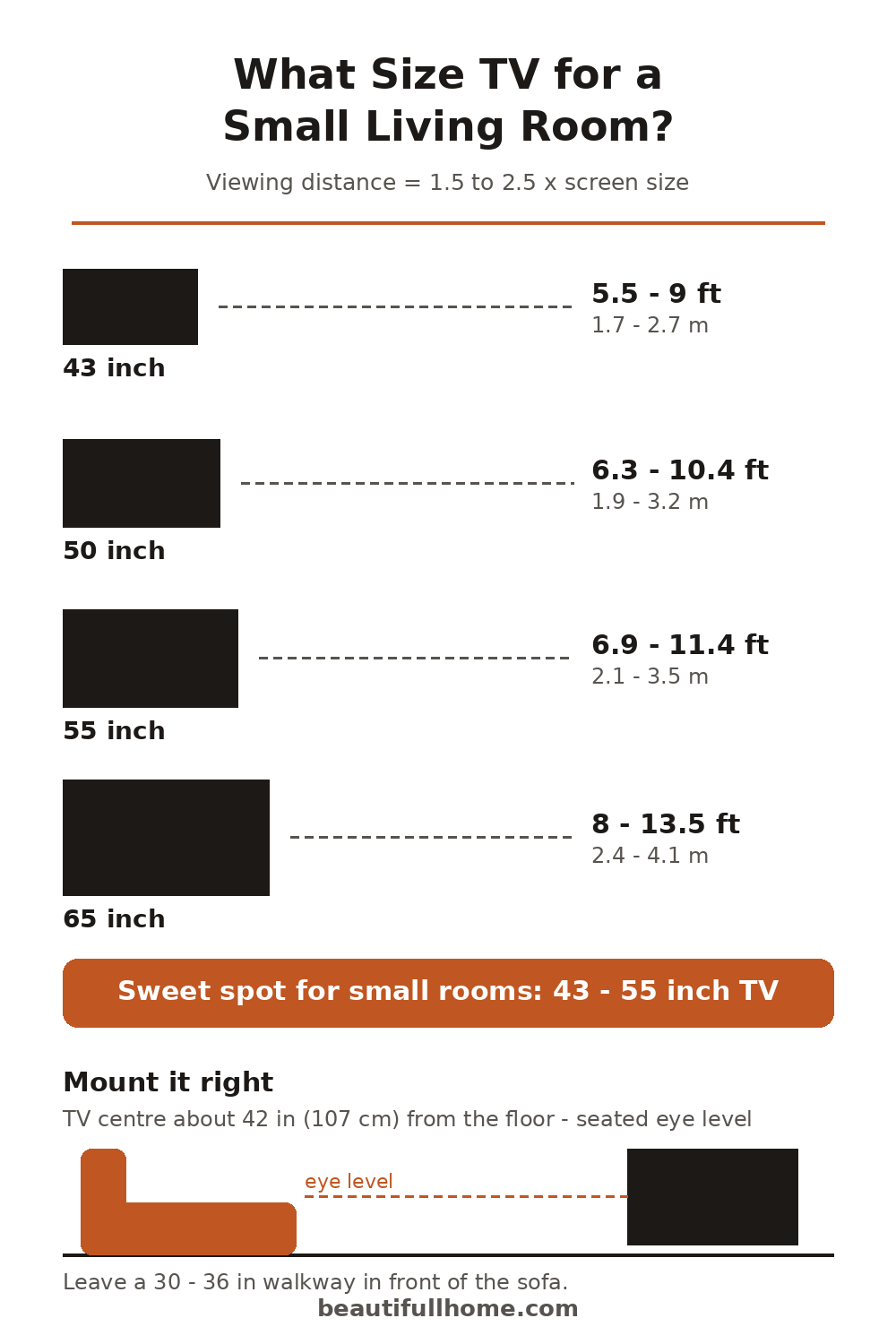
Which TV size should you choose?
43-inch TV: Suitable for very compact rooms and shorter seating distances. 50-inch TV: A practical middle option for many small living rooms. 55-inch TV: Works well when you have enough viewing distance and wall width.
A 43-55-inch TV covers many small-room needs. However, do not buy a screen based only on room dimensions.
Check the actual distance between your sofa and television first. Also consider screen resolution, personal comfort, and the type of content you watch.
For a 4K TV, viewers can generally sit closer than they could with older lower-resolution screens. Manufacturer guidance and individual preferences may therefore differ from this general chart.
Dimensioned Room Templates for Common Small Living Room Shapes
Not every small living room has the same layout. A narrow rectangular room needs a different furniture arrangement from a square room.
Here are three practical starting templates. Measurements represent example room dimensions, not universal furniture-fitting guarantees.
Template 1: Small Square Living Room
(Example room: 12 × 12 feet)
A square room gives you several furniture placement options.
Recommended arrangement:
- TV wall: 12 feet wide.
- Sofa: approximately 72 inches wide.
- TV: 43-50 inches.
- Coffee table: 24-30 inches wide.
- TV console: 48-60 inches wide.
- Main walking clearance: aim for 30-36 inches where possible.
Place the sofa against one wall and the television directly opposite it. Use a small round coffee table in the centre.
This layout creates a straightforward entertainment zone without dividing the room.
Template 2: Narrow Rectangular Living Room
(Example room: 10 × 15 feet)
A narrow room requires careful furniture selection. Avoid placing large furniture pieces across the shortest walking route.
Recommended arrangement:
- TV: mounted on one 10-foot end wall.
- Sofa: approximately 60-72 inches wide.
- TV stand: 12-15 inches deep.
- Coffee table: approximately 24 inches wide.
- Main passage: target 30-36 inches where possible.
Place the sofa along one long wall if the TV position allows a comfortable viewing angle. A corner swivel mount can help when a straight arrangement does not work.
Template 3: Compact Open-Plan Living Room
(Example living zone: 10 × 12 feet)
An open-plan room shares space with a dining area or kitchen. The main challenge is defining the living area without blocking movement.
Recommended arrangement:
- TV: on the longest available uninterrupted wall.
- Sofa: approximately 66-78 inches wide.
- Console: 48-60 inches wide.
- Rug: approximately 5 × 7 feet.
- Coffee table: 24-30 inches wide.
Place the sofa with its back toward the dining area when space permits. This creates a natural division between the two zones.
A floating console also helps maintain an open appearance.
Important measuring rule: Allow approximately 30-36 inches for a comfortable main walkway wherever the room permits. For occasional furniture access, smaller clearances may work, but avoid blocking doors and essential routes.
How Much Does It Cost to Create a Small Living Room TV Setup?
You do not need a major renovation to improve a small living room. A few carefully selected furniture pieces can make a noticeable difference.
Here is a practical US budgeting guide for the ideas covered above.
| Living room improvement | Typical US cost |
|---|---|
| Wall-mounted TV installation | $150-$450 |
| Floating TV console | $150-$700 |
| Corner swivel TV mount | $100-$350 |
| Slim TV stand | $100-$450 |
| Low storage cabinet | $200-$800 |
| TV gallery wall | $80-$400 |
| Built-in media wall | $500-$2,500+ |
| TV accent wall | $50-$350 |
| Cable management | $15-$150 |
| Compact loveseat or sofa | $400-$1,500 |
| Nesting coffee tables | $60-$250 |
| Vertical shelving | $100-$600 |
These are approximate planning ranges, not fixed quotes. Costs depend on furniture quality, materials, location, wall construction, and installation requirements.
For comparison, Angi's 2026 cost guide places professional TV mounting around $149-$346 nationally. Concealed wiring and additional installation work can increase the total.
Three Budget-Friendly Ways to Upgrade Your Room
Under $200: Choose a cable raceway, small nesting table, and lightweight wall decorations. Rearrange existing furniture before buying anything else.
$200-$600: Consider a slim TV stand, floating shelves, a suitable TV bracket, or a small accent wall.
$600-$1,500: Upgrade your seating, add a floating console, and invest in professional TV installation.
You can complete the improvements gradually. Start with the TV position and furniture arrangement before purchasing decorative accessories.
How do I put a TV in a small living room without drilling?
Renting does not mean you have to accept an uncomfortable entertainment setup. You can improve your living room without making permanent changes to the property.
Here are five practical solutions.
1. Use a Freestanding TV Stand
A freestanding TV stand avoids drilling holes into the wall. Choose a compact model with enough space for your television and entertainment equipment.
2. Try a Floor TV Stand
A floor TV stand holds the screen independently. Some models also include adjustable height and swivel features.
This is particularly useful when your landlord does not allow wall-mounted televisions.
3. Use Removable Cable Covers
Self-adhesive cable covers can hide visible wires without major installation work. Check whether the adhesive is safe for your wall paint before applying it.
4. Choose Lightweight Floating-Look Furniture
You can achieve a floating-console appearance with a slim cabinet that has raised legs. It creates a similar visual effect without attaching furniture to the wall.
5. Use Removable Wall Decorations
Lightweight artwork, removable wallpaper, and suitable picture-hanging strips can help decorate the TV wall.
Always check product weight limits and your rental agreement before installation.
My recommendation: Renters should prioritize freestanding furniture, removable cable management, and adjustable TV stands. These options are easier to move when changing apartments.
Should You Mount Your TV Above the Fireplace?
Mounting a TV above the fireplace can save wall space, but it is not always the best choice for a small living room.
The biggest problem is screen height.
Most fireplaces place the television higher than a comfortable seated viewing position. You may need to tilt your head upward for extended periods.
Consider these factors before choosing this arrangement:
- Viewing angle: Check whether you can watch comfortably without constantly looking upward.
- Fireplace heat: Make sure the TV stays within the manufacturer's permitted temperature range.
- Mantel protection: A suitable mantel may help redirect heat, but it does not guarantee safe temperatures.
- Mounting hardware: Use a bracket designed for the TV's weight and wall material.
- Screen access: A pull-down mount can make viewing and maintenance easier.
A tilting or pull-down bracket may improve the viewing angle. However, it adds expense and does not solve every heat-related concern.
Final Verdict: Is It Worth It?
Usually, no. A separate TV wall is the better choice.
Mounting above a fireplace makes sense only when the room has no practical alternative and the installation meets both viewing and temperature requirements.
If you have an unused wall, choose that instead. Your neck comfort and viewing experience are more important than saving a little wall space.
Frequently Asked Questions
1. What is the best TV size for a small living room?
A 43-55-inch TV works well in many small living rooms. The right size depends on your sofa-to-screen distance, available wall space, and personal viewing preferences. A 43-inch model suits shorter distances, while a 55-inch screen needs more room.
2. Where should I put my TV in a small living room?
Place your TV on a wall directly opposite your main seating area whenever possible. If the room has limited wall space, consider a corner swivel mount or a freestanding TV stand. Avoid placing the screen where direct sunlight creates reflections.
3. How do I make a small living room look bigger with a TV?
Use a wall-mounted TV, floating console, light wall colours, and compact furniture. Keep visible cables organized and avoid oversized entertainment centres. Raised furniture legs and vertical shelving can also make the room feel more open.
4. How can I hide TV wires without cutting into the wall?
Use an external cable raceway that matches your wall colour. You can also organize cables behind a freestanding TV stand or use cable-management clips. Never conceal ordinary power cords inside an unsuitable raceway or wall cavity.
5. Is a corner TV mount good for small living rooms?
Yes. A corner TV swivel mount can help when a traditional TV wall is unavailable. It allows you to adjust the screen toward your sofa or another seating area. Check the mount's weight capacity, extension length, and compatibility before purchasing.
Conclusion
Creating a comfortable small living room starts with three things: the right TV size, smart furniture placement, and enough space to move around.
A 43-55-inch television, floating console, slim sofa, and organized cables can transform even a compact room. You do not need expensive renovations or oversized furniture to achieve a polished appearance.
Measure your room before buying anything. Choose a layout that suits your daily routine, and prioritize comfortable viewing over decoration.
The best small living room is not the one with the most furniture. It is the one where everything has a purpose and the space feels easy to enjoy. For more general layout ideas, see our small living room ideas guide, and our what size rug for a living room guide.
Editorial note for beautifullhome.com: The cost figures are broad US planning estimates rather than contractor quotations. Readers should obtain local installation quotes and check product specifications before purchasing.