Small Living Room Decor Ideas: 12 Ways That Work
The best small living room decor ideas are the ones that make the room look bigger while it works harder: one large mirror at least 30×40 inches opposite a window, one edited gallery wall on a single wall, curtains hung 4-6 inches below the ceiling, and a palette of two colors plus neutrals. Art should be about two-thirds as wide as the sofa, the rug should be at least two-thirds as long as the sofa, and pillows should follow odd numbers in one palette. A mirror costs $60-$250, a gallery wall $80-$300, and curtains $40-$150, and a full refresh can cost under $300 if you start with the mirror, the curtains and the pillows. Measure the wall before you buy, because decor that is too small reads as clutter and decor that is too big eats the room.
What size decor fits a small living room
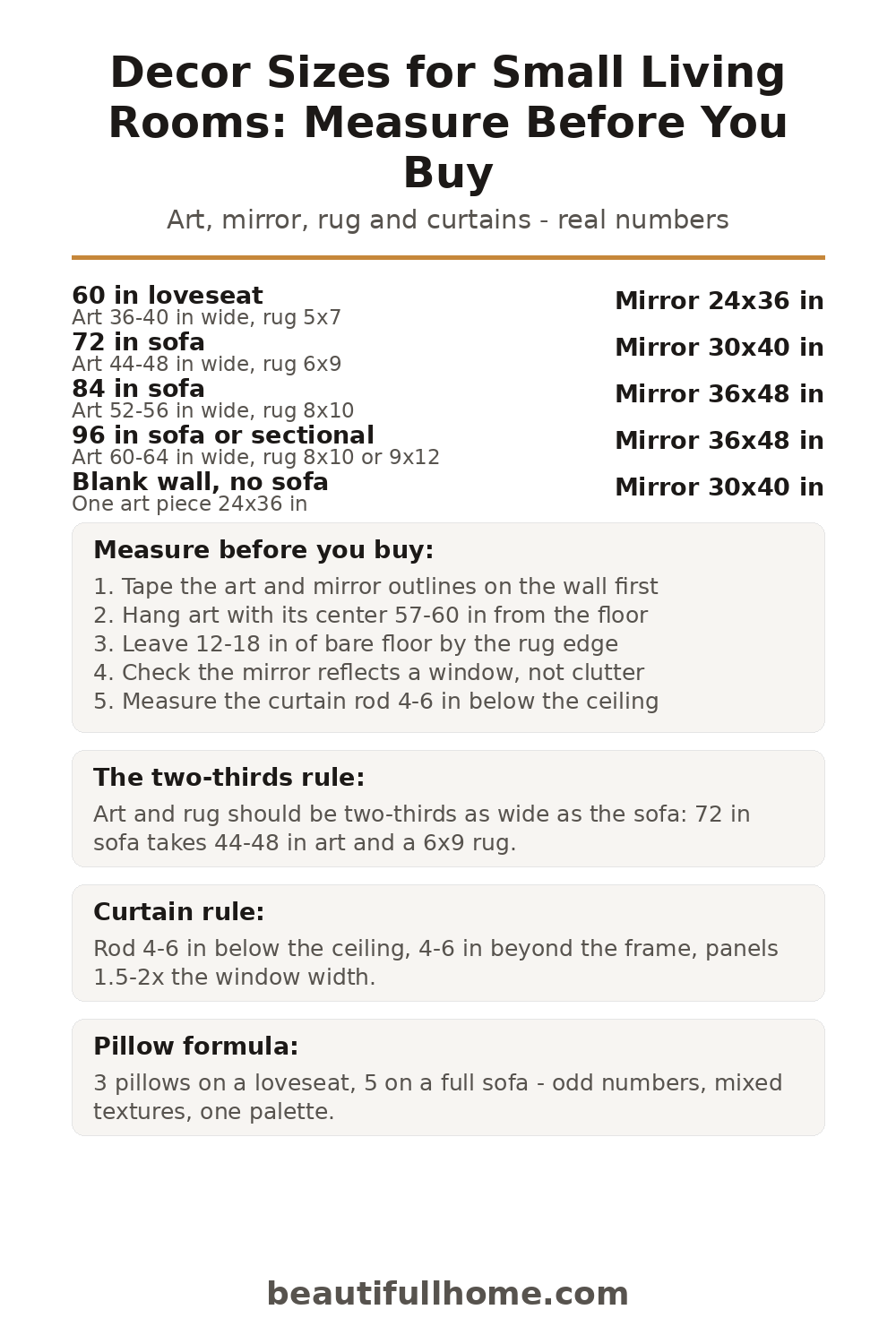
Decor fits a small living room when the sizes match the furniture, not when the pieces are small. Art first: a picture or a gallery wall above the sofa should be about two-thirds as wide as the sofa, so a 72-inch sofa takes art 44-48 inches wide, and a single piece smaller than half the sofa looks lost on the wall. Hang art with its center 57-60 inches from the floor, because that is eye level for a seated person, and a gallery wall hung too high reads as a mistake, not a statement. Mirror second: one large mirror at least 30×40 inches does more than a cluster of small mirrors, because many small reflections feel busy while one large plane of glass doubles the daylight. Rug third: the rug should be at least two-thirds as long as the sofa, with the front legs of the sofa and chairs on it, so a 72-inch sofa takes a 6×9 rug and a loveseat takes a 5×7 rug. Curtains fourth: hang the rod 4-6 inches below the ceiling and 4-6 inches beyond each side of the window frame, with panels 1.5-2 times the window width, so the window looks twice its size. Pillows fifth: three pillows on a loveseat and five on a full sofa, in odd numbers and one palette, because matched sets lined up like soldiers read as a showroom, not a home. The full room plans that go with these numbers are in our Small Living Room Layout: 7 Layouts With Measurements guide, so this post decorates the room, not the layout. Prices are typical US retail ranges for 2026, so check current prices before you buy.
| Sofa or wall | Art above sofa | Mirror | Rug | Curtains |
|---|---|---|---|---|
| 60 in loveseat | 36-40 in wide | 24×36 in min | 5×7 | Rod 4-6 in below ceiling |
| 72 in sofa | 44-48 in wide | 30×40 in min | 6×9 | Rod 4-6 in beyond frame |
| 84 in sofa | 52-56 in wide | 36×48 in | 8×10 | Panels 1.5-2x window width |
| 96 in sofa or sectional | 60-64 in wide | 36×48 in | 8×10 or 9×12 | Floor-length, kiss the floor |
| Blank wall, no sofa | One piece 24×36 in | 30×40 in min | – | – |
Small living room decor ideas: pick by your room
Small living room decor ideas start with the room you have, not the catalog photo. A dark room with one window needs a mirror and light colors, because a mirror doubles the daylight and a dark palette in a dark room feels smaller, not cozier. A room with a low ceiling needs curtains hung high and tall plants or bookcases, because the eye follows vertical lines upward and the ceiling reads as taller. A narrow room needs a round mirror and an oval rug, because circles soften the long walls and the room stops feeling like a hallway. A room with kids or pets needs wipeable fabrics, rounded corners and unbreakable decor, because glass vases and sharp frames do not survive small children. A first apartment needs renter-friendly decor, because adhesive strips, tension rods and leaning mirrors leave no holes to fix. The 12 ideas below cover all of these rooms, and the chooser at the end maps each situation to the ideas that fit it. The sofa sizes that go with this decor are in our Sofa Ideas for Small Living Room: 12 Picks That Fit guide.
1. One big mirror: the fastest way to make a room feel bigger
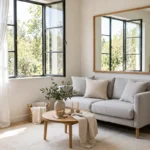
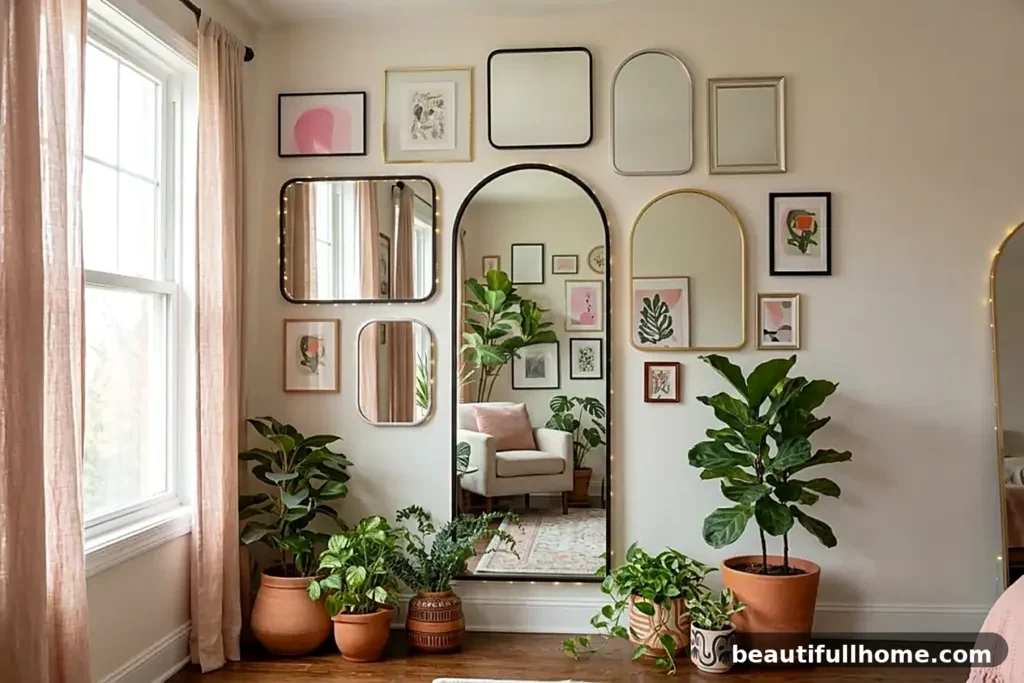
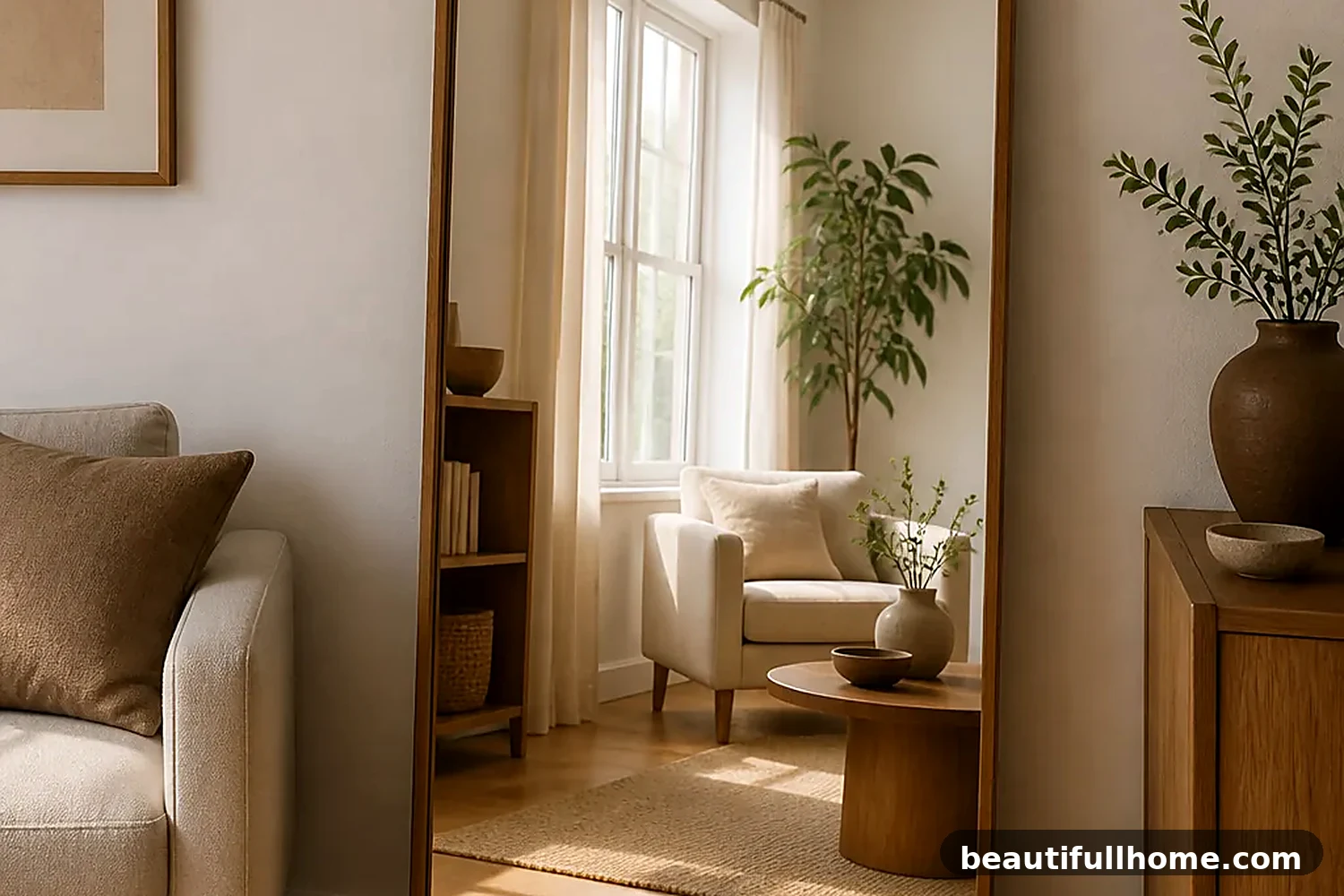
One big mirror is the fastest way to make a small living room feel bigger, because it doubles whatever it faces: daylight, lamplight, the prettiest corner of the room, and it creates the illusion of a second window. Pick one mirror at least 30×40 inches, leaning against the wall or hung opposite a window, and skip the cluster of small mirrors, because many little reflections feel busy while one large plane of glass delivers the effect cleanly. A round mirror softens a room full of rectangular furniture, and a tall leaning mirror fills a narrow wall without needing to be hung. Never place a mirror where it reflects clutter, because the mirror doubles the mess too, and keep the reflected view styled, because the mirror shows the room back to you twice.
Cost: $60-$250 entry, sweet spot $99-$179. Watch out: a leaning mirror that is not anchored can fall, so anchor the top with an adhesive bumper or a wall hook, and a mirror opposite a TV reflects the screen glare, so place it opposite a window, not opposite the TV.
2. Edited gallery wall: one wall, done well
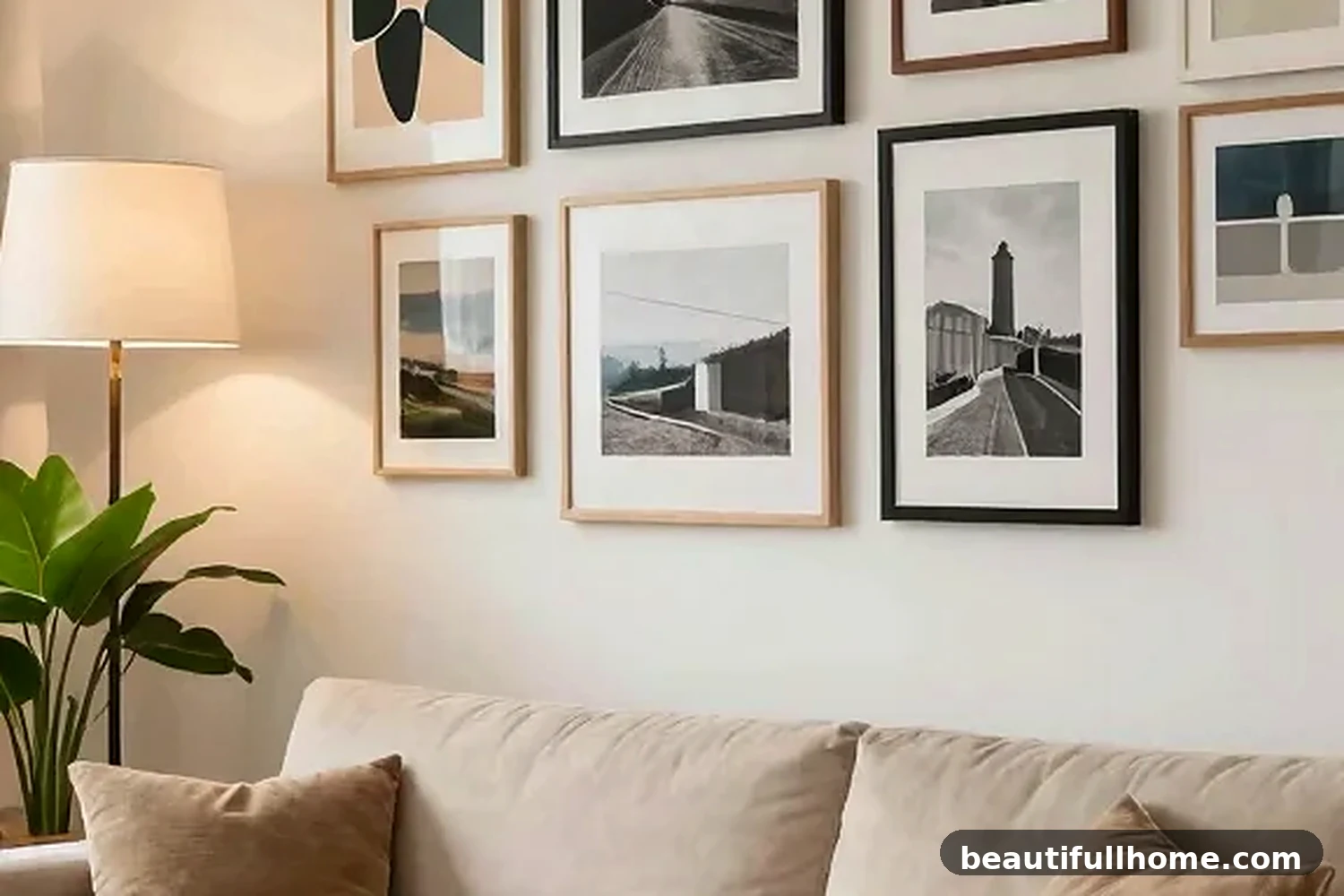
An edited gallery wall works in a small living room, but only as one deliberate moment, not scattered across every wall. Pick a single wall, usually above the sofa, and hang 5-9 pieces in a tight grid or salon cluster with 2-3 inches between frames, because one concentrated art moment reads as confident design while the same frames spread across three walls read as clutter. Stick to two frame finishes maximum, black plus natural wood is foolproof, mix sizes but keep one dominant piece around 16×20 inches to anchor the wall, and lay the arrangement on the floor first and photograph it before hanging, because a gallery wall planned on the floor goes up straight and a gallery wall planned on the wall goes up crooked. The wall colors that go behind a gallery wall are in our Small Living Room Paint Ideas: 12 Colors That Work guide.
Cost: $80-$300 entry, sweet spot $129-$219. Watch out: a gallery wall with more than 9 pieces or more than two frame finishes reads as a collage of leftovers, so edit ruthlessly, and use removable adhesive strips rated for the frame weight if you rent, because nail holes in a rental cost you the deposit.
3. Curtains hung high and wide: the under-$60 trick
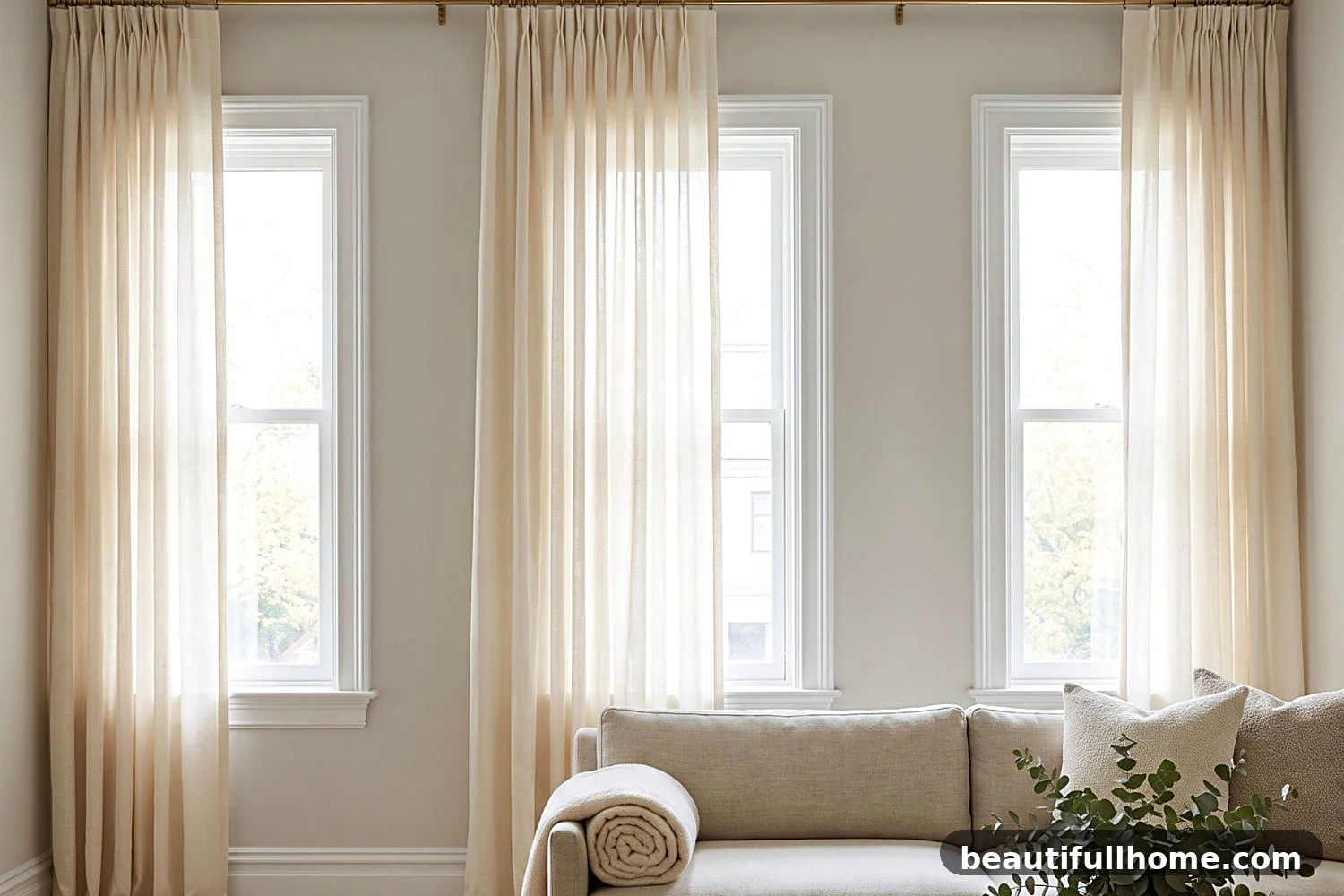
Curtains hung high and wide are the highest-impact, lowest-cost change on this list, because the rod placement alone makes the window look twice its size. Mount the curtain rod 4-6 inches below the ceiling and extend it 4-6 inches beyond each side of the window frame, then hang panels that just kiss the floor, so the eye travels up to the ceiling line and the wall around the window gives the room borrowed space. Pick panels 1.5-2 times the window width for proper fullness, and linen or linen-look fabrics that filter light softly without heavy visual weight, because oppressive dark window treatments weigh a small living room down. One continuous rod looks cleaner than two short ones on wide windows, and a tension rod inside the frame works for renters who cannot drill.
Cost: $40-$150 entry, sweet spot $59-$99. Watch out: curtains that stop at the windowsill cut the wall in half and make the ceiling read as lower, so always go floor-length, and panels narrower than the window look skimpy when closed, so measure the fullness before you buy.
4. Two-color palette: two colors plus neutrals
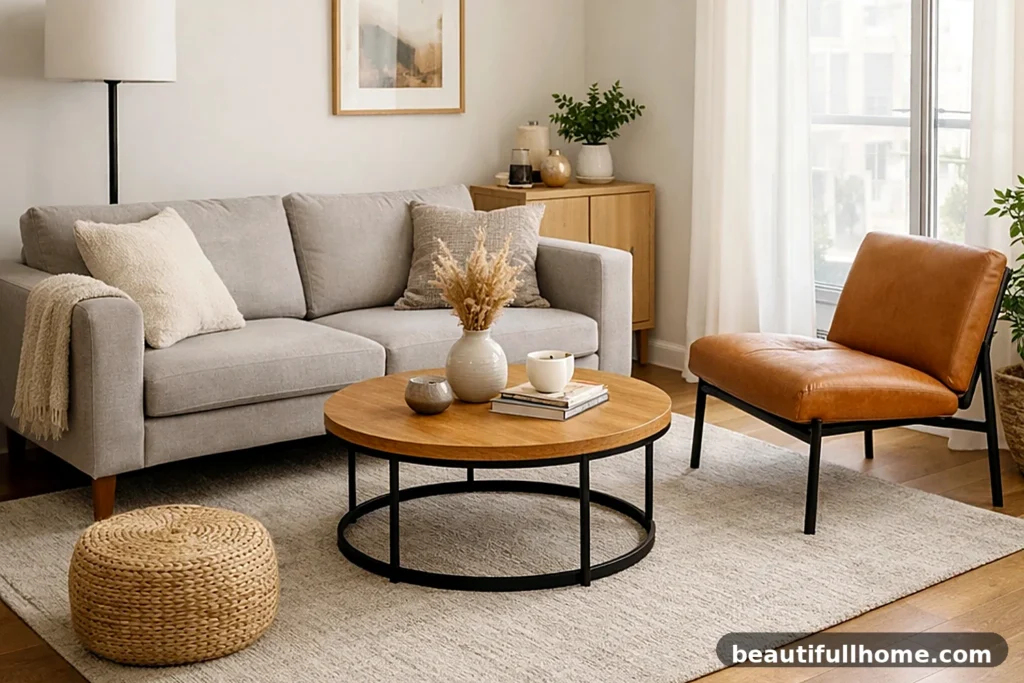
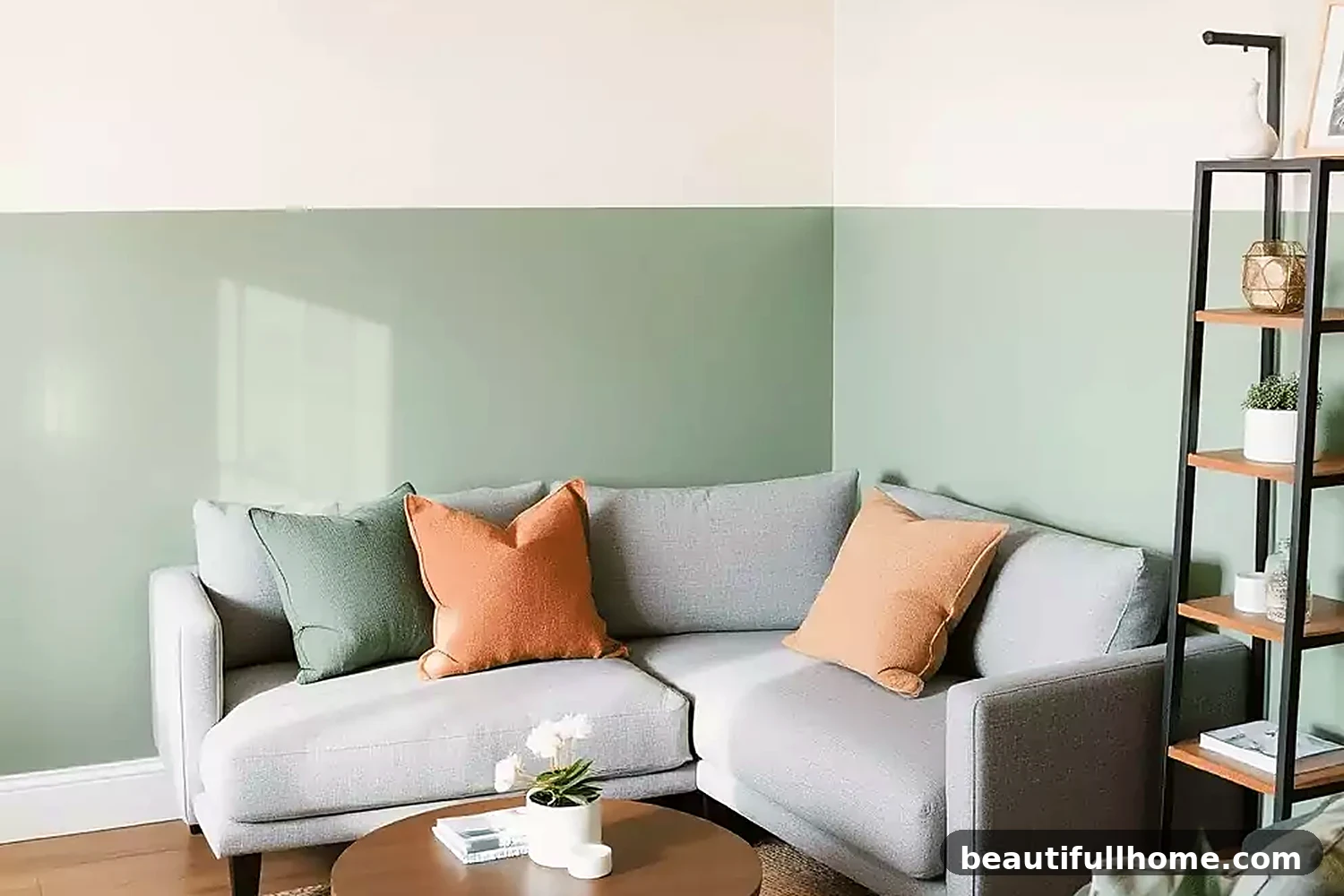
A two-color palette keeps a small living room calm, because every pillow, throw, frame and vase answers to one of two colors plus neutrals, and disparate objects look like they belong together. Pick neutrals for the big pieces, the sofa, the rug and the curtains, and spend your two colors on the small swappable things, pillows, throws, art and plant pots, so you can change the room for $50 instead of $500. Warm white and caramel, soft gray and sage, or navy and brass all work, and texture does the talking within the palette, because boucle, linen and wood grain add depth without new hues. When thrifting, carry a phone photo of the palette and check every candidate against it, because one off-palette piece breaks the calm.
Cost: $50-$200 entry, sweet spot $79-$149. Watch out: a third or fourth accent color in 150 sq ft is another visual interruption, and interruptions make small spaces feel smaller and more chaotic, so stop at two, and keep the big pieces neutral, because a colored sofa locks the palette for years.
5. Leggy furniture only: let the floor show
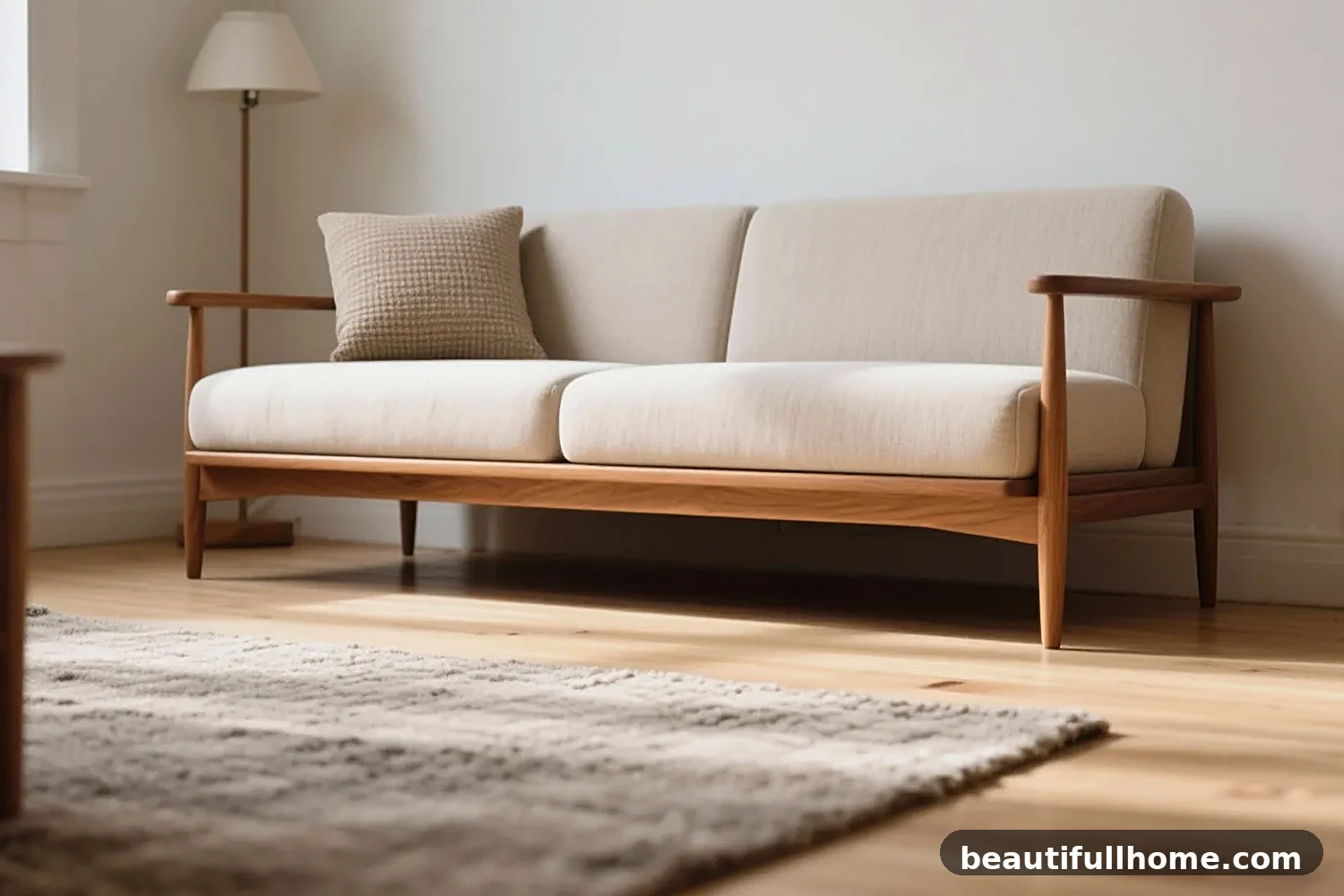
Leggy furniture only is a rule, not a purchase: in a compact room, furniture that sits flat on the floor reads as one heavy block, while furniture raised on legs, even 4-6 inches, lets the eye travel underneath, which registers as extra square footage your brain counts as usable space. A leggy sofa, media console and armchair together can make a 12×14 room feel noticeably more open without moving a single wall, because visible floor equals perceived space. Pick sofas and chairs with tapered or turned legs 4 inches or taller, media consoles and sideboards on legs rather than plinth bases, and coffee tables with an open lower shelf instead of a solid base, and avoid skirts, slipcovers that pool, and blocky cube ottomans as main pieces. The sofa sizes and leg heights that go with this rule are in our Sofa Ideas for Small Living Room: 12 Picks That Fit guide.
Cost: $0 if you already own leggy pieces, or the price of the furniture you were buying anyway. Watch out: a leggy sofa with a skirt defeats the purpose, because the skirt hides the floor, and a glass table feels lighter than a wooden one for the same reason, so keep the sight lines open.
6. Go vertical: tall bookcase and floating shelves
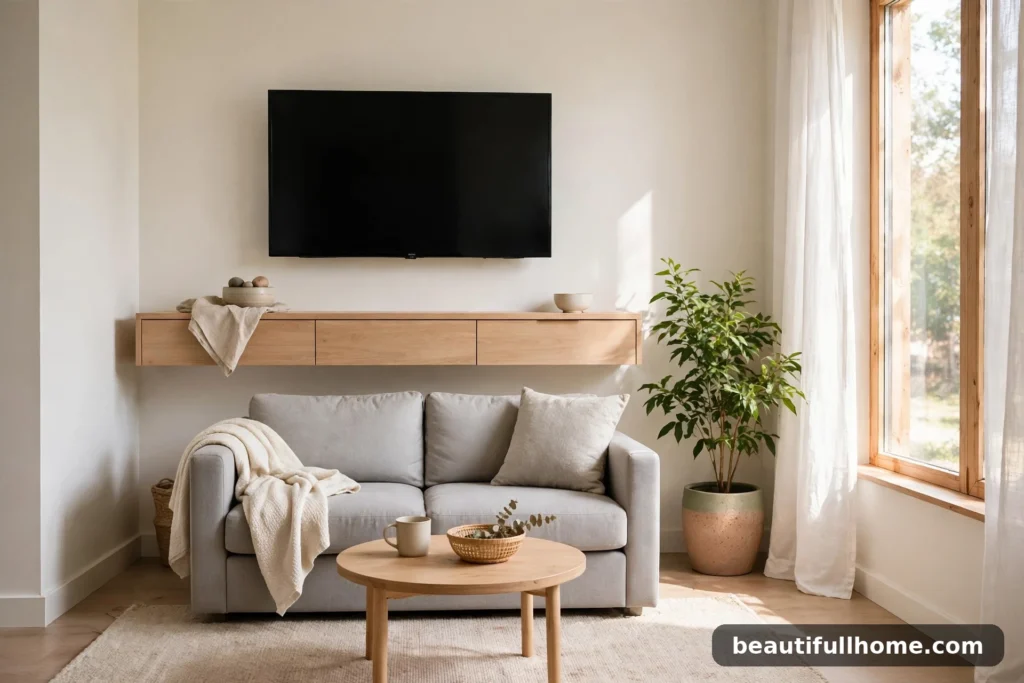
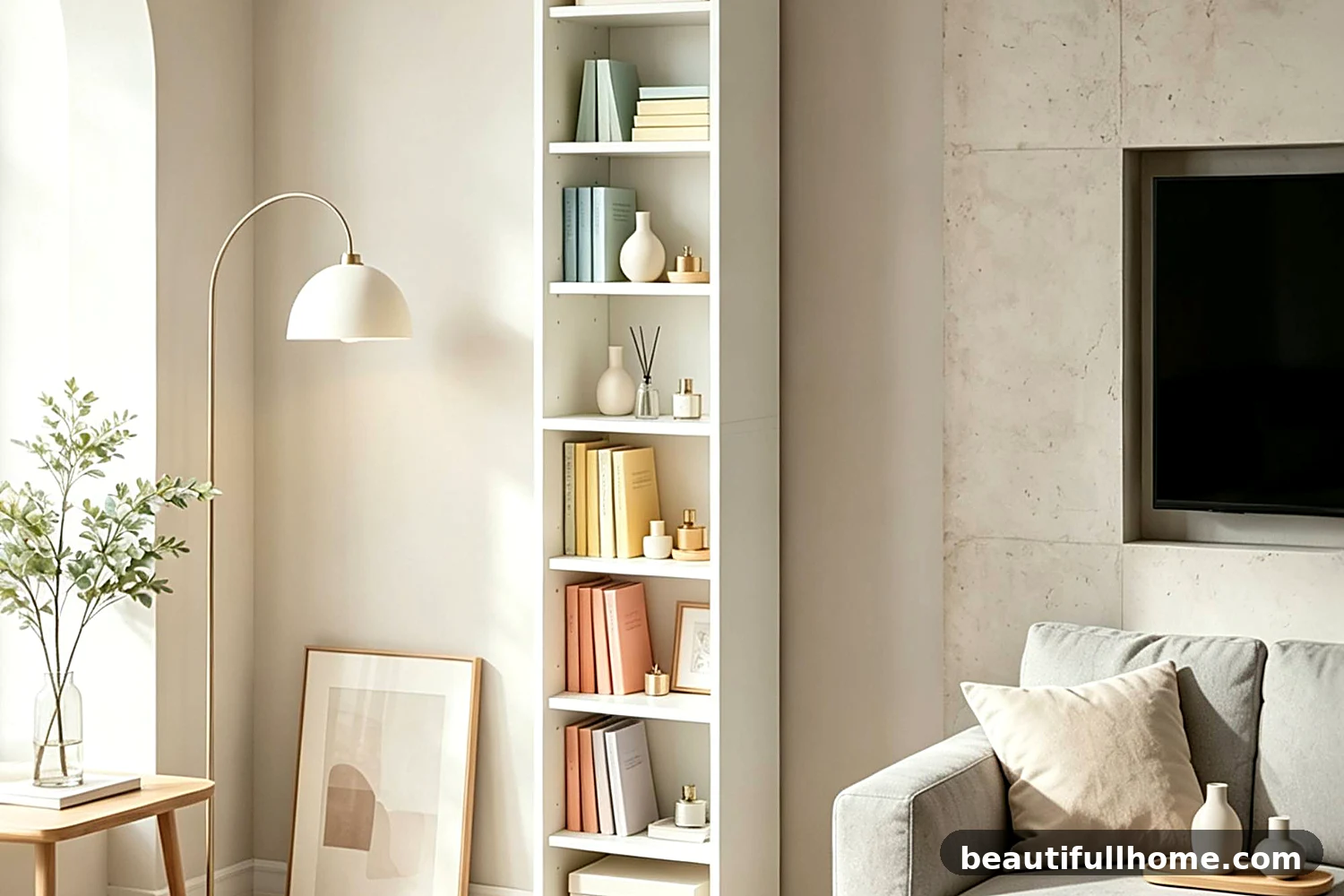
Going vertical uses the most underused dimension in a small room, because one tall narrow bookcase, 72 inches high and 24 inches wide, holds as much as a wide low unit while taking half the footprint, and it draws the eye upward, making ceilings feel taller. Style the shelves with the 70/30 rule, 70 percent books and functional items, 30 percent decor, and leave some shelves partially empty, because negative space keeps the shelves airy and a shelf packed edge to edge reads as a storage unit. Floating shelves add the same layered look without a single inch of floor footprint, so put two on an empty wall at eye level, 12-18 inches apart, and style them like a vignette, not like overflow storage. Anchor tall bookcases to the wall with anti-tip hardware, especially with kids or pets, and mount floating shelves into studs, because heavy-duty drywall anchors hold up to 50 pounds per shelf and a shelf that falls takes the wall with it.
Cost: $80-$300 for a tall bookcase, $30-$120 for two floating shelves. Watch out: a tall bookcase that is not anchored is a tip-over risk, and shelves styled with too many small objects read as clutter, so group in threes with varied heights and leave breathing room.
7. One statement plant: one big plant, not ten small ones
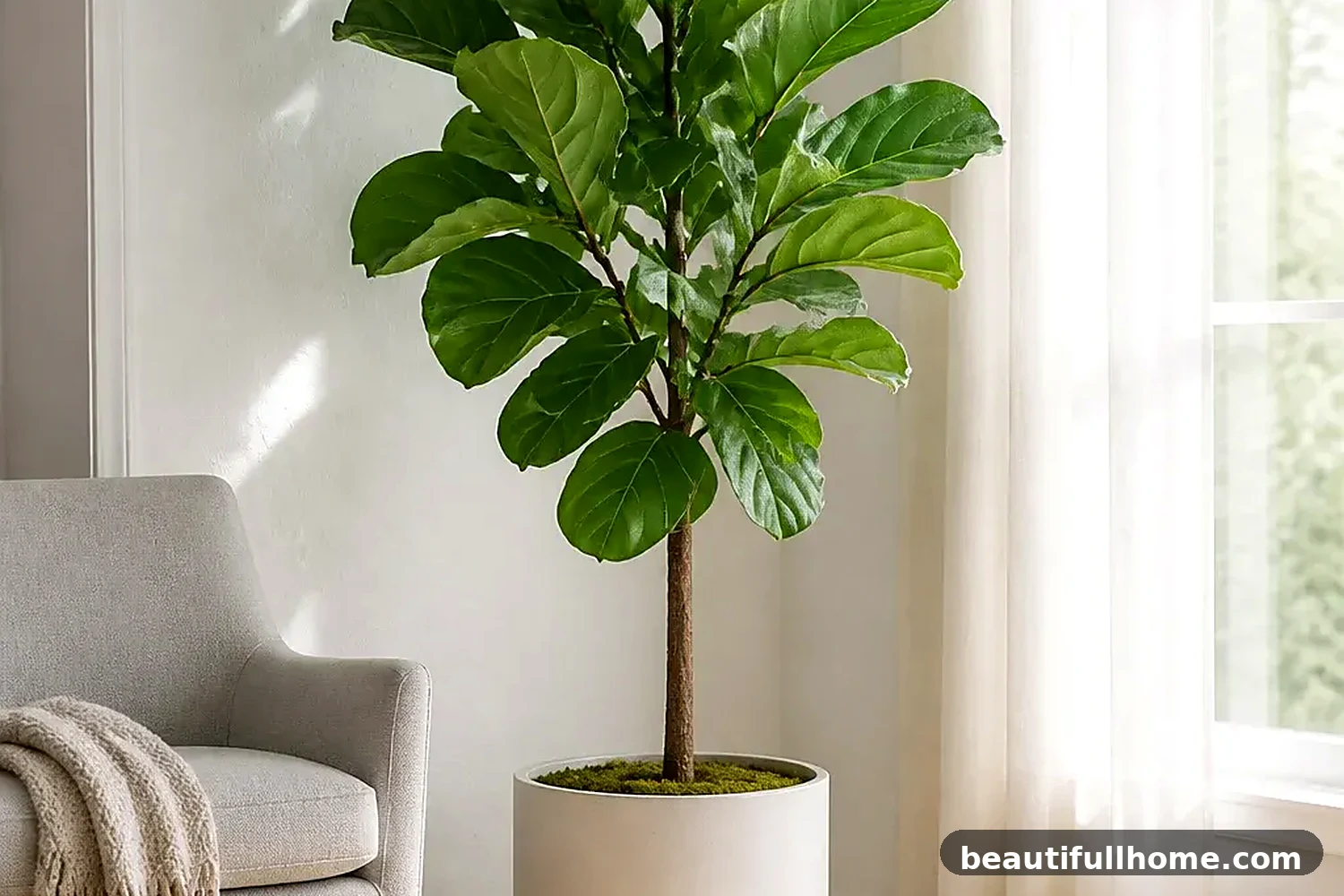
One statement plant delivers more life, height and sculptural presence than a dozen small pots combined, because a single large plant reads as a deliberate design choice while many small plants read as a collection that needs dusting. Pick one 4-5 ft plant, a fiddle leaf fig, an olive tree or a bird of paradise, in a single corner, because the height fills vertical dead space, the organic shape softens all the room's rectangles, and one pot means one watering schedule instead of ten. Match the plant to your light, bright indirect for figs, tolerant ZZ or snake plants for dark corners, and use a pot 2 inches wider than the nursery pot with drainage, in a finish that matches your palette. Elevate it on a 6-inch plant stand to add height without a bigger plant, and faux is fine if your light is hopeless, but buy the best quality you can, because cheap fakes read instantly.
Cost: $40-$150 entry, sweet spot $59-$99. Watch out: a plant in the wrong light dies in weeks, so match the plant to the window before you buy, and a plant that blocks the walkway is a trip hazard, so keep it in a corner, not in the path.
8. Throw pillow formula: odd numbers, one palette
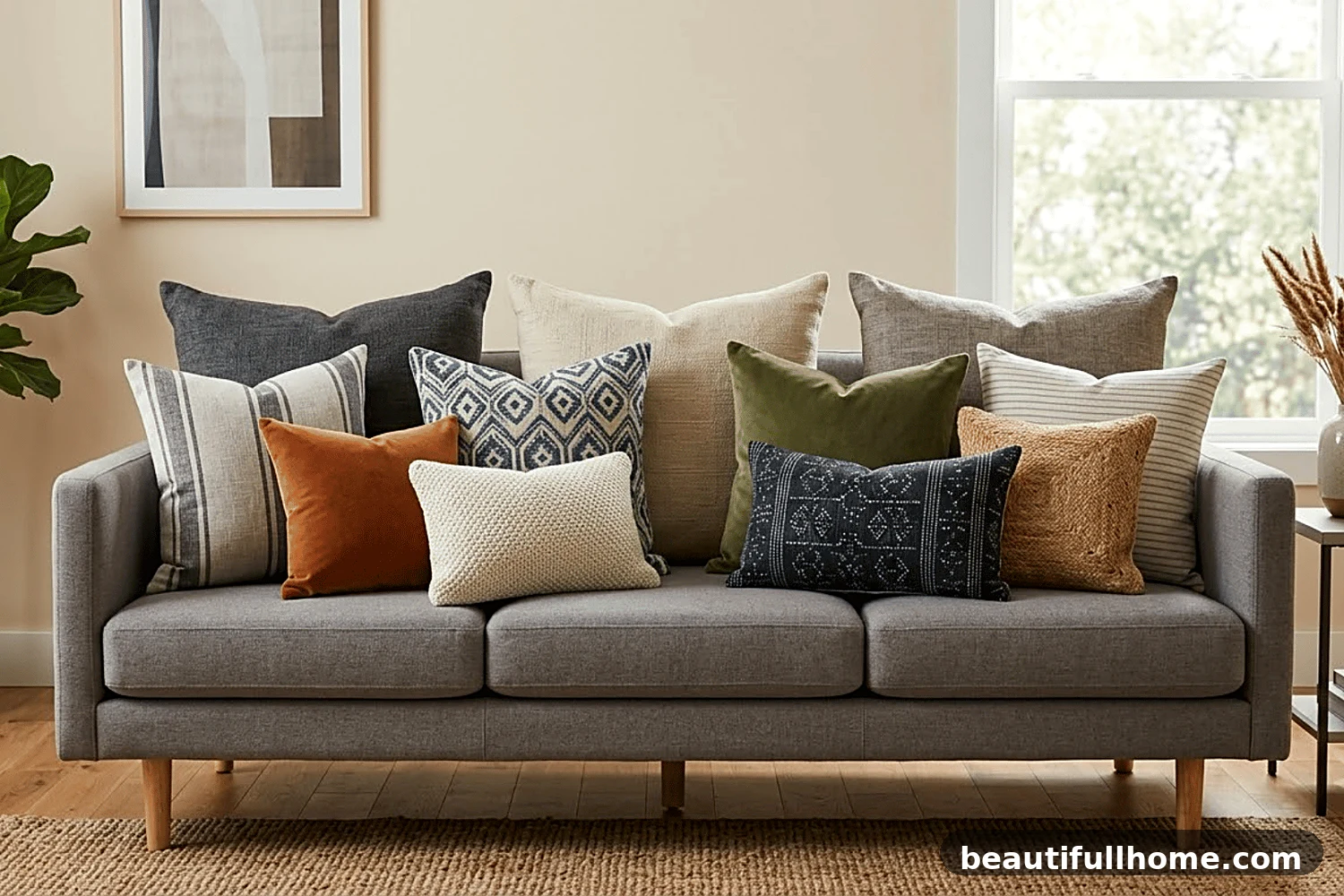
Throw pillows are the cheapest decor refresh in existence, but only if you follow the formula: odd numbers, mixed textures, one palette. Three pillows on a loveseat and five on a full sofa, never matched sets lined up like soldiers, because odd numbers look collected and even numbers look staged. Mix textures, boucle, linen, velvet and leather, in one palette, so the pillows add depth without new colors, and use one lumbar pillow for the middle, because a lumbar pillow breaks the row of squares. The farmhouse version, with the textures and colors that go with it, is in our Small Farmhouse Living Room Ideas: 12 Cozy Looks guide.
Cost: $30-$120 entry, sweet spot $49-$89. Watch out: too many pillows eat the seat, so stop at five on a full sofa and three on a loveseat, and a pillow that matches the sofa exactly disappears, so pick pillows a shade darker or lighter than the sofa.
9. Tray-corralled coffee table: one tray, three items
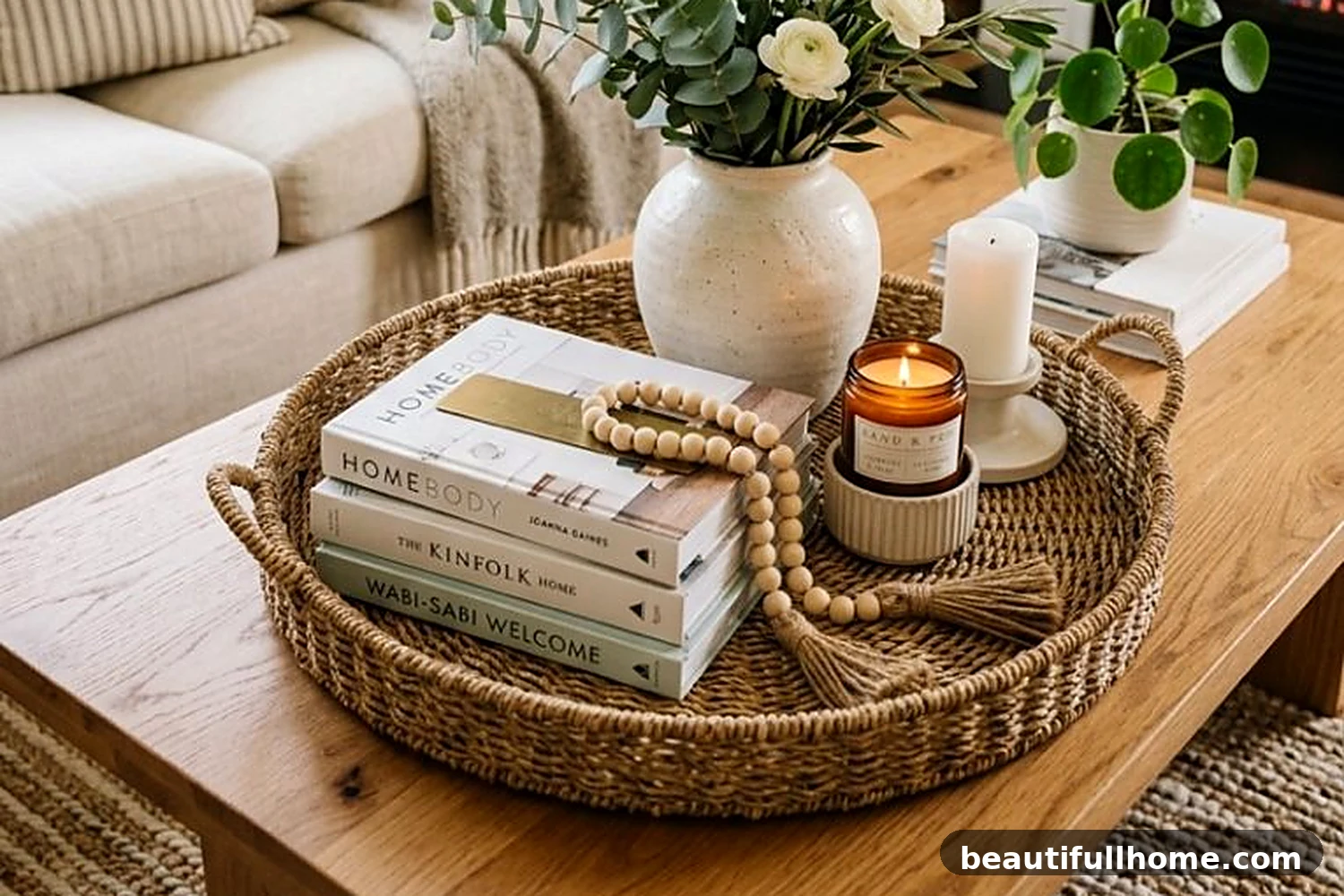
A tray-corralled coffee table stays styled because the tray creates a visual border that tells the eye the arrangement is deliberate, while the empty table surface around it signals order. Use one tray roughly 16×20 inches, and put three items on it: something tall, a small vase with stems or a candlestick, something low, a stack of two coffee table books, and something living or textural, a small plant or a bowl of stones, and stop there, because odd numbers only, three to five objects per tray, never more. The whole arrangement lifts away in one motion when you need the table for guests, which is the point: the tray is decor and the table is still usable. The coffee table sizes and types that go under the tray are in our Coffee Table Ideas for Small Living Room: 12 Picks That Fit guide.
Cost: $20-$60 entry, sweet spot $29-$49. Watch out: a tray that covers the whole table leaves no spot for a mug, so keep the tray to about two-thirds of the table, and a tray with ten objects is not a tray, it is clutter with a border.
10. Corner reading nook: give one corner a job
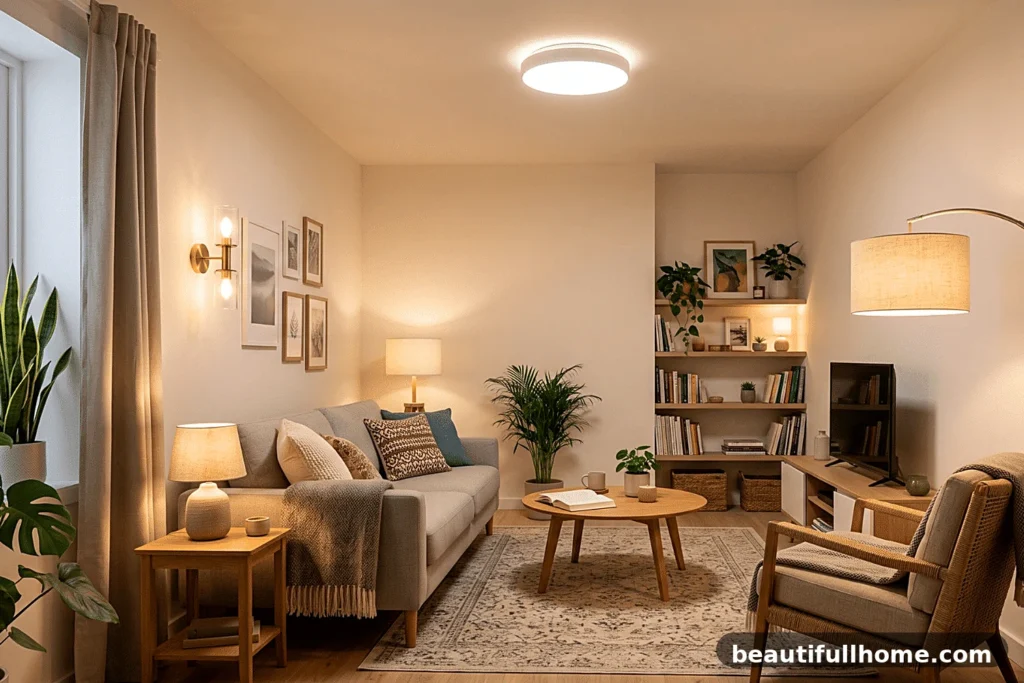
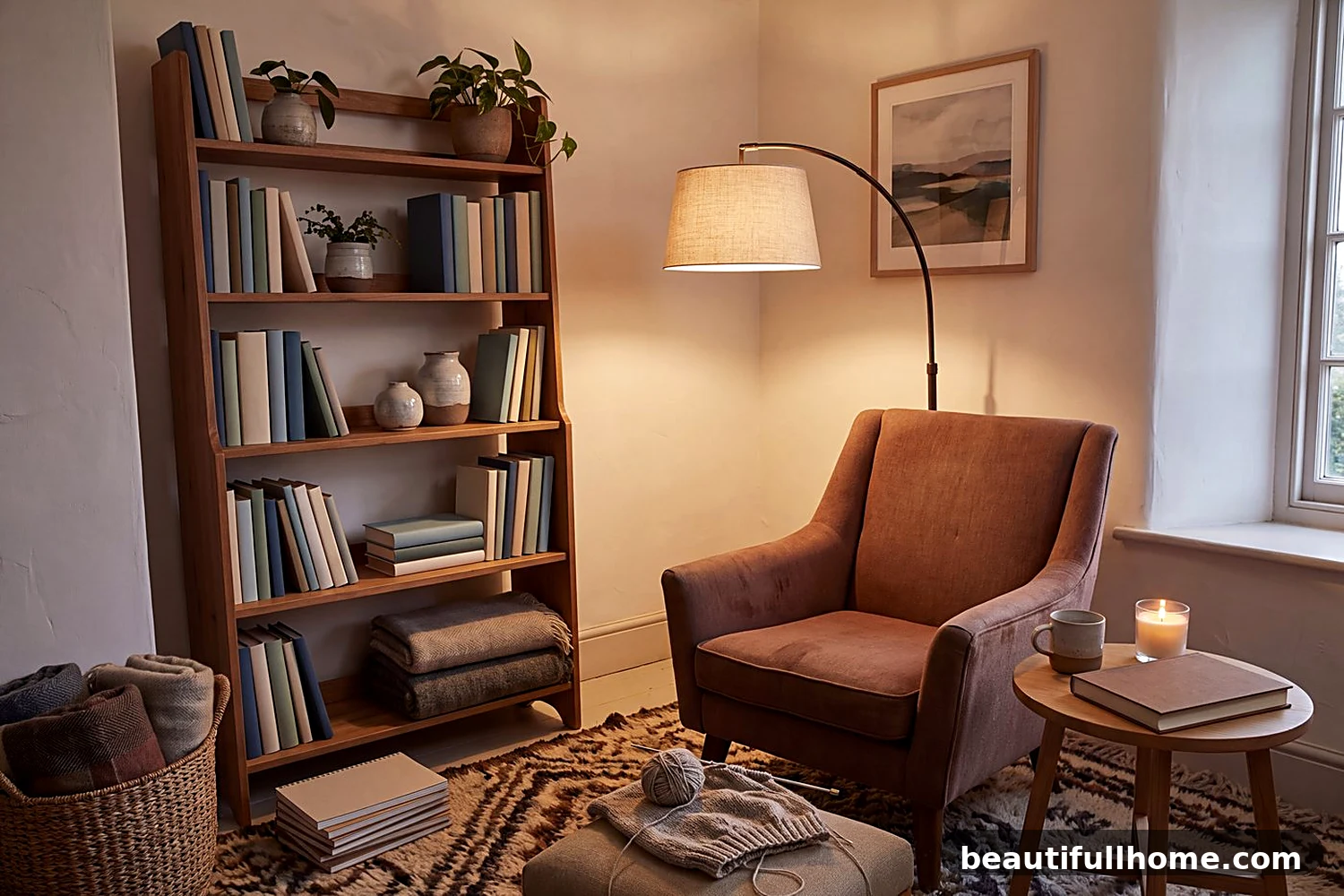
A corner reading nook gives one corner a job, and a purposed corner is square footage your brain counts twice, while an undefined corner is dead space that shrinks the room. Build it in a 4×4 ft corner: a compact armchair under 30 inches wide angled at 45 degrees, a slim floor lamp arched over the shoulder, and a side table just big enough for a book and a mug, 14 inches across or even a sturdy plant stand, plus one throw and one lumbar pillow to signal that the spot is for lingering. It suits a living room with an unused corner, a studio that needs defined zones, and a household where someone reads while someone else watches TV, because the nook is a second destination inside one room. The lighting that goes over the chair is in our Small Living Room Lighting Ideas: 12 Bright Ideas guide.
Cost: $100-$300 entry, sweet spot $149-$249. Watch out: a nook that is too big eats the room, so keep it to 4×4 ft, and a lamp that is too short leaves the reader in the dark, so the light should sit over the shoulder, not behind the chair.
11. Behind-sofa console: a slim surface that costs no floor
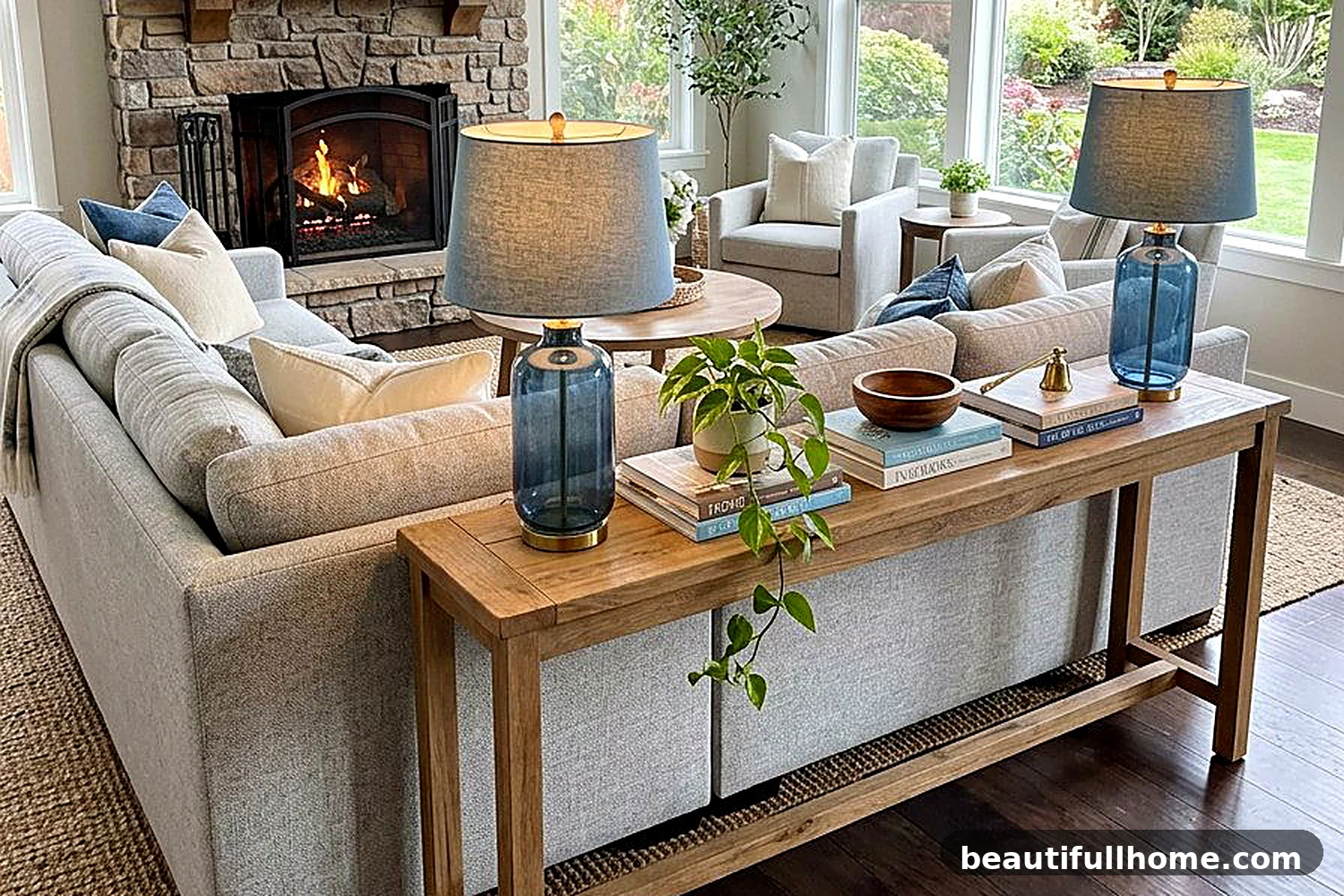
A behind-sofa console is a slim surface that costs no floor, because it sits behind the sofa in the gap most rooms waste, and it holds lamps, keepsakes and books without taking a single inch of walkway. Pick one 10-14 inches deep and about two-thirds as long as the sofa, so it reads as part of the sofa, not as a separate piece, and keep it low, under 30 inches high, so it does not block the sight line over the sofa. It suits a room where the sofa floats in the middle, because the console finishes the back of the sofa, a room with no side tables, and a room where the sofa faces the TV and the wall behind it is bare. Style it with a lamp on one end, a stack of books in the middle, and one object on the other end, because three items on a console read as styled and ten read as a shelf.
Cost: $80-$250 entry, sweet spot $119-$199. Watch out: a console deeper than 14 inches pushes the sofa into the room and eats the walkway, so measure the gap first, and a console taller than the sofa back blocks the view, so keep it under the sofa back height.
12. Negative space on purpose: edit ruthlessly
Negative space on purpose is the cheapest decor idea on this list, because it costs nothing and it makes every other idea work better. Small rooms show clutter immediately, so display a few meaningful items and store the rest: a coffee table with a tray, a plant and one book looks calm, while the same table with ten objects looks crowded. Pick one wall to be the gallery, rather than spreading art across all four, choose a few larger pieces rather than many small ones, because large art can actually make a room feel more spacious while a scatter of tiny frames adds visual noise, and leave some shelves partially empty, because empty space is what makes the full space read as intentional. Cable management is often overlooked, so use cord covers, clips and a media console with a back opening, because visible cords undo every other decor choice in the room.
Cost: $0, or under $30 for cord covers and clips. Watch out: editing does not mean emptying, because a room with nothing on the walls feels like a waiting room, not a home, so keep the one gallery wall, the one mirror and the one plant, and remove the rest.
How much does decorating a small living room cost
Decorating a small living room costs from $0 for editing what you already own to about $600 for a full refresh, and the sweet spot for most rooms is $100-$300, which buys a mirror, curtains and pillows, the three pieces that change the room most. Start with the mirror, the curtains and the pillows, because those three cost under $300 together and they change the light, the height and the color of the room in one weekend. Buy the big pieces in neutrals and spend the color money on small swappable things, because a $50 pillow refresh changes the room for a season while a $500 colored sofa locks it for years. Prices are typical US retail ranges for 2026, so check current prices before you buy.
| Decor piece | Typical price range | Sweet spot |
|---|---|---|
| Large mirror | $60-$250 | $99-$179 |
| Gallery wall | $80-$300 | $129-$219 |
| Curtains | $40-$150 | $59-$99 |
| Pillows and throws | $50-$200 | $79-$149 |
| Tall bookcase | $80-$300 | $129-$219 |
| Floating shelves (pair) | $30-$120 | $49-$89 |
| Statement plant | $40-$150 | $59-$99 |
| Tray and coffee table styling | $20-$60 | $29-$49 |
| Reading nook | $100-$300 | $149-$249 |
| Behind-sofa console | $80-$250 | $119-$199 |
| Editing and cable management | $0-$30 | $0-$30 |
Small apartment living room decor: the renter plan
Small apartment living room decor follows the same 12 ideas, but every fix must leave no holes, because the deposit depends on it. Hang the gallery wall with removable adhesive strips rated for the frame weight, and lay the arrangement on the floor first, because a strip that fails drops the frame and the wall. Use tension rods inside the window frame for curtains, and skip the high-and-wide trick where you cannot drill, focusing on full-length panels instead. Lean the mirror against the wall and anchor the top with an adhesive bumper, because a leaning mirror needs no holes at all. Use a tall narrow bookcase instead of floating shelves, because shelves need studs and a bookcase needs floor space you already have. Pick removable wallpaper for one accent wall, because it peels off clean and it gives the room the color a painted wall would. The full rental-friendly version with no-drill ideas is in our Small Apartment Living Room Ideas: 15 Rental-Friendly Ways guide.
Mistakes to avoid with small living room decor
The most common mistake is too many small things, because ten small objects on a shelf read as clutter while three larger objects read as styled, and small rooms punish clutter faster than big rooms do. The second mistake is too many colors, because each new color in 150 sq ft is another visual interruption, so stop at two colors plus neutrals. The third mistake is a mirror facing clutter, because the mirror doubles the mess, so place it opposite a window, not opposite the TV or the toy pile. The fourth mistake is art hung too high or too small, because art with its center above 60 inches reads as a mistake and art smaller than half the sofa looks lost. The fifth mistake is curtains too short or too narrow, because curtains that stop at the windowsill cut the wall in half and panels narrower than the window look skimpy. The sixth mistake is a rug too small, because a tiny rug floating in the middle of the floor chops the room into pieces, so the rug should be at least two-thirds as long as the sofa with the front legs on it. The seventh mistake is pushing everything flush to the walls, because floating a small sofa a few inches off the wall makes the room feel more intentional, not smaller. The rug size that fixes the sixth mistake is in our What Size Rug for Living Room guide.
Which decor idea should you pick
Pick by what the room lacks, not by what looks good in the shop. If the room is dark, pick the mirror and light colors, because a mirror doubles the daylight. If the ceiling feels low, pick curtains hung high and tall plants or bookcases, because vertical lines pull the eye up. If the room feels narrow, pick a round mirror and an oval rug, because circles soften long walls. If the room feels busy despite not having much stuff, pick the two-color palette and negative space, because the problem is visual noise, not volume. If the walls are bare, pick the gallery wall and the mirror, because one concentrated art moment and one large mirror finish a room. If you rent, pick the renter plan, because adhesive strips, tension rods and leaning mirrors leave no holes. If you have kids or pets, pick wipeable fabrics, rounded corners and the ottoman instead of a glass table, because glass and sharp frames do not survive small children. If your budget is under $100, pick the curtains and the pillows, because those two change the room most for the least money.
Frequently asked questions
What is the best decor for a small living room?
The best decor for a small living room is one large mirror, one edited gallery wall, curtains hung high and wide, and a two-color palette, because those four make the room look bigger, feel calmer and work harder without taking floor space. Start with the mirror, the curtains and the pillows, because those three cost under $300 together and they change the light, the height and the color of the room in one weekend.
How do you decorate a small living room without making it look cluttered?
Use fewer, larger pieces and leave negative space on purpose. Pick one wall for the gallery, one large mirror, and one tray with three items on the coffee table, and store the rest. Follow the two-color palette rule, because each new color in a small room is another visual interruption, and keep the rug at least two-thirds as long as the sofa, because a rug that is too small chops the room into pieces.
How big should art be above a sofa in a small living room?
Art above a sofa should be about two-thirds as wide as the sofa, so a 72-inch sofa takes art 44-48 inches wide, and its center should sit 57-60 inches from the floor. A single piece smaller than half the sofa looks lost, and a gallery wall hung too high reads as a mistake, so measure the wall and lay the arrangement on the floor first.
Can renters decorate a small living room without drilling?
Yes. Hang the gallery wall with removable adhesive strips rated for the frame weight, use tension rods inside the window frame for curtains, lean the mirror against the wall with an adhesive bumper, use a tall bookcase instead of floating shelves, and pick removable wallpaper for one accent wall. All of it comes off clean when you move.
What colors make a small living room look bigger?
Light neutrals make a small living room look bigger, because they reflect light and blur the edges of the room, and a palette of two colors plus neutrals keeps the room calm. Dark colors can work too if used with intention, because a deep green or navy on all walls makes a small room feel enveloping and rich instead of cramped, especially in a room with little natural light.
Conclusion
A small living room does not need more decor. It needs fewer, better pieces in the right sizes: one large mirror, one edited gallery wall, curtains hung high and wide, and a palette of two colors plus neutrals. Measure the wall, hang art at eye level, and edit ruthlessly, because a room with one focal wall and empty surfaces feels designed, while a room with a little decor on every wall feels crowded. The layout that goes with the decor is in our Small Living Room Layout: 7 Layouts With Measurements guide, the sofa sizes are in our Sofa Ideas for Small Living Room: 12 Picks That Fit guide, the coffee table under the tray is in our Coffee Table Ideas for Small Living Room: 12 Picks That Fit guide, and the rug under it all is in our What Size Rug for Living Room guide.