Small Living Room Bay Window Ideas: 12 Ways That Work
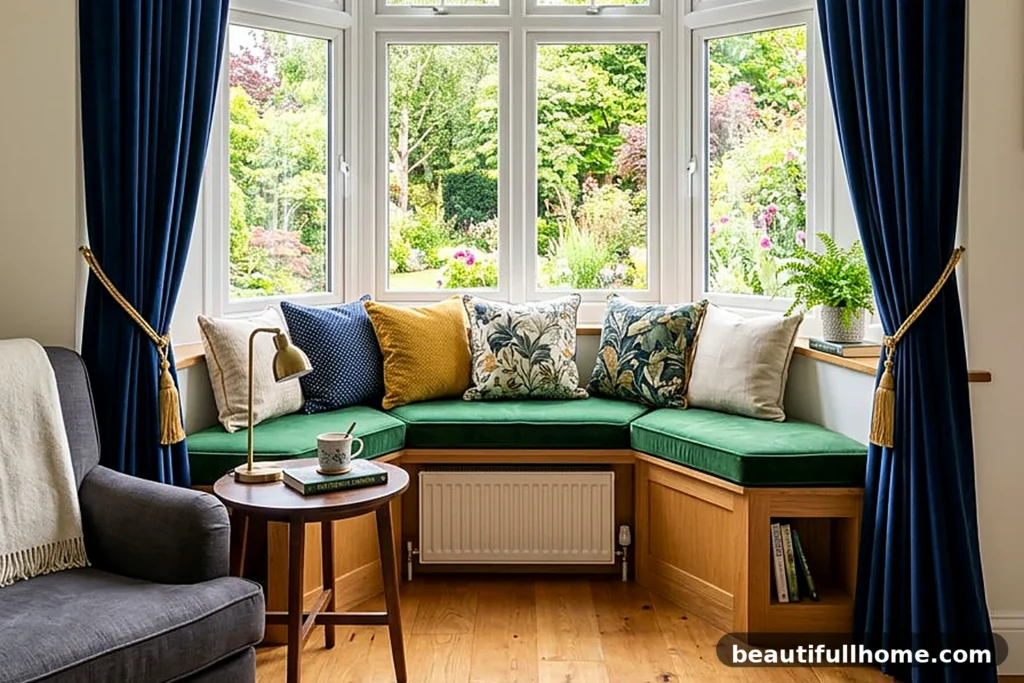
The best small living room bay window idea is a window seat, because a bay window should be the best seat in the house, and in most small living rooms it ends up as dead space: too angled for the sofa, too bright for the TV, and just deep enough to collect a plant and good intentions. Give the bay one clear job, seat, reading corner, plant shelf, or extra storage, pick one, size it honestly, and that awkward angle becomes the spot everyone fights over. A comfortable window seat sits 17 to 19 inches high including the cushion, roughly chair height, so feet rest flat on the floor, and 18 to 22 inches deep for sitting upright with a book. Keep the cushion and pillow line below the window sill's main sightline, with low-profile cushions around 3 to 4 inches thick, because a bay window exists to bring in light. A freestanding bench costs $80-$200, a built-in bench with drawers costs $300-$900 in materials, and the cheapest refresh on this list, a seasonal cushion swap, costs $25-$60.
What size should a bay window seat be
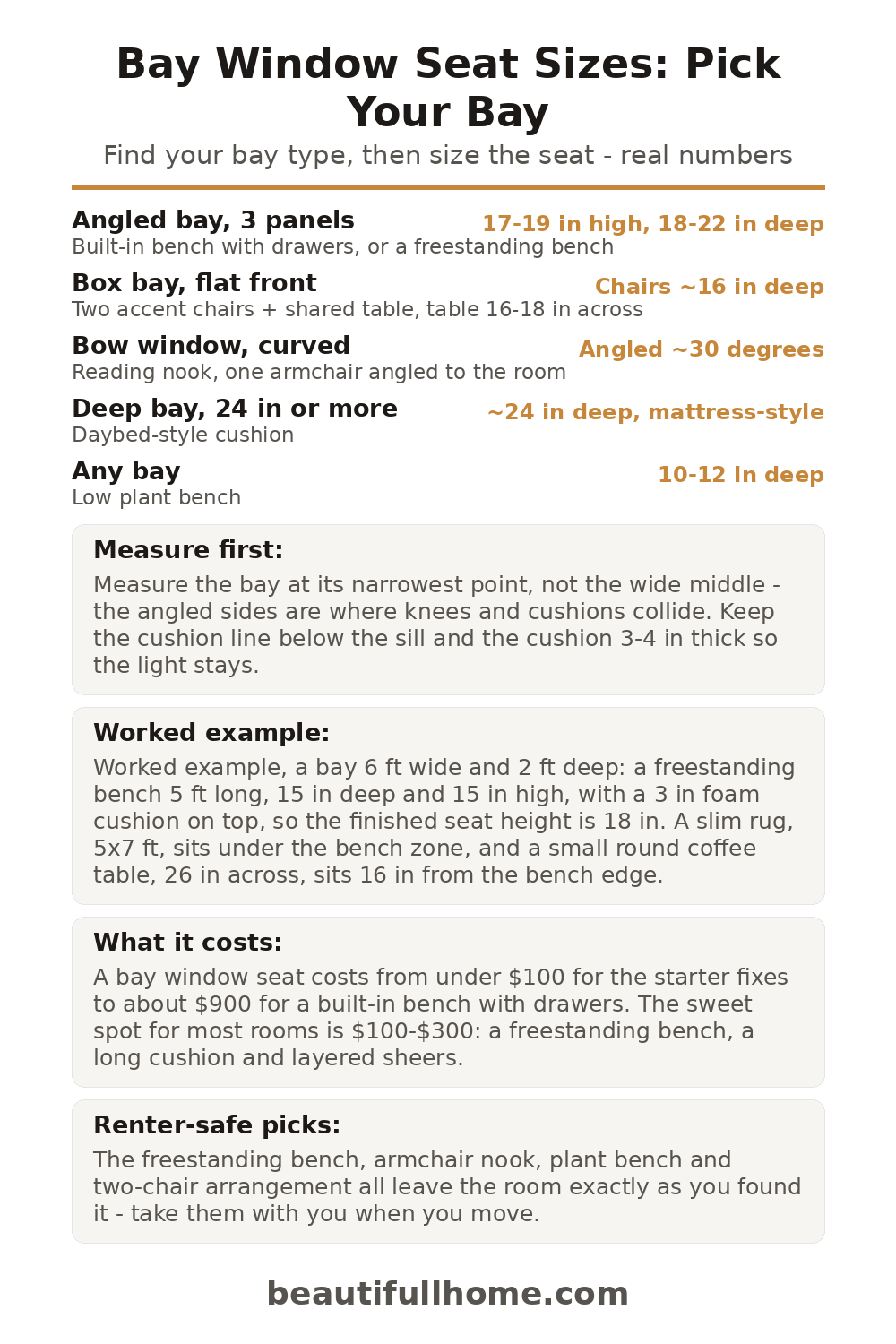
A bay window seat should be 17 to 19 inches high including the cushion and 18 to 22 inches deep, because that is chair height, so feet rest flat on the floor, and deep enough to sit upright with a book. Go much higher and it feels like a perch; much lower and standing up becomes a small workout, especially for older guests. If you want to stretch out sideways with legs up, you need 24 inches or more. Measure the bay at its narrowest point, not the wide middle, because the angled sides are where knees and cushions collide. The bay type decides the seat, not the other way around, so read the table and find your bay first. An angled bay takes a built-in bench or a freestanding bench, a box bay takes two chairs, and a bow window takes a reading nook. The room plans that go with these numbers are in our Small Living Room Layout: 7 Layouts With Measurements guide, so this post sizes the seat, not the layout. Prices are typical US retail ranges for 2026, so check current prices before you buy.
| Bay type | Best seat | Seat size | Best for |
|---|---|---|---|
| Angled bay, 3 panels | Built-in bench with drawers | 17-19 in high, 18-22 in deep | Storage + the classic look |
| Angled bay, 3 panels | Freestanding bench | 14-16 in deep, a few inches shorter than the center section | Renters + no-build |
| Box bay, flat front | Two accent chairs + shared table | Chairs use ~16 in depth, table 16-18 in across | Wide but shallow bays |
| Bow window, curved | Reading nook, one armchair | Chair angled ~30 degrees toward the room | Light + conversation |
| Deep bay, 24 in or more | Daybed-style cushion | ~24 in deep, mattress-style | Naps + guests |
| Any bay | Low plant bench | 10-12 in deep | Light-hungry plants |
Small living room bay window ideas: the rules
A bay window works best when every inch has a job, because the recess is small and every piece in it must justify its presence. Start with seat height, then depth, then the light rule: keep the cushion and pillow line below the window sill's main sightline, and choose low-profile cushions around 3 to 4 inches thick. A bay window exists to bring in light, and a mountain of tall pillows that blocks the lower glass throws away the one thing the bay does better than any other wall. A slim rug under the seat zone helps define it, and a low bench or sturdy ledge shelf, 10 to 12 inches deep, holds a row of pots without blocking the glass. Measure the bay at its narrowest point, hold the seat at 17 to 19 inches high and 18 to 22 inches deep, and keep cushions low enough to protect the light. The furniture sizes that go with every seat are in our Furniture Ideas for Small Living Room: 12 Smart Picks guide.
1. Built-in bench with storage drawers
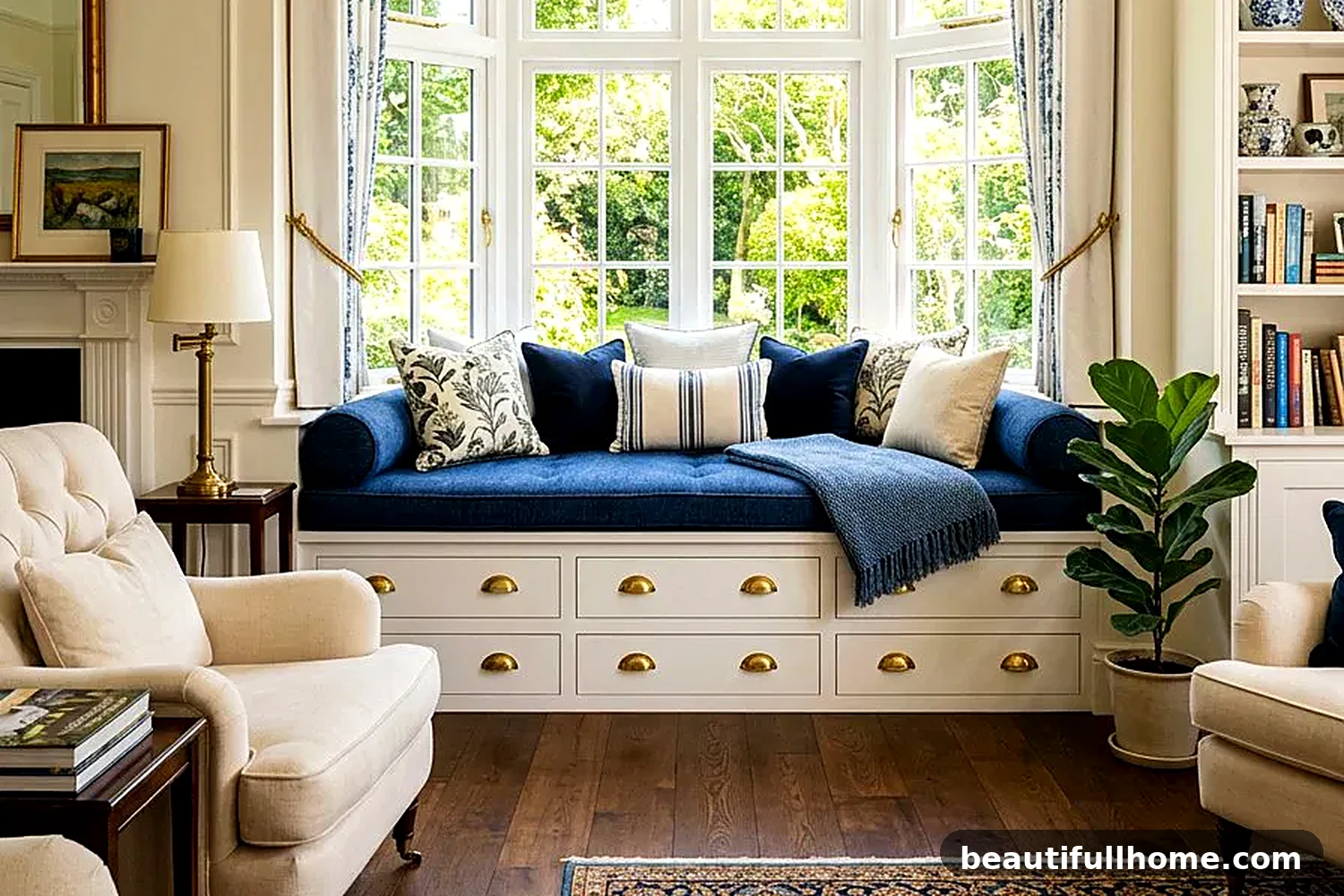
The built-in bench with storage drawers is the classic answer and still the best one for most homes, because a built-in bench follows the bay's angles exactly, and drawers underneath swallow throws, board games and spare cushions. A simple painted plywood build with two or three drawers typically costs $300 to $900 in materials, or $150 to $400 if you assemble flat-pack drawer units and trim them to fit. Top it with a foam cushion 3 to 4 inches thick in a washable linen blend, and choose removable covers from day one, because a sunny seat collects dust and the occasional coffee ring.
Cost: $300-$900 in materials, sweet spot $500-$700; $150-$400 for the flat-pack route. Watch out: a built-in is permanent, so it suits a home you own, not a rental, and a cushion thicker than 4 inches raises the seat above the comfortable 17 to 19 inch height and starts blocking the lower window glass.
2. Reading nook with one armchair
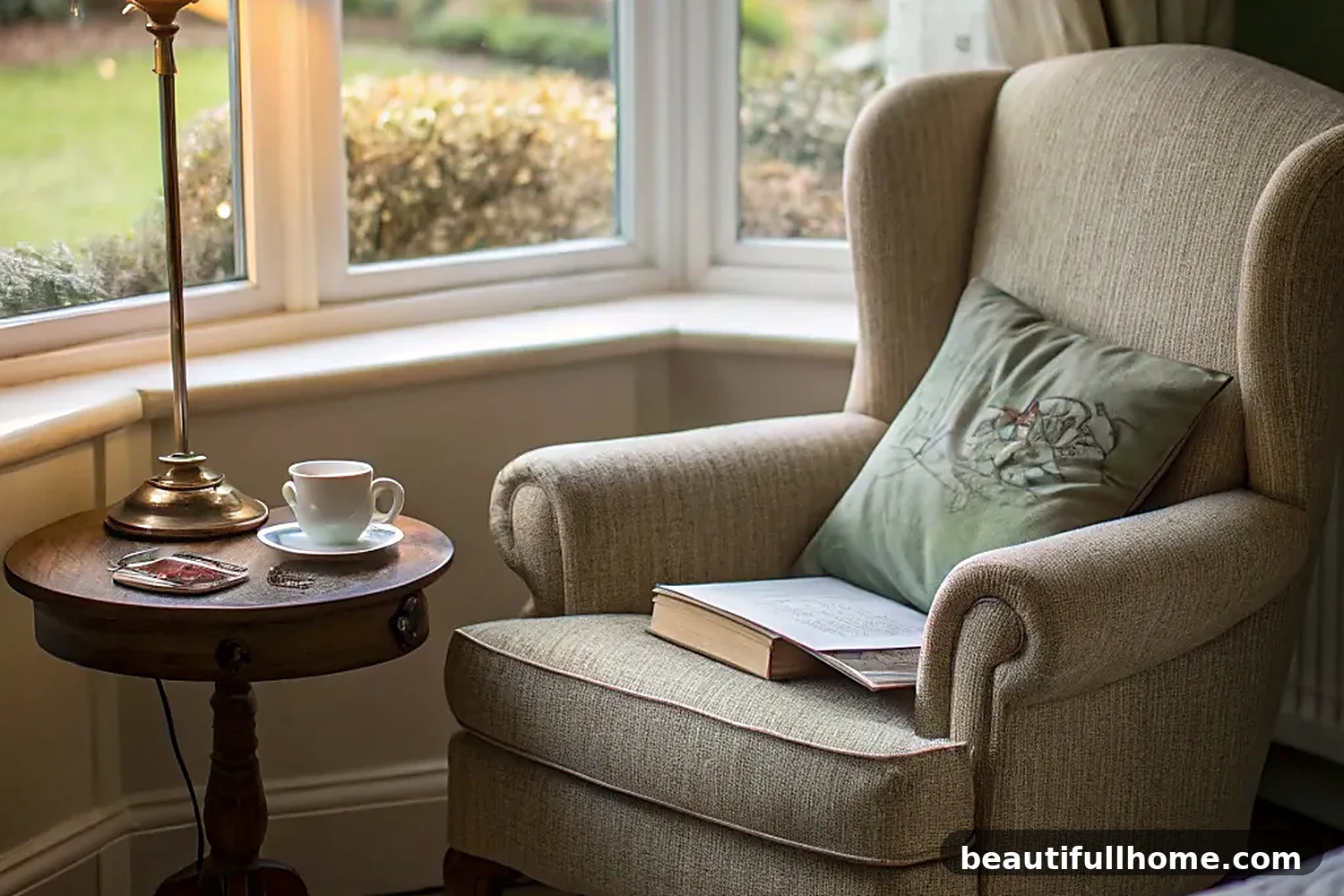
The reading nook with one armchair is the best idea when building is not an option, because you angle a single comfortable armchair into the bay, add a small side table 20 to 24 inches high, and finish with a lamp at reading height, and the whole setup costs $120 to $350 if you shop patiently. It turns the brightest corner of the room into the natural place to read. Angle the chair about 30 degrees toward the room rather than facing straight out, so you keep the light over your shoulder and stay part of the conversation. The armchair sizes that fit a bay are in our Sofa Ideas for Small Living Room: 12 Picks That Fit guide.
Cost: $120-$350, sweet spot $180-$280. Watch out: a chair angled so far that it faces the room completely loses the light over your shoulder, and a side table taller than 24 inches blocks the glass, so keep the table at 20-24 inches.
3. Two accent chairs and a shared side table
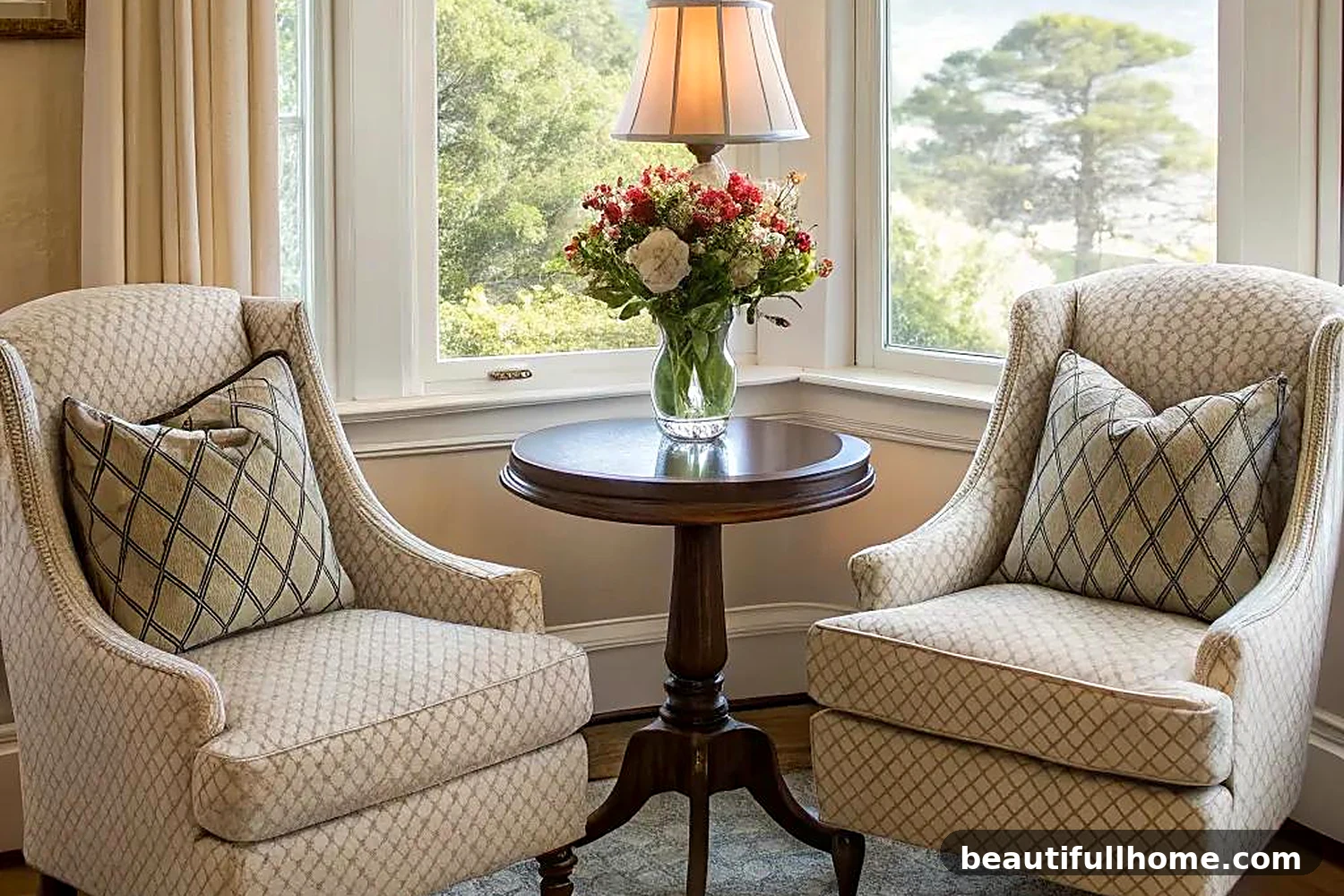
Two accent chairs and a shared side table suit a bay that is wide but shallow, because two matching accent chairs with a small round table between them create a symmetrical conversation spot that uses only about 16 inches of depth. It is also the easiest idea to undo: the chairs can rejoin the main seating when guests arrive. Keep the table small, around 16 to 18 inches across, just big enough for two cups and a vase. The chair and table sizes that go with this arrangement are in our Furniture Ideas for Small Living Room: 12 Smart Picks guide.
Cost: $200-$600 for the chairs, $40-$120 for the table, sweet spot $300-$450 + $60-$90. Watch out: two bulky chairs in a shallow bay block the glass and crowd the room, so pick slim arms and a table no wider than 18 inches.
4. Freestanding bench as a no-build window seat
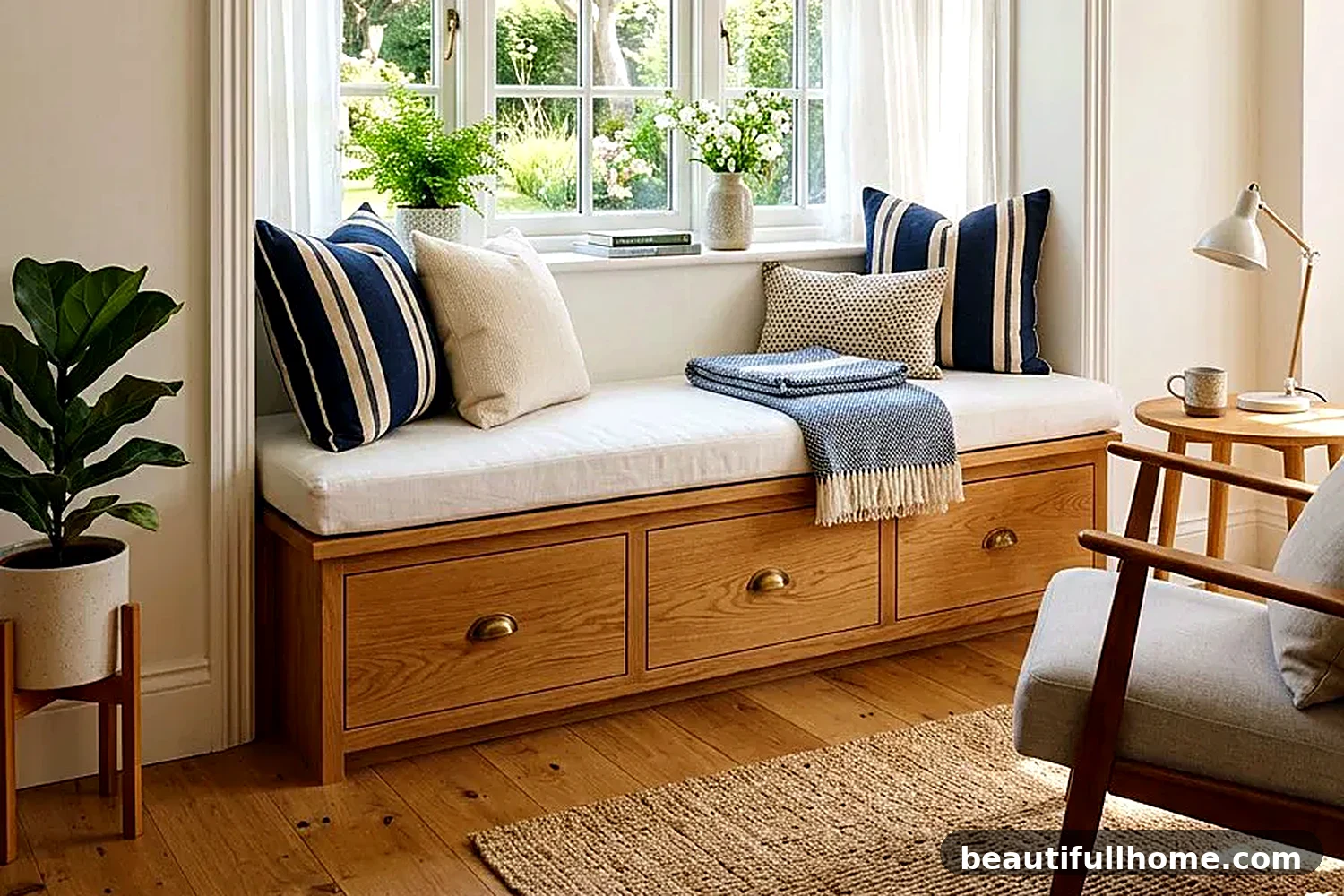
A freestanding bench as a no-build window seat gives you 80 percent of the built-in look for $80 to $200, because a plain freestanding bench placed across the bay, with a long cushion on top, reads as custom once pillows are on. Choose one 14 to 16 inches deep so it tucks under the sill line, add a long cushion, and nobody will ask whether it was custom made. Measure the bay's straight center section and buy a bench a few inches shorter, so the angled ends stay clear for curtains.
Cost: $80-$200, sweet spot $120-$170. Watch out: a bench longer than the center section collides with the angled sides and blocks the curtains, and a bench deeper than 16 inches eats the walkway, so measure the narrowest point first.
5. Low plant bench that works like a greenhouse shelf
A low plant bench that works like a greenhouse shelf suits light-hungry plants, because a bay window and light-hungry plants are made for each other. A low bench or sturdy ledge shelf, 10 to 12 inches deep, holds a row of pots without blocking the glass. Group plants by watering needs, keep the tallest at the sides, and the bay stays bright instead of turning into a jungle silhouette. Add a washable tray under each pot, because one overflow on a sunny morning is all it takes to mark a wooden sill.
Cost: $60-$180, sweet spot $90-$140. Watch out: a row of small plants creates a cluttered sill and demands more watering than most people expect, so pick one tall plant for height and a few small ones for the shelf, and keep leaves off the pane, because condensation can leave marks around the frame.
6. Daybed-style cushion for naps and guests
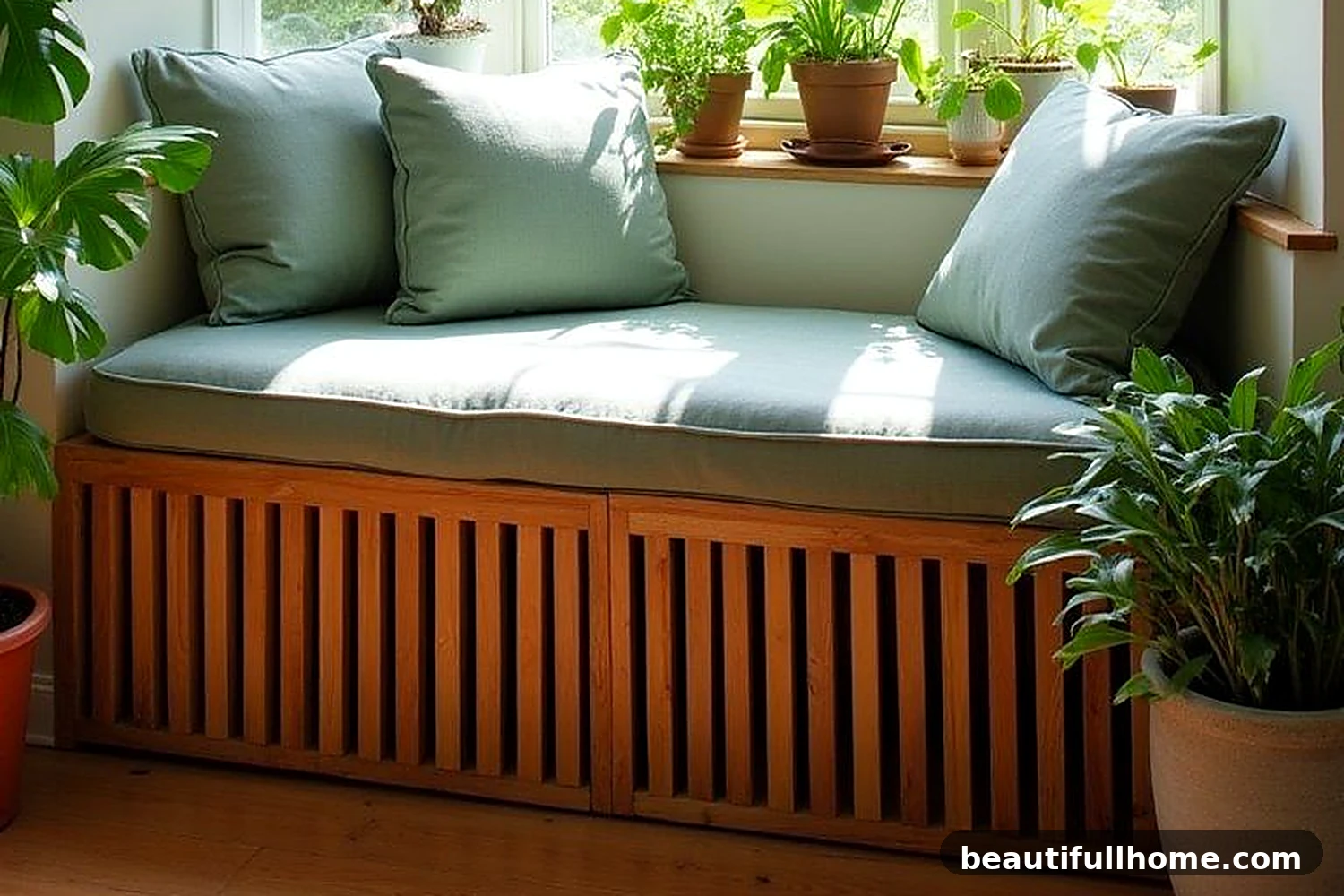
A daybed-style cushion for naps and guests works where the bay is deep enough, because a single mattress-style cushion, about 24 inches deep, turns the seat into a nap spot and an emergency guest bed. Layer it with a fitted cotton cover, one long bolster, and a throw, and expect $100 to $250 for the cushion and covers in twin-cot or custom foam. This works best in living rooms that rarely host formal seating, because the daybed look reads relaxed, not tailored.
Cost: $100-$250, sweet spot $150-$200. Watch out: a daybed cushion in a shallow bay hangs over the edge and blocks the walkway, so it needs a bay 24 inches deep or more, and a thick mattress cushion blocks the lower glass, so keep the cushion at 4 inches or less above the seat base.
7. Flanking shelves that frame the seat
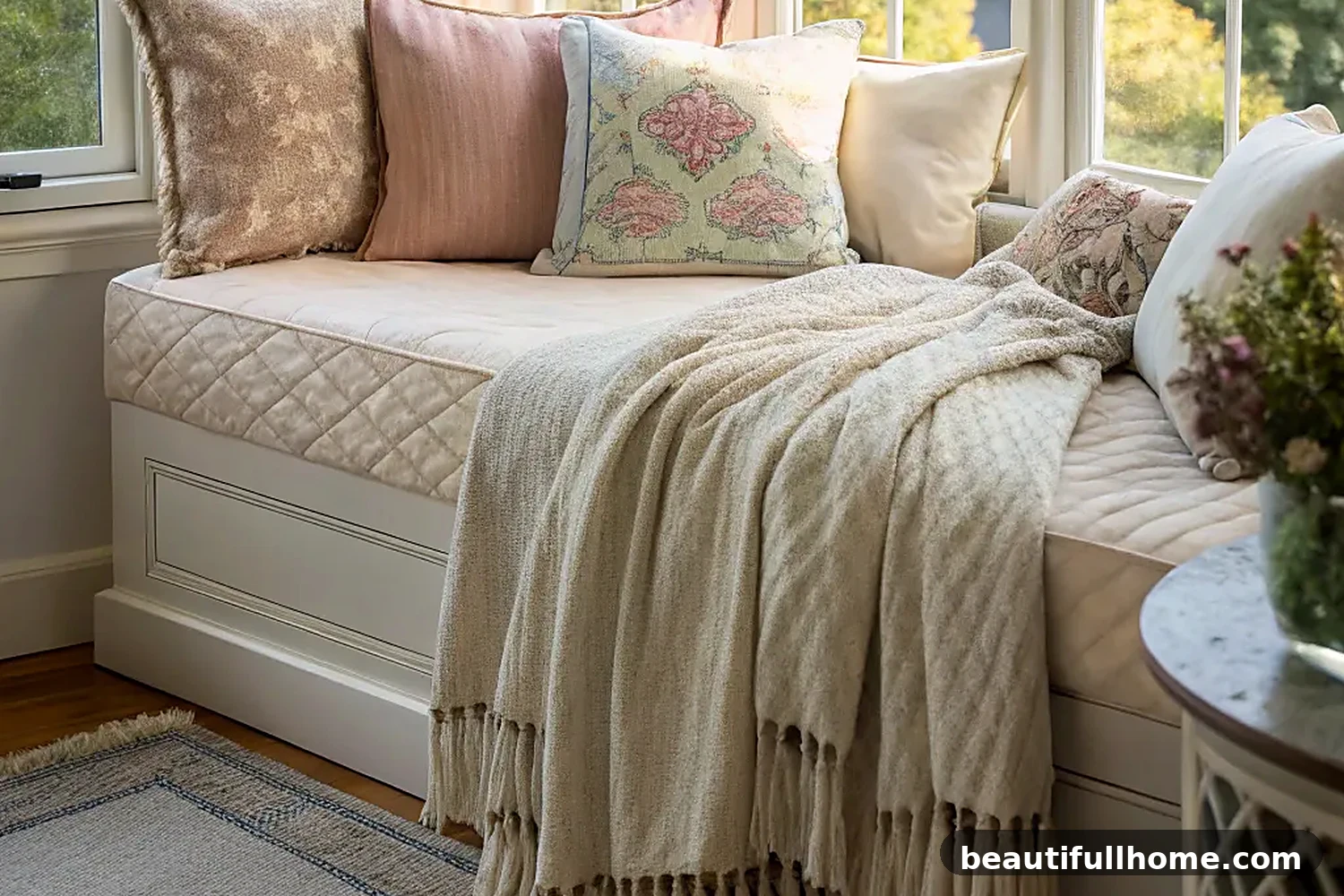
Flanking shelves that frame the seat add the storage small rooms always need, because narrow bookcases or shelf towers on both sides of the bay frame the seat and give lamps and books a home that is not the floor. Keep each tower under 14 inches deep so it does not swallow the angled walls, and the seat becomes a library corner. Style the shelves lightly at window height so they do not compete with the view. The shelf and display sizes are in our Small Living Room Decor Ideas: 12 Ways That Work guide.
Cost: $120-$400, sweet spot $180-$300. Watch out: tall shelves that run past the window height compete with the view and make the bay feel boxed in, so keep the top shelf below the sill line or style it lightly.
8. Small round coffee table bay for slow mornings
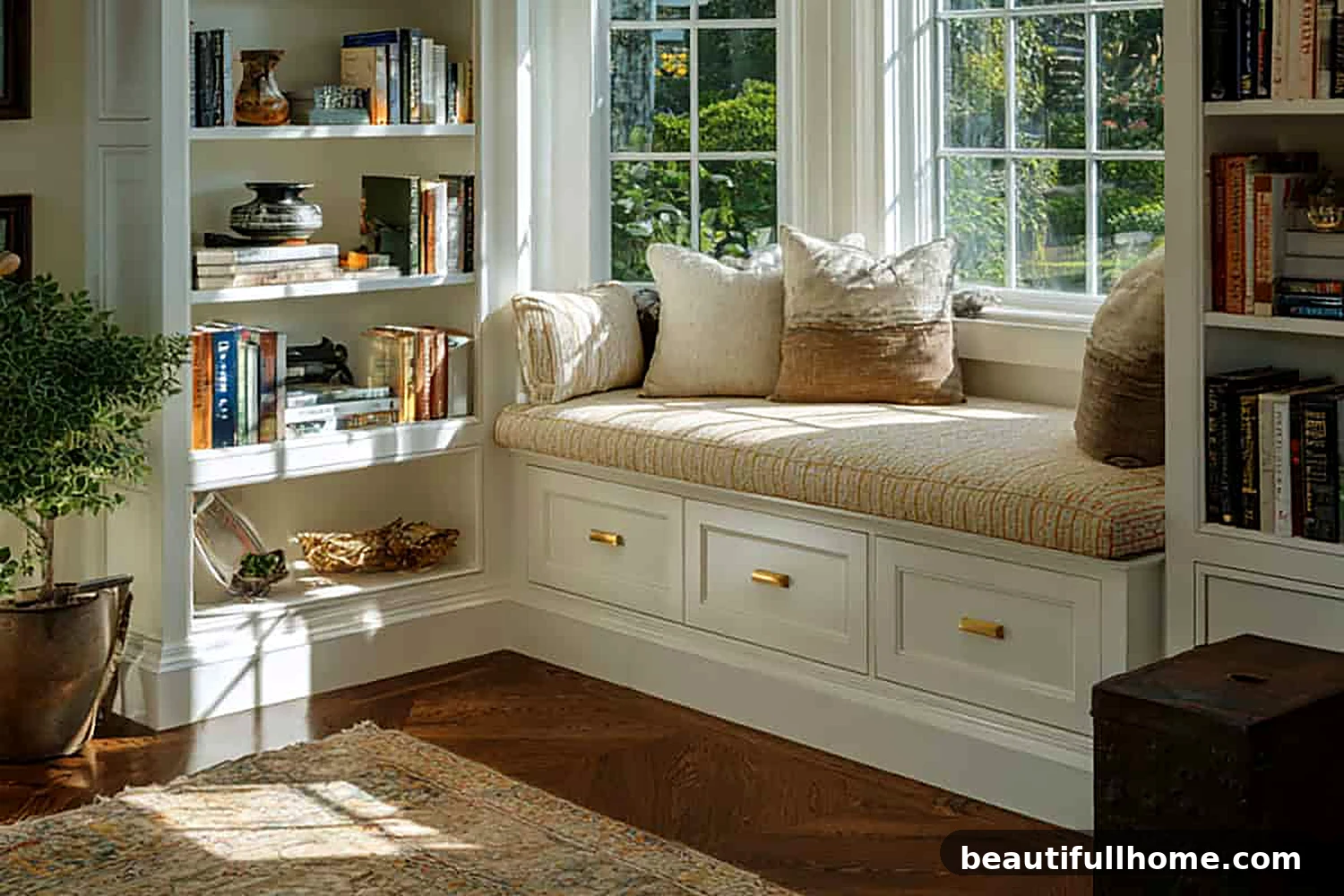
A small round coffee table bay turns the bay into a breakfast and puzzle spot, because you place a compact round coffee table, 24 to 30 inches across, in the center of the bay with the bench or chairs around it. Round tables suit angled bays because there are no corners to clash with the geometry. A slim rug under the seat zone helps define it, and the rug sizes that keep a small room feeling open are in our What Size Rug for Living Room guide. The coffee table sizes, shapes and costs are in our Coffee Table Ideas for Small Living Room: 12 Picks That Fit guide.
Cost: $80-$300, sweet spot $129-$219. Watch out: a rectangular table longer than two-thirds of the bench blocks the walkway on both ends, and a table taller than the seat makes the bay feel cramped, so round and low is the safer pick.
9. Layered sheers that soften glare without killing light
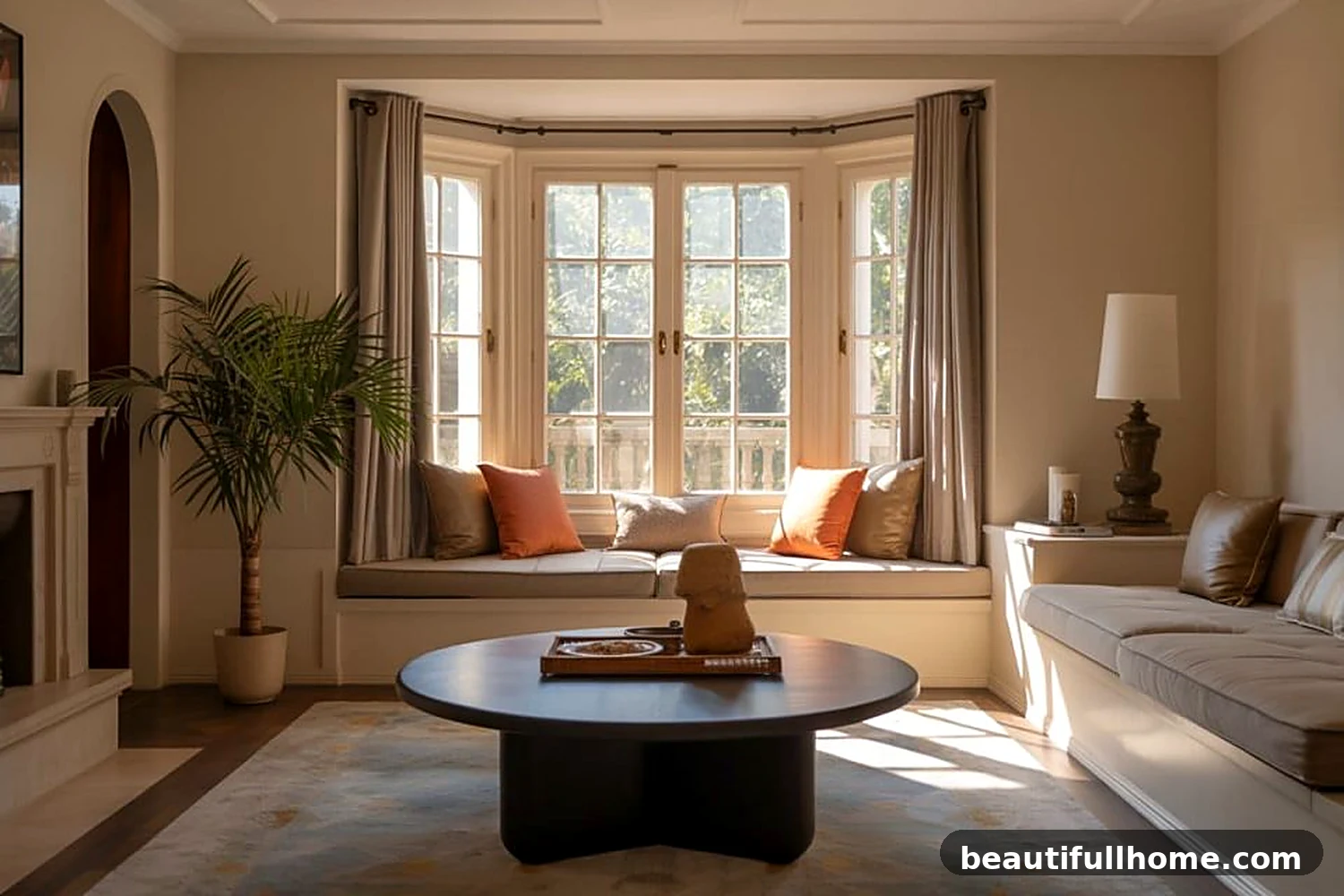
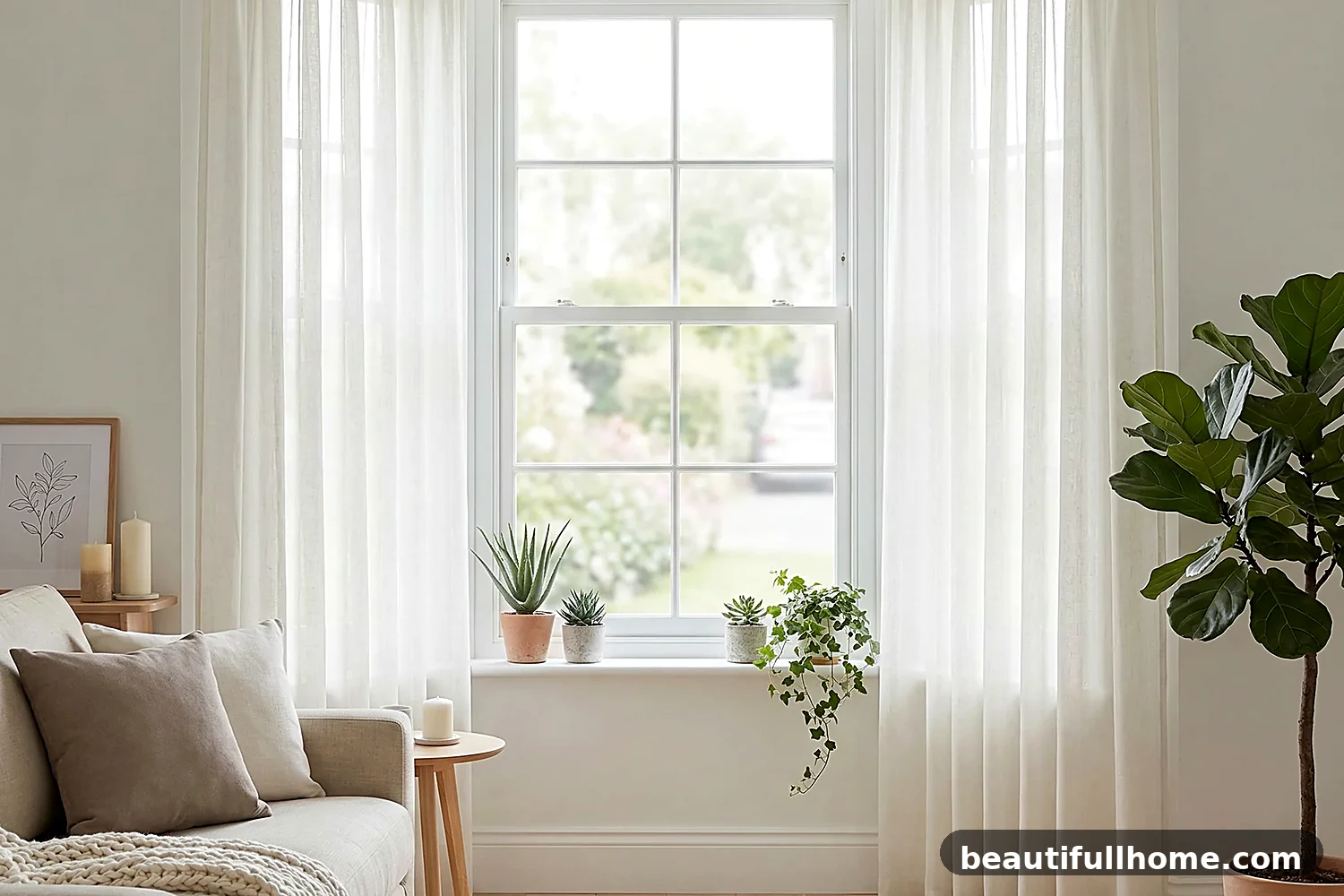
Layered sheers that soften glare without killing light suit south-facing bays, because south-facing bays can glare by mid-morning. Sheer curtains hung on a ceiling track that follows the bay's angles soften the light while keeping the seat usable all day. Budget $40 to $120 for sheers and a flexible track, and keep the fabric off the cushion line so it moves freely. The curtain and sheer sizes are in our Small Living Room Decor Ideas: 12 Ways That Work guide.
Cost: $40-$120, sweet spot $60-$90. Watch out: heavy lined curtains in a bay block the light the bay exists to bring in, and sheers that pool on the cushion collect dust and block the seat, so keep the fabric above the cushion line.
10. Pull-out desk tray for short work sessions
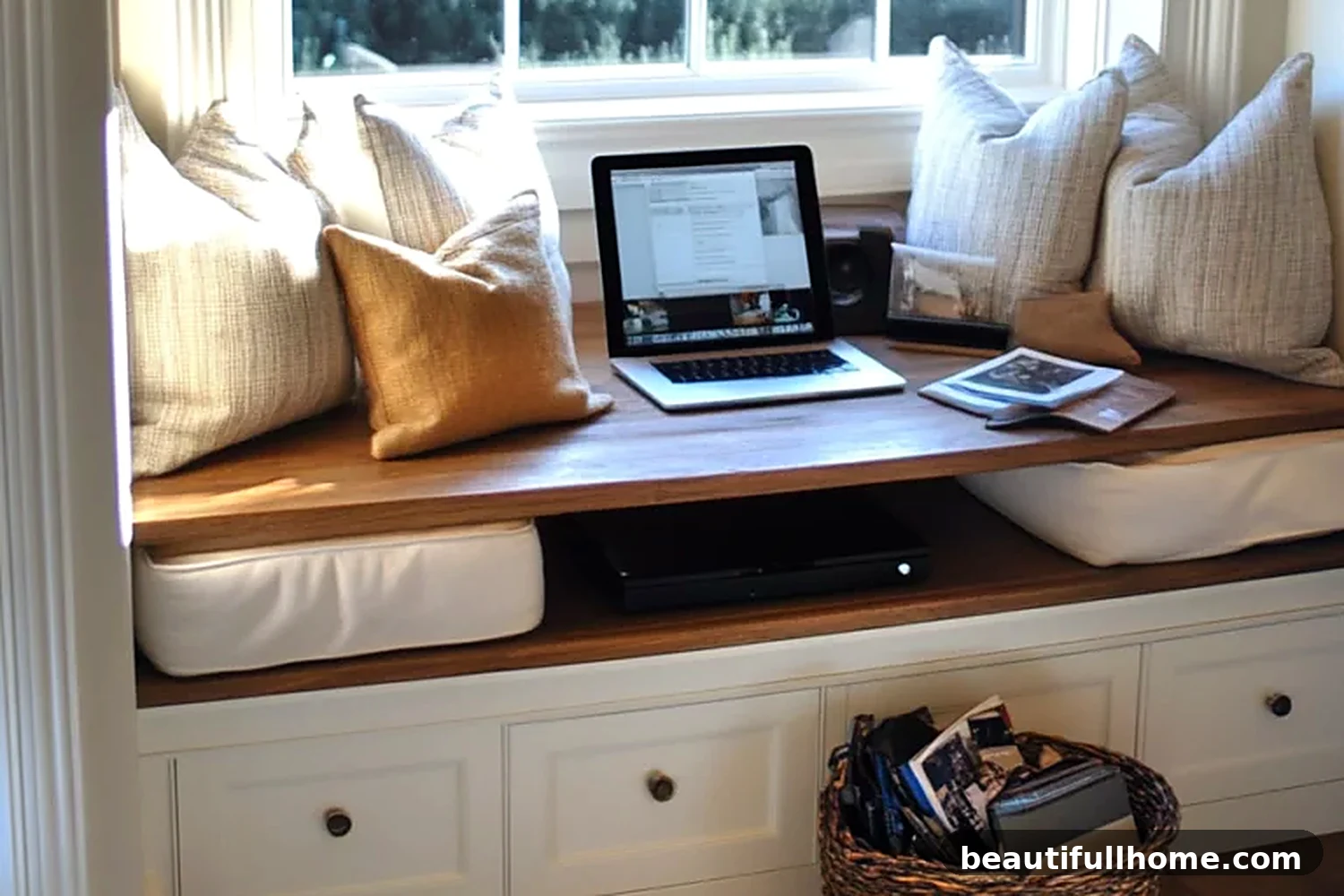
A pull-out desk tray for short work sessions gives the bay a second job as a laptop perch, because a slim tray table or a bench with a slide-out top turns the seat into a work zone without adding legs. Keep sessions short and the screen angled away from direct sun, and the tray stores flat, so the seat returns to pure relaxation in seconds. Expect $30 to $80 for a sturdy tray.
Cost: $30-$80, sweet spot $45-$65. Watch out: a full cabinet desk in a bay makes the room look narrower and reads as an office, not a window seat, so keep the work surface slim and the sessions short.
11. Kid-friendly low seat with book crates
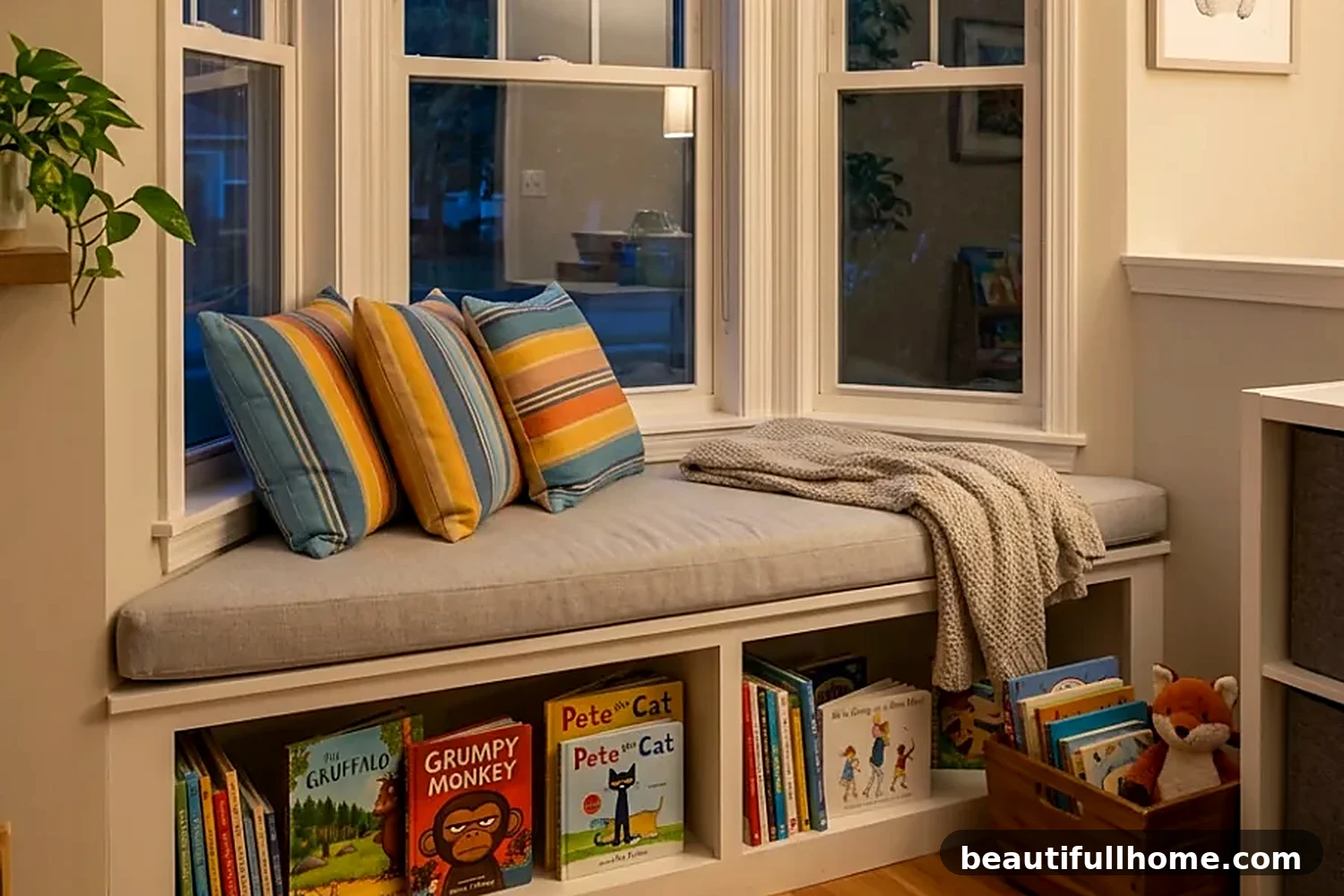
A kid-friendly low seat with book crates suits families, because at 14 to 16 inches high, a low bench is the right height for children, and open crates underneath hold picture books where small hands can reach them. Choose rounded cushion corners and washable fabrics, and the bay becomes the reading corner children actually use, because everything is at their height.
Cost: $60-$180, sweet spot $90-$140. Watch out: sharp cushion corners at child height and fabrics that cannot be washed are the two mistakes to avoid, so pick rounded corners and removable, washable covers.
12. Seasonal cushion swap that refreshes the whole bay
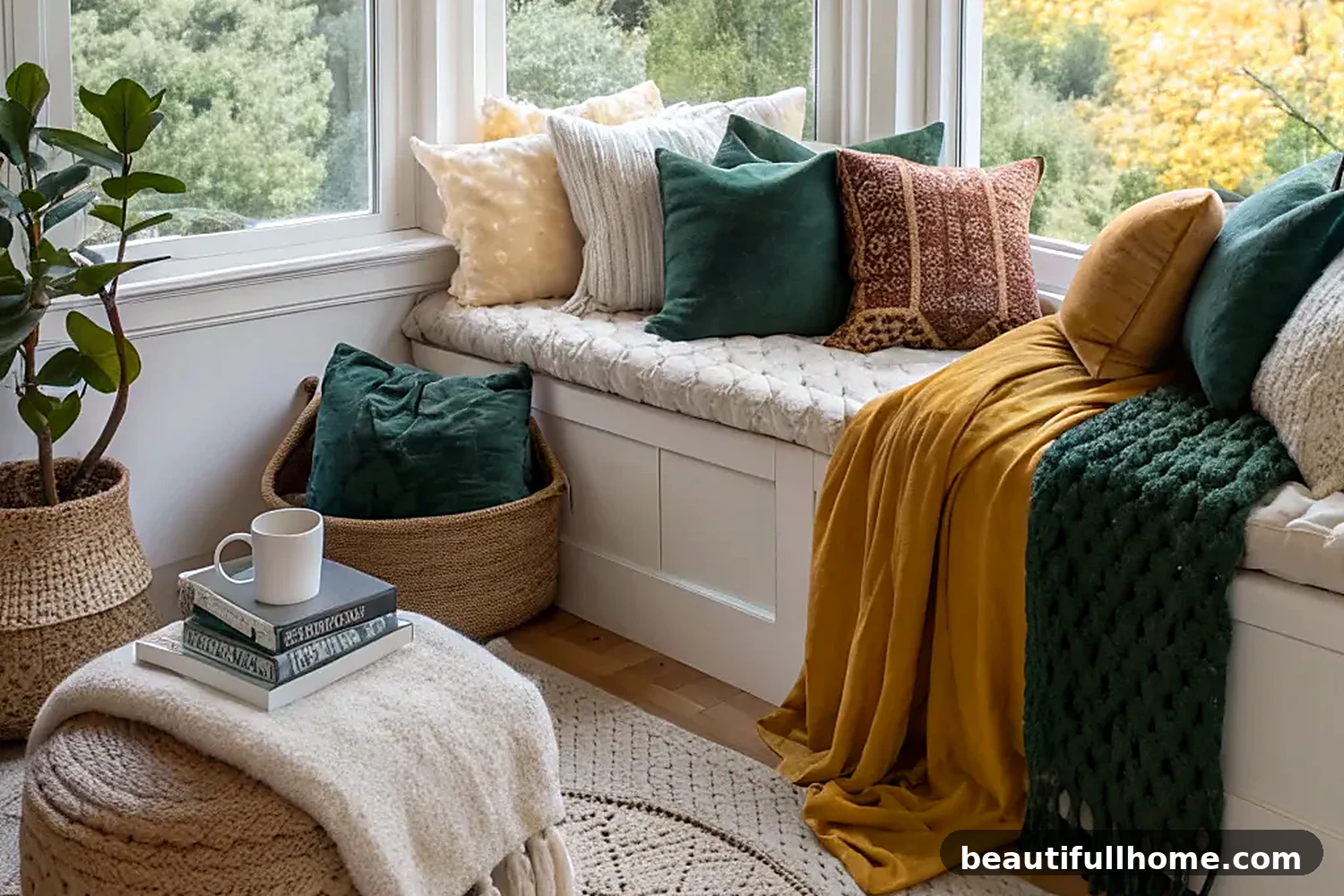
A seasonal cushion swap that refreshes the whole bay is the cheapest refresh on this list, because you keep one neutral bench cushion and swap only the pillow covers and throw with the season. Linen and pale cotton in warm months, a knit throw and deeper tones when evenings cool, and two sets of covers cost $25 to $60 total and make the whole living room feel newly decorated.
Cost: $25-$60, sweet spot $35-$50. Watch out: sun fades fabric faster in a bay than anywhere else in the room, so choose solution-dyed or tightly woven linen blends in lighter colors, which show fading least, and rotate the cushion a few times a year so any fading stays even instead of striping one end.
How much does a bay window seat cost
A bay window seat costs from under $100 for the starter fixes to about $900 for a built-in bench with drawers, and the sweet spot for most rooms is $100-$300, which buys a freestanding bench, a long cushion and layered sheers, the three pieces that change the bay most. Start with the freestanding bench or the armchair nook if you rent, and build in drawers only when you know the seat has become the most-used spot in the room. Invest in the cushion and the bench, because a good foam cushion and a bench that fits the bay last years, and save on the pillow covers and throw, because those swap seasonally from affordable sources. Prices are typical US retail ranges for 2026, so check current prices before you buy.
| Item | Typical cost | Sweet spot |
|---|---|---|
| Seasonal cushion swap | $25-$60 | $35-$50 |
| Pull-out desk tray | $30-$80 | $45-$65 |
| Layered sheers + track | $40-$120 | $60-$90 |
| Low plant bench | $60-$180 | $90-$140 |
| Kid-friendly low seat | $60-$180 | $90-$140 |
| Freestanding bench | $80-$200 | $120-$170 |
| Round coffee table | $80-$300 | $129-$219 |
| Daybed cushion + covers | $100-$250 | $150-$200 |
| Reading nook (chair + table + lamp) | $120-$350 | $180-$280 |
| Flanking shelves | $120-$400 | $180-$300 |
| Flat-pack bench with drawers | $150-$400 | $220-$320 |
| Two accent chairs + table | $240-$720 | $360-$540 |
| Built-in bench, materials | $300-$900 | $500-$700 |
Three ways to fix the bay: under $100 buys a seasonal cushion swap, a pull-out desk tray and layered sheers, which is the whole starter refresh. About $300 buys a freestanding bench, a long cushion and sheers, which is the full seat in this guide. About $900 buys the built-in bench with drawers, a custom cushion and flanking shelves, which is the complete bay with storage. Measure the bay first and live with the freestanding bench for a month before building anything: the seat size decides the built-in, and a built-in measured wrong is a built-in bought twice.
Worked example: a 6 ft wide, 2 ft deep bay
Take a bay 6 feet wide and 2 feet deep, with an 8 ft ceiling, in a 10×12 ft living room, the bay on the far short wall and the sofa on the long wall facing it. Measure the bay at its narrowest point, 5 ft 6 in between the angled sides, and the seat follows that number, not the wide middle. The seat is a freestanding bench 5 ft long, 15 inches deep and 15 inches high, with a 3 inch foam cushion on top, so the finished seat height is 18 inches, chair height, with feet flat on the floor. The cushion line sits below the sill, so the lower glass stays clear and the light comes in. A slim rug, 5×7 ft, sits under the bench zone with the front legs of the bench on it, and a small round coffee table, 26 inches across, sits in front of the bench, 16 inches from its edge. A tall plant stands at one side of the bay, and layered sheers on a ceiling track follow the bay's angles. Total furniture footprint in the bay is about 12 sq ft, which leaves the walkway from the door to the window clear at 30 inches. A bay window seat is the exception to the feng shui "no sofa under a window" rule, because the seat back sits at or below the sill and the curtains stay operable, and our Front Door Feng Shui: 12 Small Living Room Layouts guide explains why that exception works. The same bay with a sofa pushed into it loses the light, and everyone sits with their back to the room.
Window treatments compared
Window treatments decide how much light and privacy a bay gives you, so pick by what the bay faces, not by what looks good in a photo. Curtains give the most warmth and the most privacy, but they block light when closed and need a rod that follows the bay's angles. Blinds give the most control, because you can tilt the slats, but they collect dust and read hard in a small room. Sheers give the most light, softening glare without killing it, but they give almost no privacy after dark. Shutters give the most privacy and the most structure, but they cost the most and they block the glass when closed. Roman blinds give a tailored look and good privacy, but they block the lower glass when lowered. Pick sheers for a south-facing bay, lined curtains for a street-facing bay, and Roman blinds for a bay that needs privacy without bulk.
| Treatment | Typical cost | Light | Privacy | Renter-safe |
|---|---|---|---|---|
| Sheers on a track | $40-$120 | Most, softens glare | Low after dark | Yes, tension rod or track |
| Curtains, full-length | $60-$250 | Good when open | High when closed | Yes, tension rod |
| Roman blinds | $80-$300 | Good when raised | High when lowered | Yes, inside mount |
| Blinds, wood or faux wood | $60-$200 | Adjustable | High | Yes, inside mount |
| Shutters | $200-$600 | Good when open | Highest | No, needs fixing |
Bay types: angled, box and bow
A bay window is not one shape, and the shape decides what fits in it. An angled bay has three panels, a flat center and two angled sides, and it takes a built-in bench or a freestanding bench that follows the center section. A box bay has a flat front and two short sides at right angles, and it takes two chairs or a bench across the flat front. A bow window is curved, with four or five narrow panels, and it takes a reading nook with one armchair, because a straight bench cannot follow the curve. Measure the bay at its narrowest point in every case, because the angled sides are where knees and cushions collide, and buy the seat a few inches shorter than the center section so the angled ends stay clear for curtains.
| Bay type | Panels | Best seat | Watch out |
|---|---|---|---|
| Angled bay | 3, flat center + angled sides | Built-in or freestanding bench | Bench longer than the center section collides with the sides |
| Box bay | 3, flat front + right-angle sides | Two chairs or a bench | Deep sides can shade the seat |
| Bow window | 4-5, curved | Reading nook, one armchair | A straight bench cannot follow the curve |
Renter fixes: no-drill, freestanding, removable
Renters can fix a bay window without touching the walls, because every piece in this guide has a freestanding version. The armchair nook, the freestanding bench, the plant bench and the two-chair arrangement all leave the room exactly as you found it, and you take the portable versions with you when you move. Save the built-in drawers and flanking shelves for a home you own. Use a tension rod and removable hooks for the curtains, so you get the same movement without drilling, and pick a freestanding bench and a freestanding shelf, because furniture that stands on the floor leaves no marks. The rental-friendly version of every piece in this guide is in our Small Apartment Living Room Ideas: 15 Rental-Friendly Ways guide.
Privacy and glare: south-facing and street-facing bays
Privacy and glare are the two problems a bay window creates, and they need opposite fixes, so pick by what the bay faces. A south-facing bay glares by mid-morning, and sheer curtains on a ceiling track that follows the bay's angles soften the light while keeping the seat usable all day, because the fabric diffuses the sun without blocking it. A street-facing bay needs privacy after dark, and lined curtains or Roman blinds give it, because sheers alone show a silhouette once the lights are on. A bay that faces both south and the street needs both, sheers for the day and lined curtains for the night, and the two layers hang on one track. After dark, a small lamp on the bench keeps the bay useful, and the lighting layers that go with it are in our Small Living Room Lighting Ideas: 12 Bright Ideas guide.
Which idea should you pick
Pick by what the bay is for, not by what looks good in a photo. If you want storage, pick the built-in bench with drawers. If you rent, pick the freestanding bench or the armchair nook. If the bay is wide but shallow, pick two accent chairs and a shared side table. If the bay is deep, pick the daybed-style cushion. If you love plants, pick the low plant bench. If you work from home, pick the pull-out desk tray. If you have kids, pick the low seat with book crates. If you want the cheapest refresh, pick the seasonal cushion swap. If the bay glares, pick layered sheers. If the bay faces the street, pick lined curtains or Roman blinds. If your budget is under $100, pick the seasonal swap, the desk tray and the sheers. If your budget is about $300, pick the freestanding bench, the long cushion and the sheers.
Frequently asked questions
How much does a built-in bay window seat cost?
A simple painted plywood bench with drawers typically runs $300 to $900 in materials if you build it yourself, and ready-made or custom work costs more. The freestanding shortcut, a bench plus a long cushion, lands between $80 and $200 and looks nearly as tailored once pillows are on.
What cushion thickness is best for a bay window seat?
Three to four inches of firm foam is the sweet spot. Thinner feels hard within ten minutes, and thicker raises the seat above the comfortable 17 to 19 inch height and starts blocking the lower window glass, which costs you light and the view you built the seat for in the first place.
Can a bay window seat work in a rental?
Yes. The armchair nook, the freestanding bench, the plant bench and the two-chair arrangement all leave the room exactly as you found it. Save the built-in drawers and flanking shelves for a home you own, and take the portable versions with you when you move.
What fabric survives a sunny bay?
Sun fades fabric faster in a bay than anywhere else in the room. Choose solution-dyed or tightly woven linen blends in lighter colors, which show fading least, and rotate the cushion a few times a year so any fading stays even instead of striping one end.
Should the sofa go in the bay window?
No, not as a rule. A sofa pushed into a bay blocks the light and sits with its back to the room, and the bay is too angled for a sofa to sit straight. Give the bay its own job, a bench, a reading nook or two chairs, and keep the sofa on the long wall facing the bay, so the bay stays the best seat in the house instead of the sofa's worst position.
Conclusion
A bay window should be the best seat in the house, and it becomes one the day you give it one clear job. Measure the bay at its narrowest point, hold the seat at 17 to 19 inches high and 18 to 22 inches deep, and keep cushions low enough to protect the light. Start with the freestanding bench or the armchair nook if you rent, and build in drawers only when you know the seat has become the most-used spot in the room. The room plans that go with the seat are in our Small Living Room Layout: 7 Layouts With Measurements guide, the furniture sizes are in our Furniture Ideas for Small Living Room: 12 Smart Picks guide, and the armchair sizes are in our Sofa Ideas for Small Living Room: 12 Picks That Fit guide.