Sofa Ideas for Small Living Room: 12 Picks That Fit
The right sofa for a small living room is 72-84 inches wide, under 36 inches deep, with slim track arms and raised legs 4-8 inches high, so the floor shows underneath and the room keeps its air. A 72-inch sofa with rolled arms seats like a 52-inch sofa, because the arms eat up to 10 inches per side, so pick track arms or armless in a narrow room. An apartment sofa costs $350-$900, a loveseat $250-$700, and a compact sectional under 92 inches costs $700-$1,200. Measure the wall, the door and the stairs before you buy, because a sofa that does not fit through the door is a return, not a sofa.
What makes a sofa fit a small room
A sofa fits a small room when five numbers line up, and none of them is the price. Width first: the sofa should be no wider than two-thirds of the wall it sits against, so a 12 ft wall takes a sofa up to 96 inches, and a 10 ft wall takes one up to 80 inches. Depth second: keep the sofa under 36 inches deep, because a deeper sofa eats the walkway in front of it, and a backrest cushion over 6 inches deep pushes the seat forward and cuts another 3-4 inches of floor. Arms third: rolled arms eat up to 10 inches of space on each side, track arms take 4-5 inches, and an armless sofa gives you the most seat in the same footprint. Legs fourth: exposed legs 4-8 inches high let the floor show underneath, which makes the sofa look lighter, while a low blocky sofa swallows a small room. Seat height fifth: 17-19 inches is the comfortable height, and it is also the height that lines up with the TV. Prices are typical US retail ranges for 2026, so check current prices before you buy.
Sofa ideas for small living rooms: pick by your room
Sofa ideas for small living rooms start with the room you have, not the catalog photo. A room under 10 ft wide needs a loveseat or an armless sofa, because a full three-seater leaves no walkway. A room under 120 sq ft needs a sofa under 72 inches, or two armchairs instead of a sofa at all. A corner room or an open plan suits a compact sectional under 92 inches, with the chaise clear of the door swing. A rental or a walk-up flat needs a modular or boxed sofa, because a one-piece sofa may not fit the stairs. A room with guests needs a sleeper, and a room with kids or pets needs a slipcovered sofa with washable covers. The 12 ideas below cover all of these rooms, and the chooser at the end maps each situation to the ideas that fit it. The full room plans that go with the sofa, walkways and rug placement, are in our Small Living Room Layout: 7 Layouts With Measurements guide, so this post picks the sofa, not the layout.
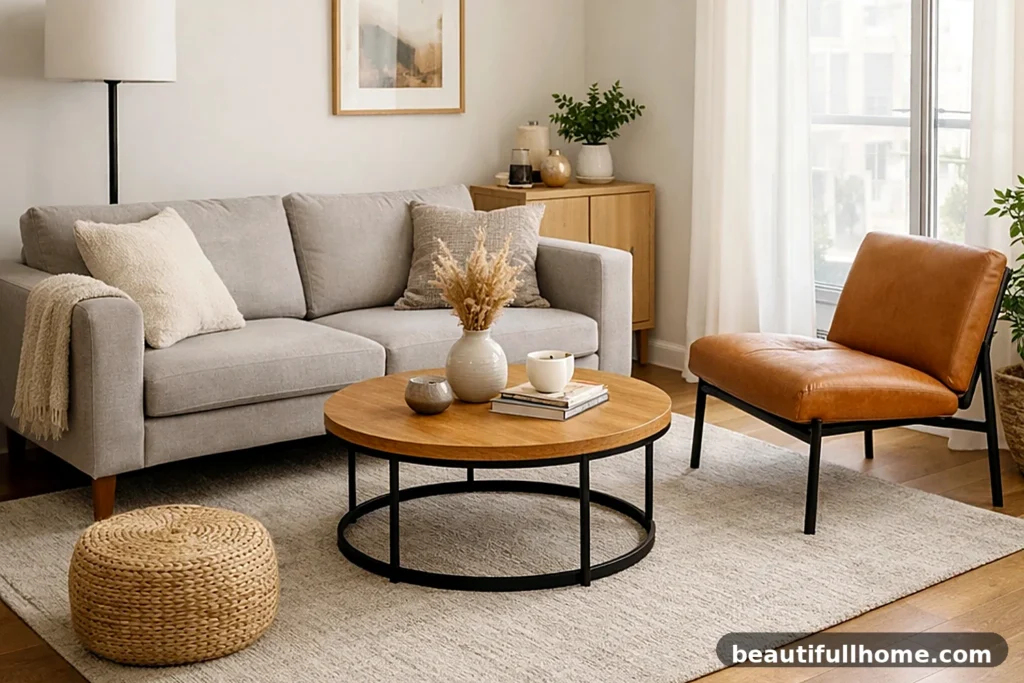
1. Apartment sofa 72-84 in: the default pick
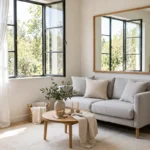
An apartment sofa is the default pick for most small rooms, because it is a full three-seater shrunk to fit: 72-84 inches wide, with the 72-78 inch range the sweet spot, slim track arms, a medium seat depth, and raised legs so the floor shows underneath. Three people sit on it, two sit on it comfortably, and it leaves a 30-inch walkway in a 12×14 ft room. Pick a tight back or bench cushion, because a deep backrest cushion pushes the seat forward and steals floor space, and pick a leg height of 4-8 inches, because legs make the sofa read as lighter than a sofa that sits on the floor.
Cost: $350-$900 entry, sweet spot $699-$849. Watch out: a standard 84-90 inch three-seater looks the same in the shop and eats the room at home, so measure the wall first and keep the sofa under two-thirds of it.
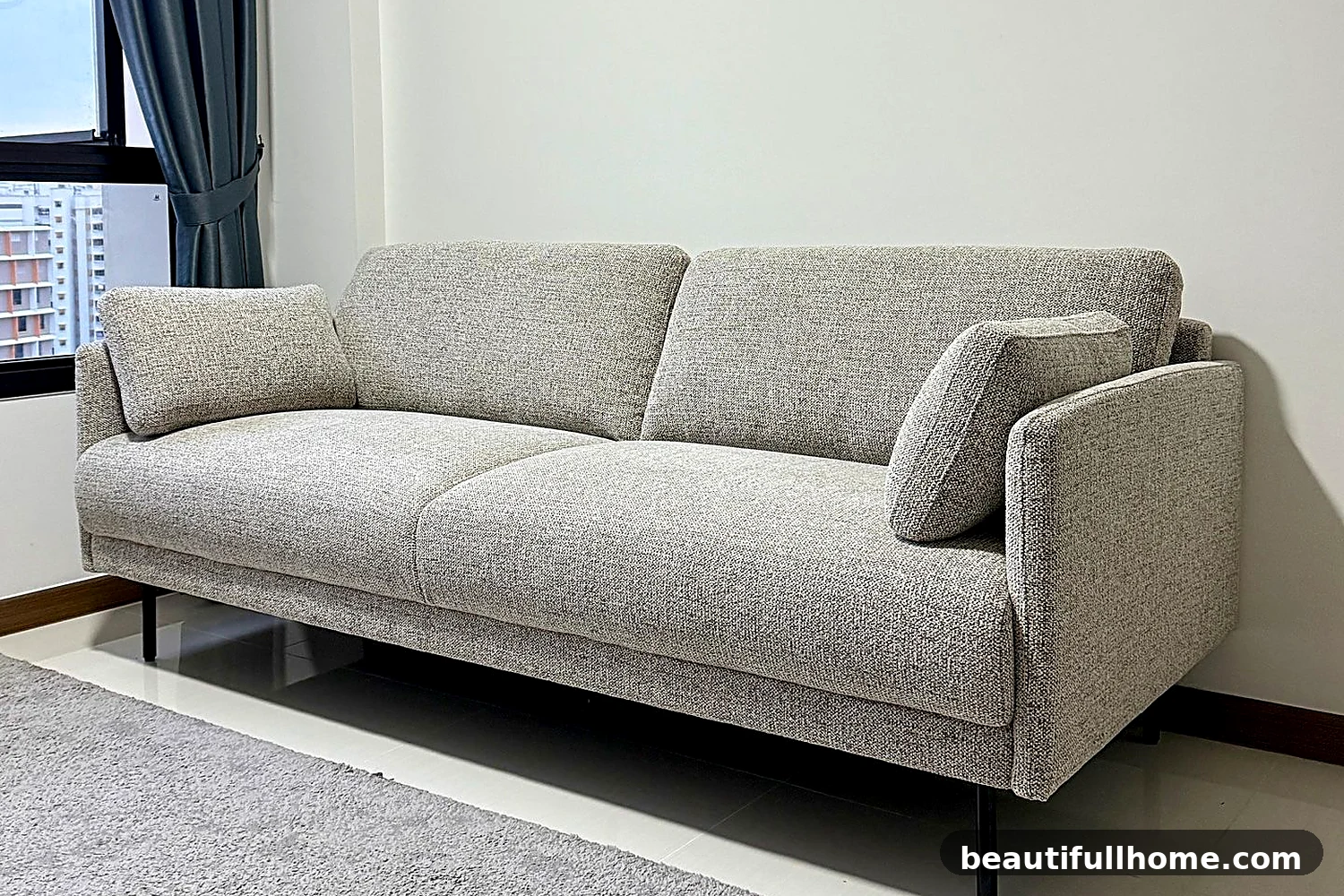
2. Loveseat 48-72 in: the two-seat pick
A loveseat is the two-seat pick for a room under 10 ft wide or under 120 sq ft, because it seats two people and leaves room for a side table, a floor lamp and a walkway. Buy one 48-72 inches wide with exposed legs, so the floor shows underneath and the loveseat reads as furniture, not a block. It pairs with one armchair for a third seat, and it suits a studio, a reading corner, or a room where the sofa faces the TV and the third seat is never used. The rug size that goes under a loveseat and a chair is in our What Size Rug for Living Room guide.
Cost: $250-$700 entry, sweet spot $419-$479. Watch out: a loveseat under 48 inches seats one person, not two, so measure the seat width, not the sofa width, and subtract the arms before you count the seats.
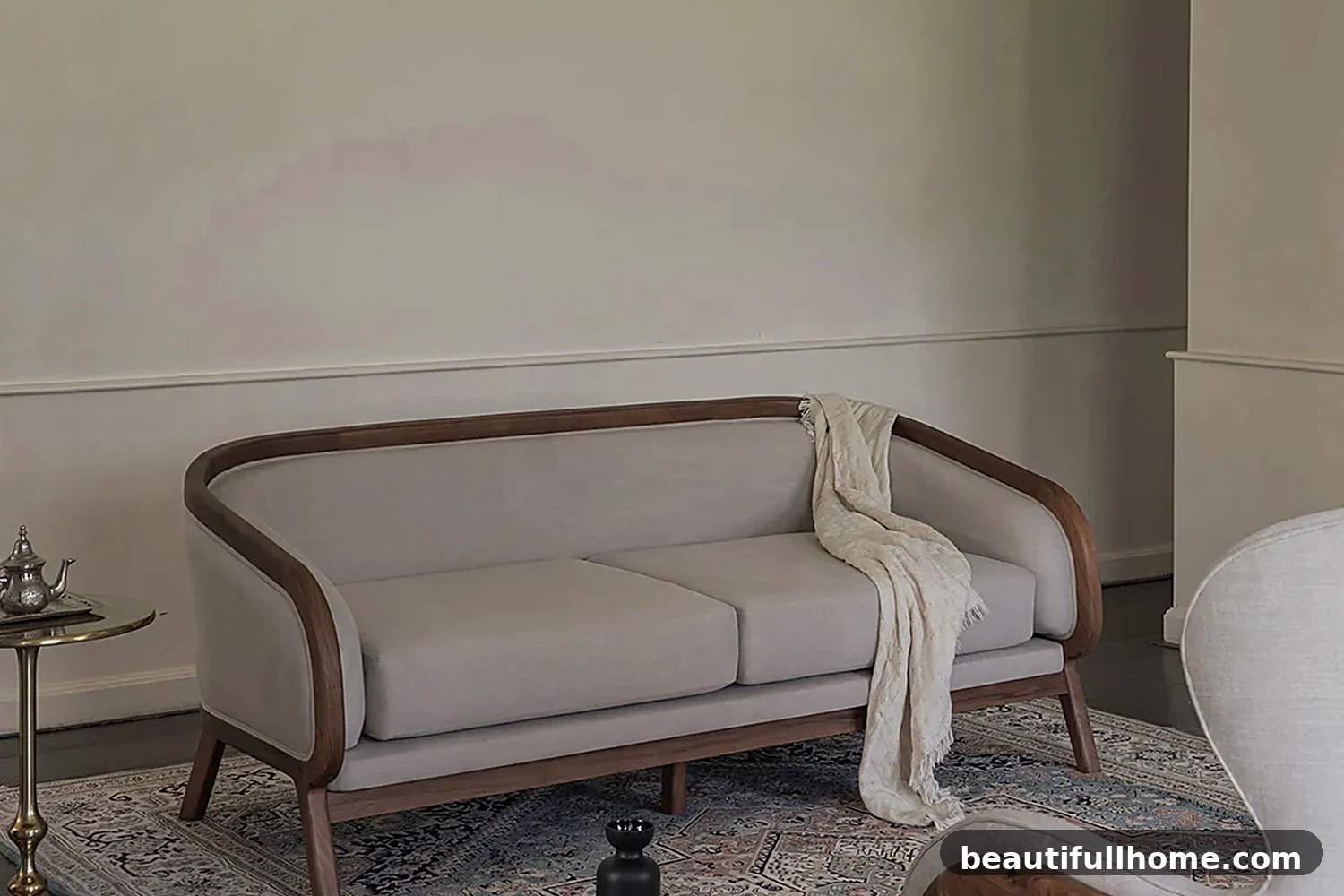
3. Compact sectional under 92 in: the corner pick
A compact sectional is the corner pick, because an L-shape with a reversible chaise hugs two walls at once and seats four or five people where a sofa and a chair would crowd the room. Stay under 92 inches wide if the shortest wall is under 11 ft, because three-seat sectionals run 90-104 inches wide and the extra inches block the walkway. Pick a reversible chaise, so the long side moves when you rearrange or move house, and keep the chaise clear of the door swing, or the door hits it every time it opens. This covers the folded keyword "small living room sectional layout ideas": the sectional types, sizes and prices are here, and where the sectional goes in the room, corner, chaise clear of the door, 30-inch walkway, is in the sectional-vs-sofa section below. Full room-layout plans stay in our Small Living Room Layout: 7 Layouts With Measurements guide, and the open-plan version with a dining table is in our Very Small Living and Dining Room Ideas: 12 Layouts guide.
Cost: $700-$1,200 entry, sweet spot $1,099-$1,449. Watch out: a sectional in a narrow room blocks the path to the window, so measure the chaise length against the walkway, and skip the U-shape entirely in a small room, because it eats two walls and the floor between them.
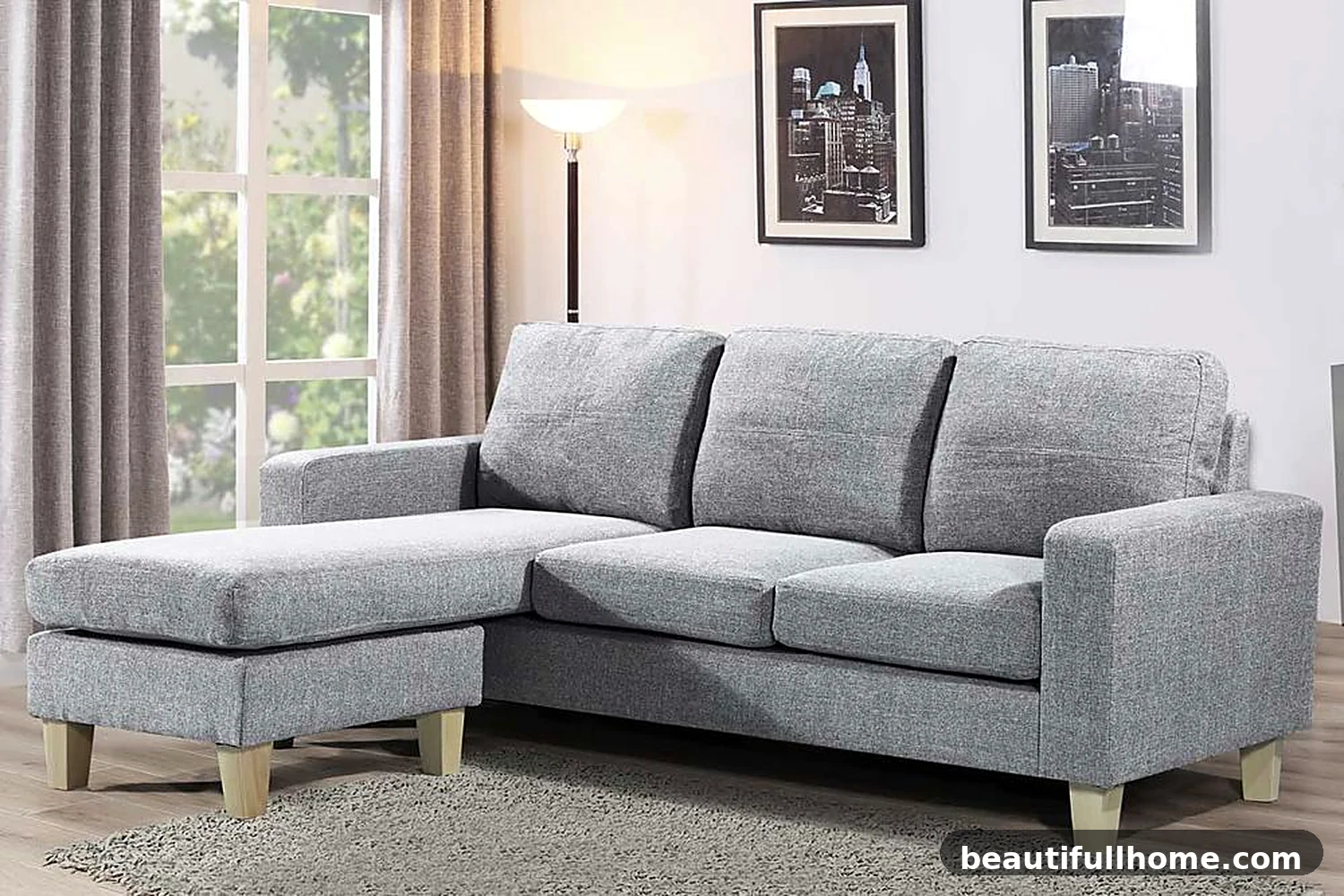
4. Modular sofa: the renter and walk-up pick
A modular sofa is the renter and walk-up pick, because it arrives in boxes, one piece at a time, and reconfigures when the room changes: a two-seater today, a sectional tomorrow, a chaise next year. Each piece fits through a 30-32 inch door and up a narrow stair, which a one-piece sofa often cannot, and you add pieces as the room grows instead of replacing the whole sofa. Pick pieces with the same seat height and depth, so the sofa reads as one piece when it is together, and keep the connectors tight, because loose pieces drift apart when people sit down.
Cost: $1,000-$5,000+. Watch out: a modular sofa costs more per seat than a fixed sofa, so count the pieces you actually need, and check the return window, because a modular set bought in parts is harder to return than a single sofa.
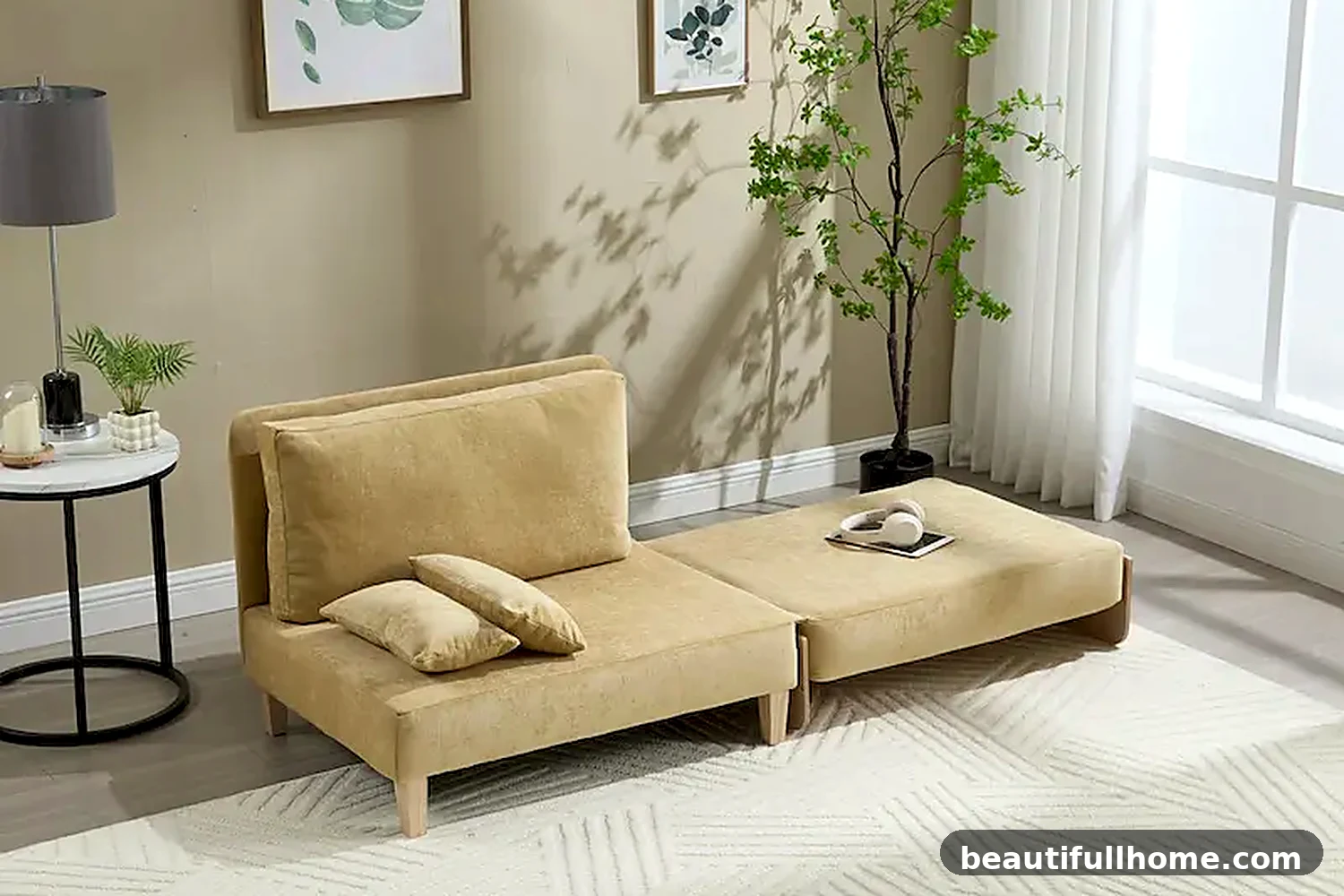
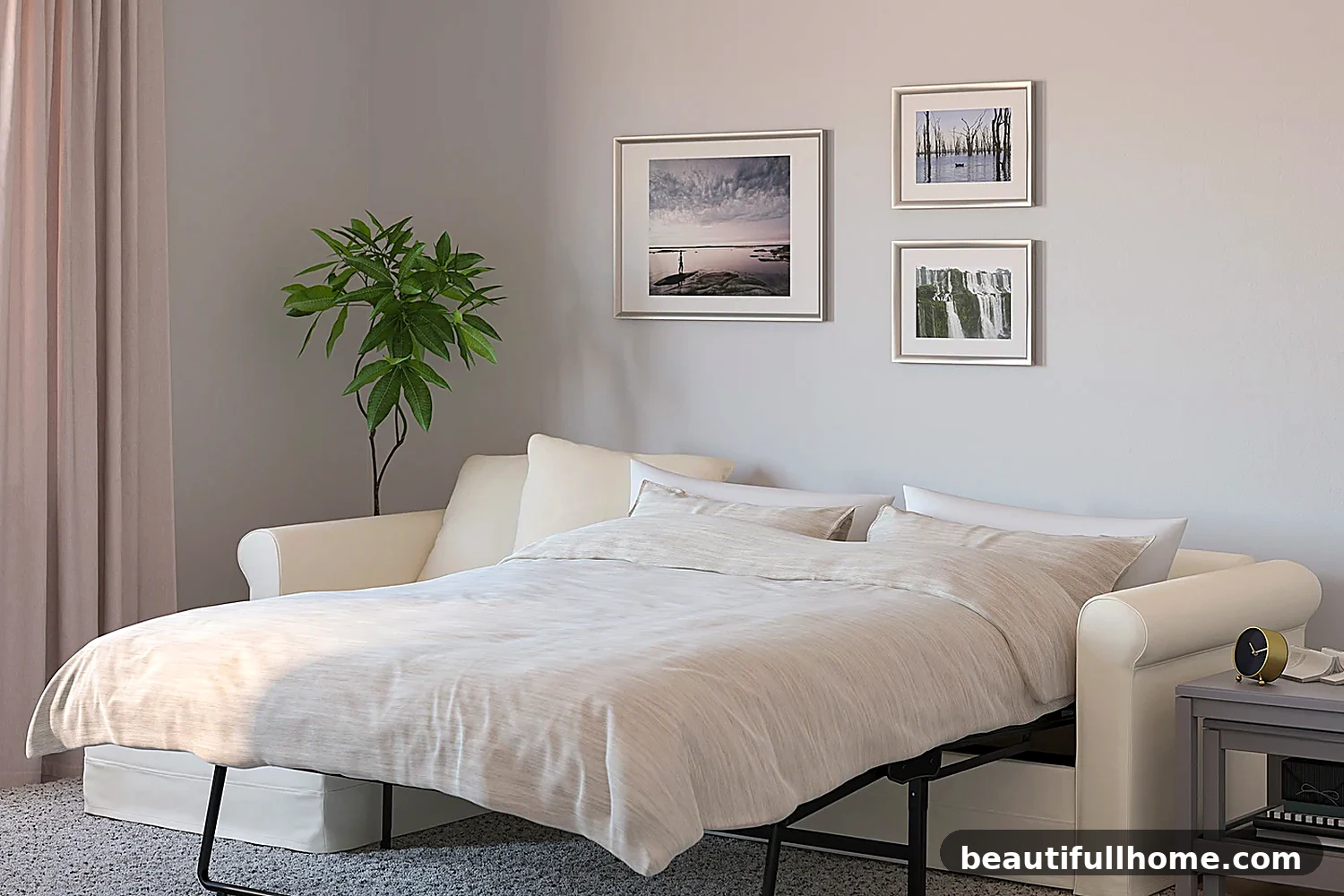
5. Sleeper sofa or sleeper loveseat: the guest bed
A sleeper sofa is the guest bed without a guest room, because it seats three by day and sleeps two by night, and a sleeper loveseat does the same for one guest in a smaller room. Pick a pull-out with a real mattress, not a bar mechanism, and avoid pull-out bar mechanisms under $600, because the bar digs into the sleeper's back and the mechanism adds $200 or more while hurting daily sitting comfort. If you host guests less than once a month, skip the sleeper and buy a better sofa, because a sleeper you never use is $200 of mechanism you sit on every day.
Cost: $400-$1,000 entry, sweet spot $799-$1,099. Watch out: a sleeper needs floor space to open, so measure the open bed against the coffee table, and check the delivery path, because a sleeper is heavier and wider than the same sofa without the mechanism.
6. Armless sofa: the most seat per footprint
An armless sofa gives you the most seat in the same footprint, because there are no arms to eat the width: a 72-inch armless sofa seats three people, while the same sofa with rolled arms seats two, because rolled arms eat up to 10 inches per side. It suits a narrow room, a tight doorway, and a room where the sofa floats in the middle, because there is no arm to block the view or the walkway. Pair it with one armchair for the armrest people actually want, and keep a side table within reach, because there is no arm to rest a book or a drink on.
Cost: about the same as an apartment sofa, $350-$900 entry. Watch out: an armless sofa feels less supportive for long sitting, so sit-test it before you buy, and keep the back cushions tight, because there is no arm to hold them in place.
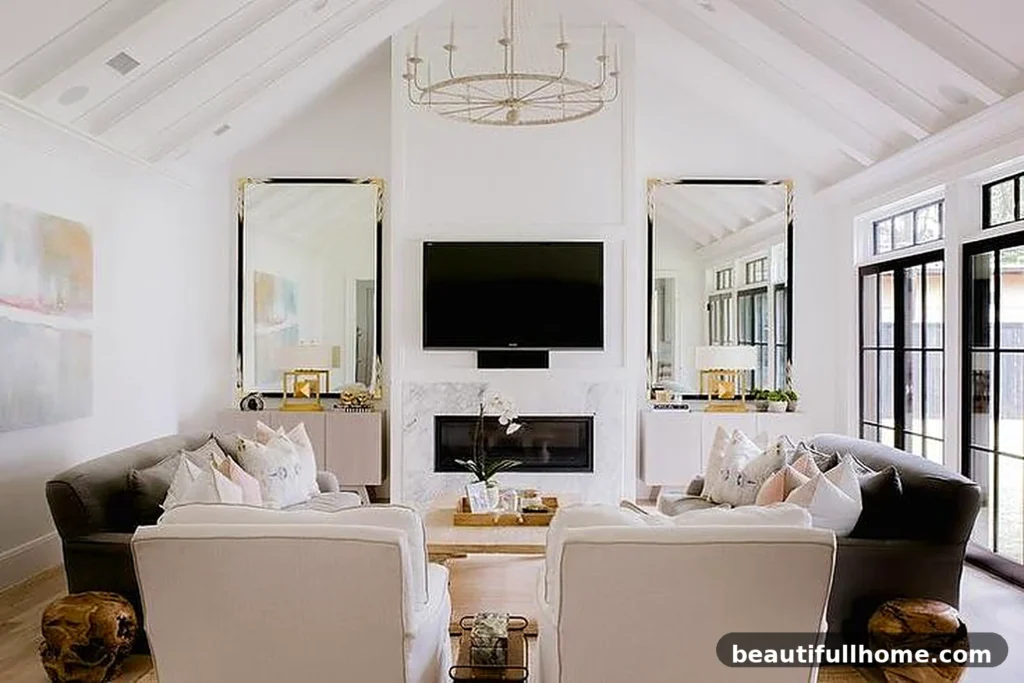
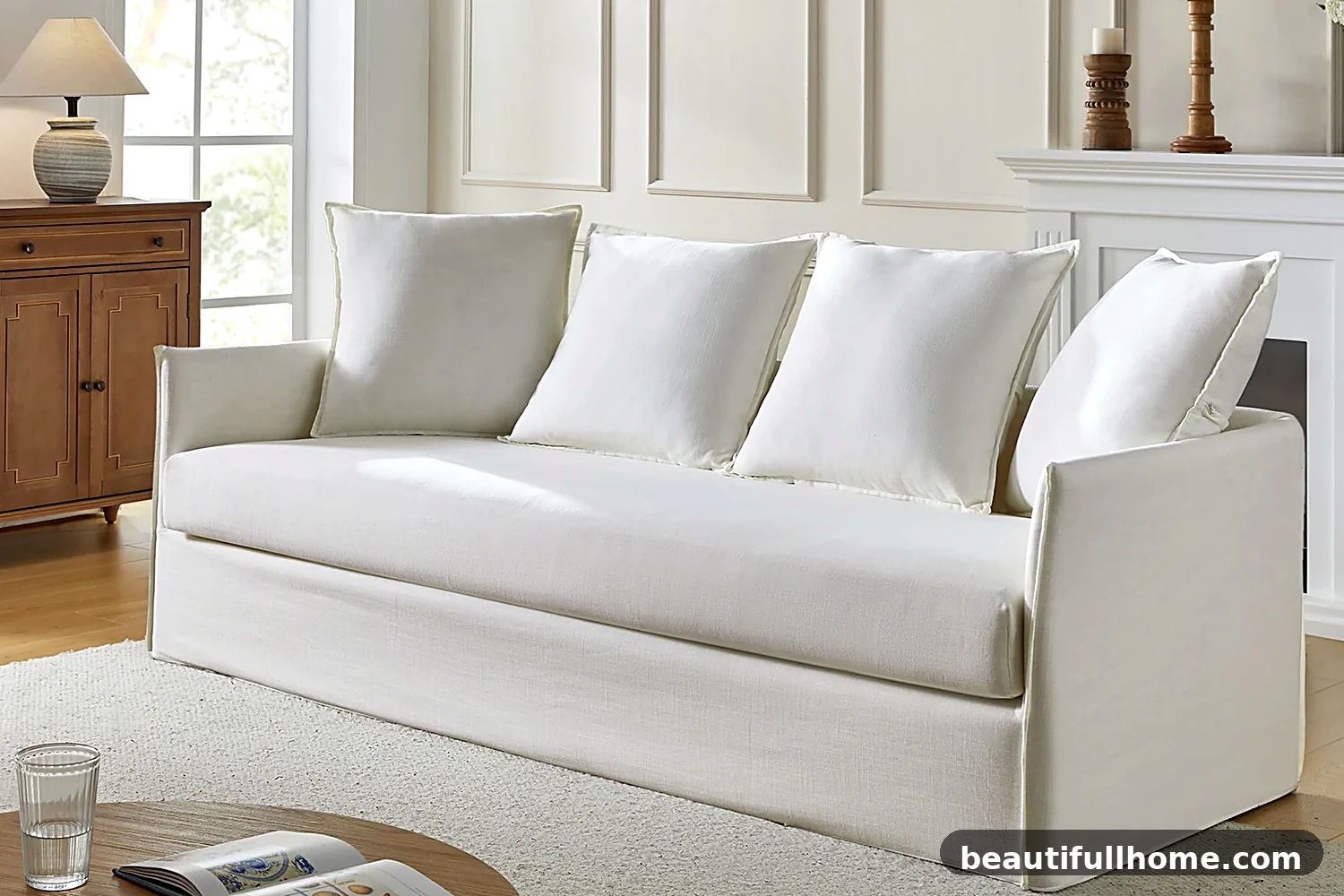
7. Slipcovered sofa: the kids and pets pick
A slipcovered sofa is the kids and pets pick, because the covers come off and wash, and a fresh cover costs $100-$300 instead of a new sofa. Buy one 72-78 inches wide with track arms, because rolled arms eat seat width and the cover never sits right over a roll, and pick a washable linen or cotton cover in warm white or cream, with plain cushions in the same fabric family. A slipcovered apartment sofa costs $600-$1,500, and the cover alone keeps the sofa fresh for years. The farmhouse version, with the shiplap wall and the wood pieces that go with it, is in our Small Farmhouse Living Room Ideas: 12 Cozy Looks guide.
Cost: $600-$1,500, replacement cover $100-$300. Watch out: a dark or patterned slipcover shows every crumb and fights the calm palette, so keep the cover plain and put the pattern in one throw instead.
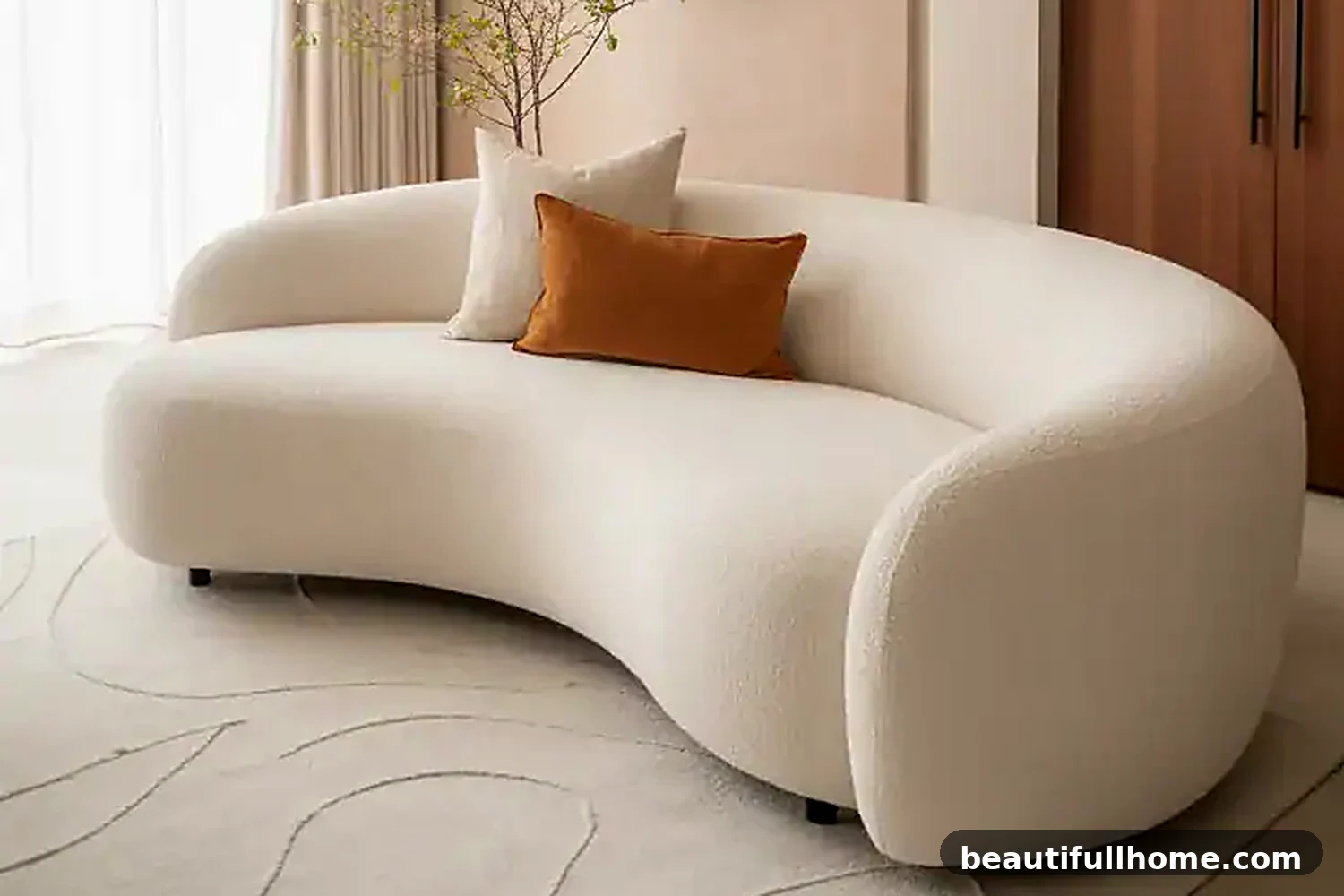
8. Curved sofa: the long narrow room pick
A curved sofa is the long narrow room pick, because its rounded back breaks up a straight wall and softens the sharp corners that make a narrow room feel like a corridor. The curve gives extra perching seats at the ends, where a straight sofa gives none, and it suits a room where the sofa floats, because the back is worth looking at. Pick a gentle curve, not a half-circle, because a deep curve eats floor space in the middle of the room, and keep the coffee table round, so the table follows the curve instead of fighting it.
Cost: about the same as a standard sofa, $500-$2,500. Watch out: a curved sofa wastes the wall behind it, so measure the gap between the curve and the wall, and skip it if the room is square, because a curve needs a long wall to earn its place.
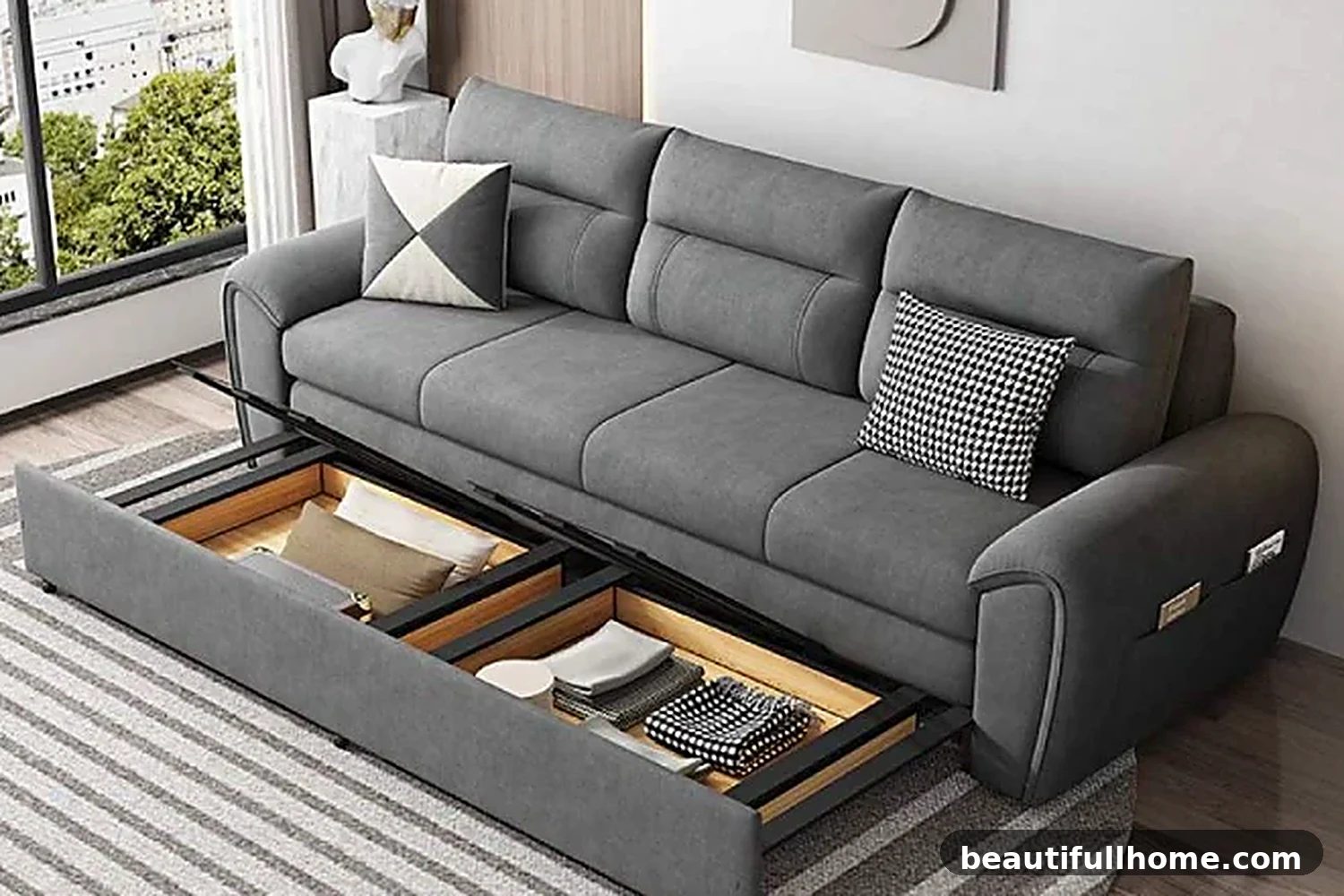
9. Storage sofa: the hidden blanket pick
A storage sofa hides the blankets, because under-seat drawers or lift-up seats hold throws, cushions and the remote, and a small room needs the storage: books and baskets live inside the sofa instead of on the floor. Pick one drawer per seat, or one lift-up seat, and check the drawer depth, because a shallow drawer holds nothing and a deep one is hard to open when someone sits on it. The storage costs $200-$400 more than the same sofa without it, which is cheaper than a separate storage bench in a small room.
Cost: $200-$400 premium over a fixed equivalent. Watch out: a storage sofa is heavier and harder to move, so check the delivery path, and keep the drawers for light things, because a drawer full of books jams when the sofa flexes.
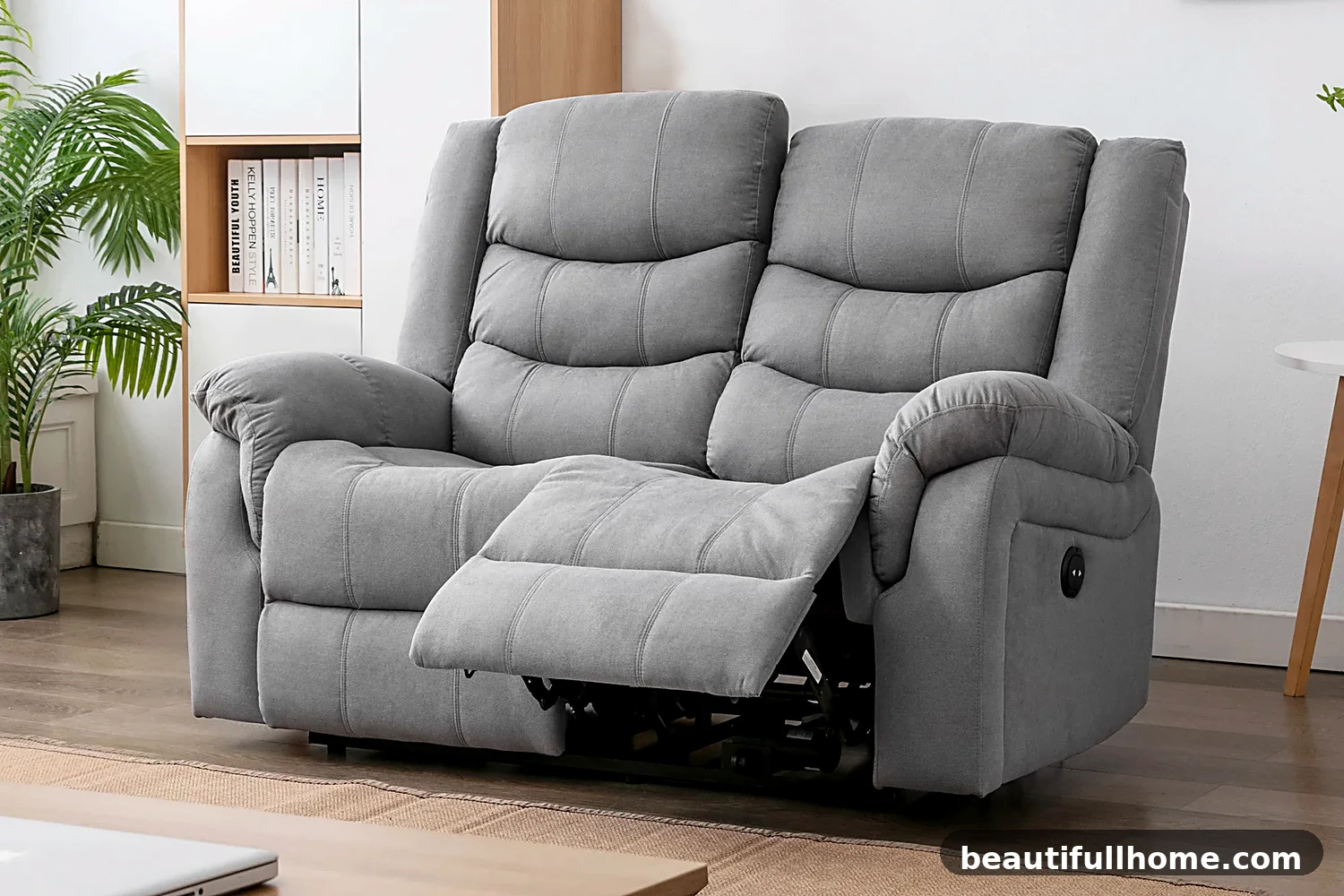
10. Compact recliner sofa: two-seat comfort
A compact recliner sofa gives you two-seat comfort without the bulk, because a manual recliner in a two-seat frame reclines one seat at a time and needs no power outlet. Pick a medium seat depth, because a deep recliner seat pushes you too far from the TV, and keep the recliner clear of the wall, because the back needs 4-6 inches to tilt. The sofa-to-TV distance that goes with it is in our Small Living Room Ideas With TV: 12 Smart Layouts guide.
Cost: $500-$1,200 entry. Watch out: a recliner sofa is deeper than a fixed sofa when it reclines, so measure the open depth against the coffee table, and skip the power recliner in a small room, because the motor adds bulk and a cord you have to hide.
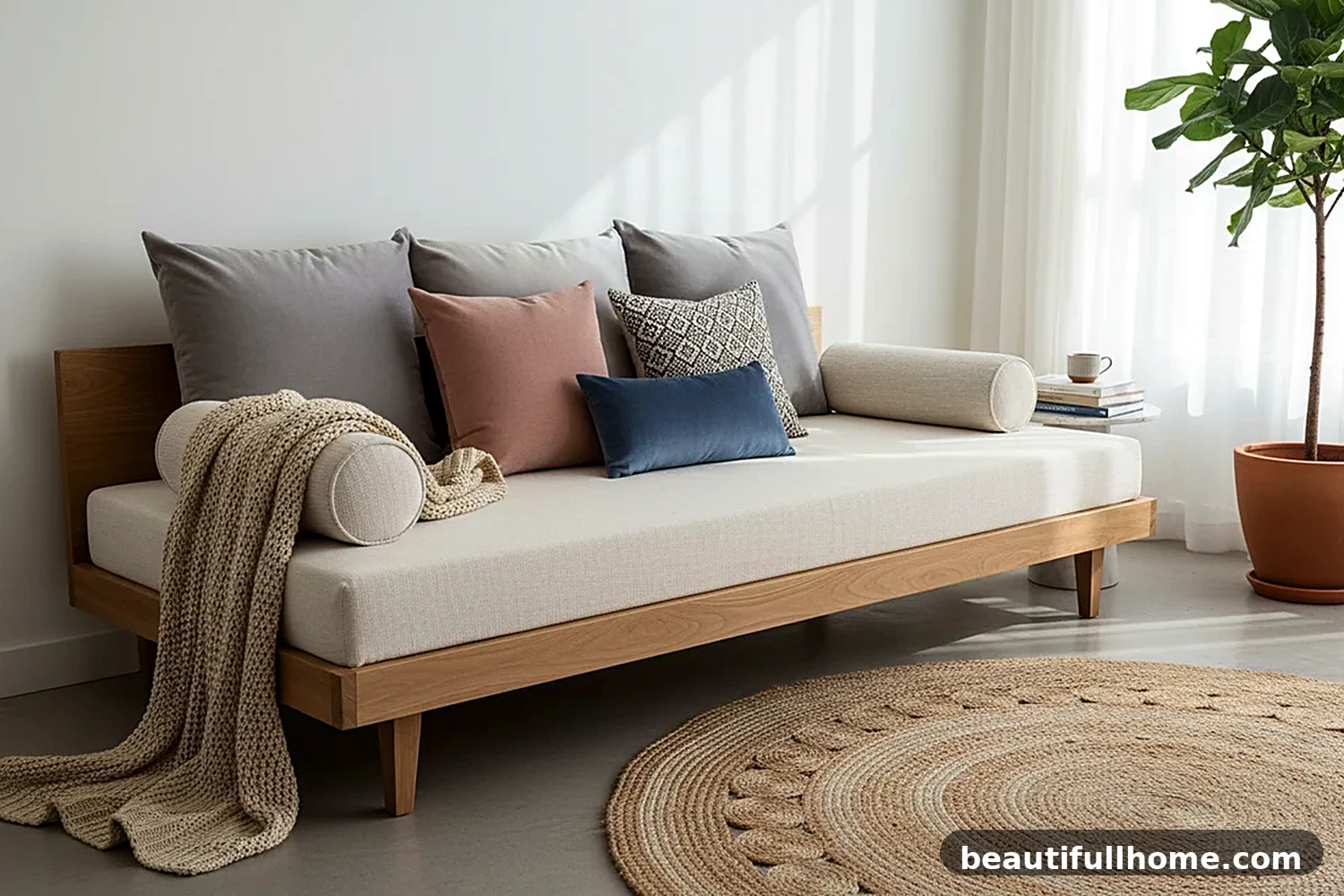
11. Daybed or chaise: lounging plus a guest bed
A daybed or chaise is lounging plus a guest bed, because it seats two by day, sleeps one by night, and needs no mechanism at all. A daybed about 93 inches long suits a long wall, and a chaise suits the window wall, where it catches the light. Pair it with two armchairs for a full set, and keep the cushions tight, because a daybed with loose cushions reads as a bed, not a sofa. A futon costs $189-$549, and a daybed frame costs about $215.
Cost: futon $189-$549, daybed about $215. Watch out: a daybed needs a back cushion to read as a sofa, so budget for bolsters, and skip it if the room has no long wall, because a daybed across a short wall blocks the walkway.
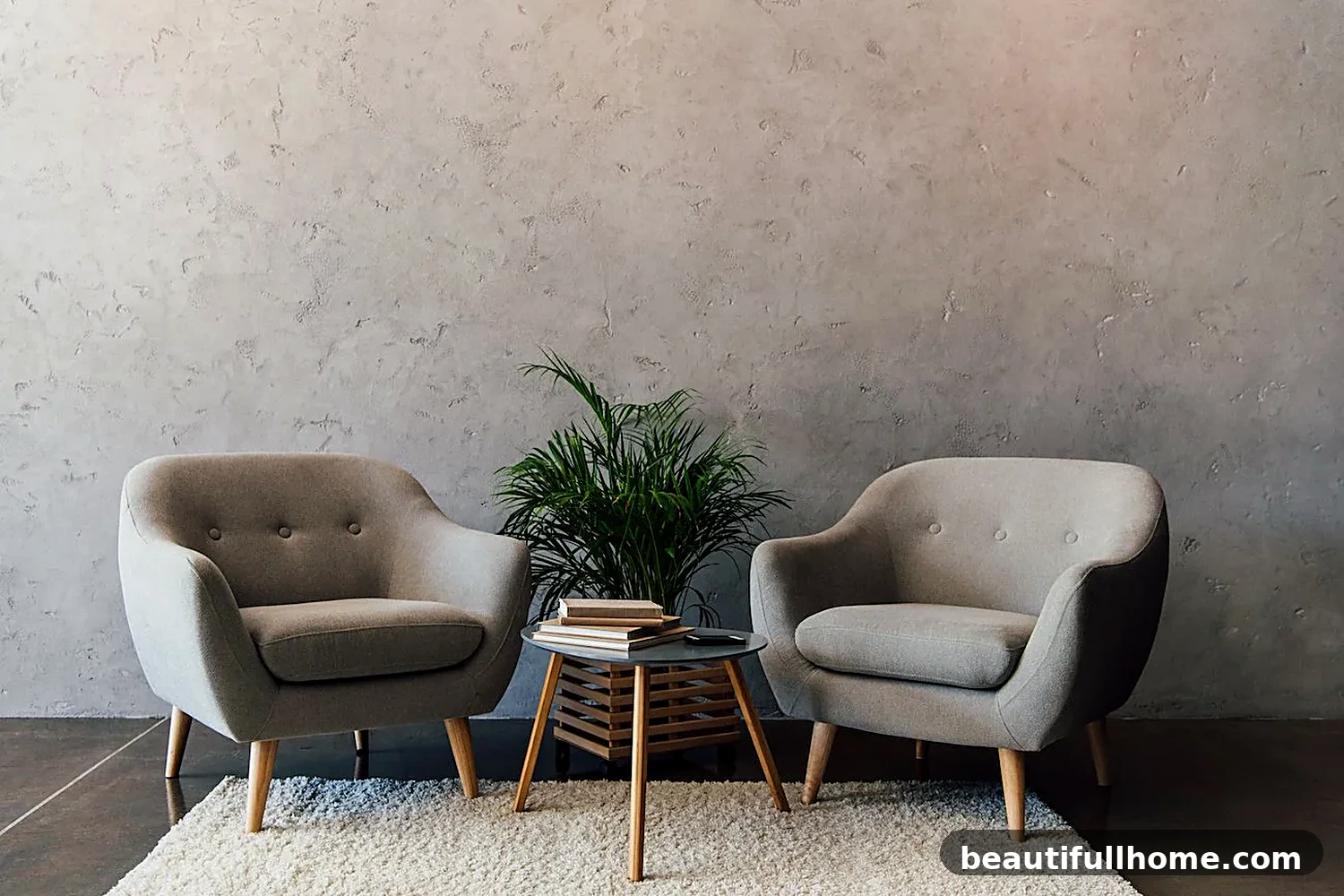
12. Two armchairs instead of a sofa: the too-small room pick
Two armchairs instead of a sofa is the pick when the room is too small for a sofa at all, because each person gets their own chair, 28-30 inches wide each, and the chairs move where a sofa cannot: one by the window, one by the fire, both together for a conversation. A pair of armchairs with a small table between them seats two people in less floor space than a loveseat, and each chair turns toward the TV, the window or the guest. Pick chairs with the same seat height, 17-19 inches, so the pair reads as a set, and keep the table small, because a big table between two chairs blocks the conversation.
Cost: two armchairs cost about the same as a loveseat, $250-$700. Watch out: two chairs with no sofa leave no place to lie down, so keep one chair wide enough to curl up in, and skip the matching 3+2 set entirely, because a three-seater plus a loveseat eats a small room.
What size sofa fits a small living room?
| Sofa type | Width | Depth | Seats | Best for |
|---|---|---|---|---|
| Loveseat | 48-72 in | 30-36 in | 2 | Rooms under 10 ft wide, studios |
| Apartment sofa | 72-84 in | 30-36 in | 3 | Most small rooms, the default pick |
| Standard 3-seater | 84-90 in | 36-40 in | 3 | Rooms over 12 ft wide only |
| Compact sectional | 84-92 in | 60 in chaise | 4-5 | Corners, open plans |
| Sleeper sofa | 72-84 in | 36-40 in | 3 by day, 2 by night | Guest rooms, studios |
| Armless sofa | 60-84 in | 30-36 in | 3 | Narrow rooms, tight doorways |
| Modular sofa | 72-96 in | 30-36 in | 3-5 | Renters, walk-ups, growing rooms |
| Daybed or chaise | 72-93 in | 30-40 in | 2 by day, 1 by night | Long walls, window walls |
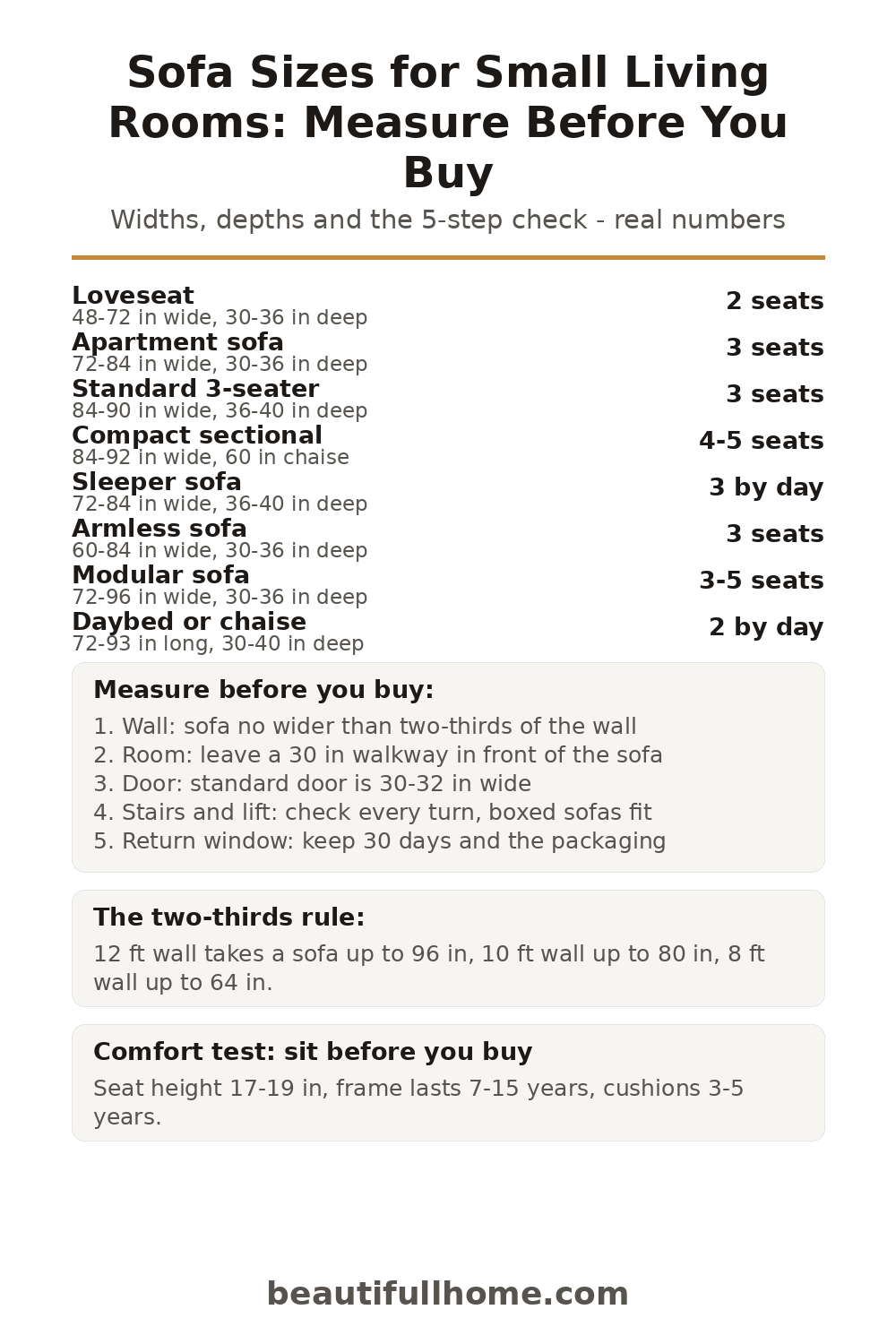
The two-thirds rule decides the width: measure the wall the sofa sits against, multiply by two-thirds, and that is the widest sofa that fits. A 12 ft wall takes a sofa up to 96 inches, a 10 ft wall takes one up to 80 inches, and an 8 ft wall takes one up to 64 inches, which is loveseat territory. Keep the depth under 36 inches, and keep 30 inches of walkway in front of the sofa, because a sofa that leaves no walkway is a wall, not furniture.
What a sofa costs
| Sofa type | Entry range | Mid range | Sweet spot |
|---|---|---|---|
| Loveseat | $250-$700 | $800-$1,500 | $419-$479 |
| Apartment or standard sofa | $350-$900 | $1,000-$2,500 | $699-$849 |
| Compact sectional | $700-$1,200 | $1,300-$3,500 | $1,099-$1,449 |
| Sleeper sofa | $400-$1,000 | $1,100-$2,800 | $799-$1,099 |
| Modular sofa | $1,000-$5,000+ | – | – |
| Recliner sofa | $500-$1,200 | $1,300-$2,700 | – |
| Futon or daybed | $189-$549 | – | $229-$319 |
Three ways to budget the sofa alone: under $500 buys a futon or a budget loveseat, which is ideas 2 and 11. About $1,000 buys the apartment sofa sweet spot, $699-$849, which is idea 1, or a loveseat plus one armchair. About $2,000 buys a sectional or a sleeper in the mid-range, which is ideas 3 and 5, or a modular set. Most sofas overall cost $700-$2,000 in 2026, and designer brands run higher, with a median sofa at $1,849 across tracked models, so the ranges above are the retail bands, not the designer medians.
Measure before you buy: the 5-step checklist
- Measure the wall: the sofa must be no wider than two-thirds of the wall it sits against, so a 12 ft wall takes a sofa up to 96 inches and a 10 ft wall takes one up to 80 inches.
- Measure the room: leave 30 inches of walkway in front of the sofa and 14-18 inches between the sofa and the coffee table, or the room stops working.
- Measure the door: a standard door is 30-32 inches wide and a sofa's smallest dimension is usually 34-38 inches, so check the sofa's height and depth against the door before you buy.
- Measure the stairs and the lift: check every turn on the stair and the lift door, because a sofa that fits the front door and not the stair turn is a return, and a boxed or modular sofa fits where a one-piece sofa cannot.
- Check the return window: buy from a shop with at least 30 days to return, and keep the packaging until the sofa has sat in the room for a week, because a sofa that looks right in the shop can still be wrong at home.
Fabric and colour: the chooser
Performance fabrics: microfiber, performance velvet and tight-weave synthetics are the small-room fabrics, because they resist stains and pet hair, and they cost extra over plain polyester, which is the cheapest fabric. Pick performance fabric if the room has kids, pets or daily meals on the sofa.
Light colours: warm white, cream and pale grey make a small room feel bigger, because they reflect light, and they suit a slipcovered sofa, because the covers wash. Pick light colours if the room is dark or north-facing, and keep the covers washable, because a light sofa shows every mark.
Dark colours: charcoal, navy and forest green hide marks and ground the room, but they swallow light, so pick dark colours only if the room has good daylight and light walls, and keep the rug light, because a dark sofa on a dark rug disappears.
Colour-drenched: a sofa in the same colour as the walls, a monochromatic velvet, makes a small room feel calm, because there is no contrast to break the room up. Pick colour drenching if the room is one colour already, and keep the cushions in the same family, because a contrasting cushion breaks the effect. The wall colours that go with each sofa colour are in our Small Living Room Paint Ideas: 12 Colors That Work guide.
Prints: avoid large or overwhelming prints in a small room, because a big pattern on a big sofa dominates the room, and a small print reads as texture, not pattern. Pick a solid sofa and put the pattern in one throw or two cushions, never in the sofa itself.
Sectional or sofa: how to decide
A sectional wins when the room has a corner to hug, when the room is open plan and the sectional marks the living zone, and when four or five people need seats every day, because a sectional seats more people per inch of wall than a sofa and a chair. A sectional loses when the room is narrow, because the chaise blocks the path to the window, when the door swing hits the chaise, and when the room rearranges often, because a sectional has one shape and a sofa and a chair have many. The 92-inch rule decides it: stay under 92 inches wide if the shortest wall is under 11 ft, and if the sectional you want is wider than that, buy the sofa and one armchair instead. A reversible chaise saves the sectional in a room that might change, because the long side moves, but a fixed chaise in the wrong corner is a permanent mistake.
The comfort test: sit before you buy
Sit on the sofa before you buy it, because the numbers only get you to the shop. Check the seat height first: 17-19 inches is the comfortable height, and your feet should touch the floor flat. Check the seat depth next: a medium depth is the sweet spot, because a deep seat pushes a short person forward and a shallow seat pushes a tall person back. Check the cushions: a frame lasts 7-15 years and cushions last 3-5 years before they need re-stuffing, so ask what the cushions are filled with and whether the covers come off. Check the arms: sit with your arms on them for a minute, because an arm that is too high or too hard ruins a long evening. Check the back: lean back and see if the backrest supports your shoulders, because a back that is too low or too soft makes the sofa a chair you cannot relax in.
Sofa mistakes that make a small room feel smaller
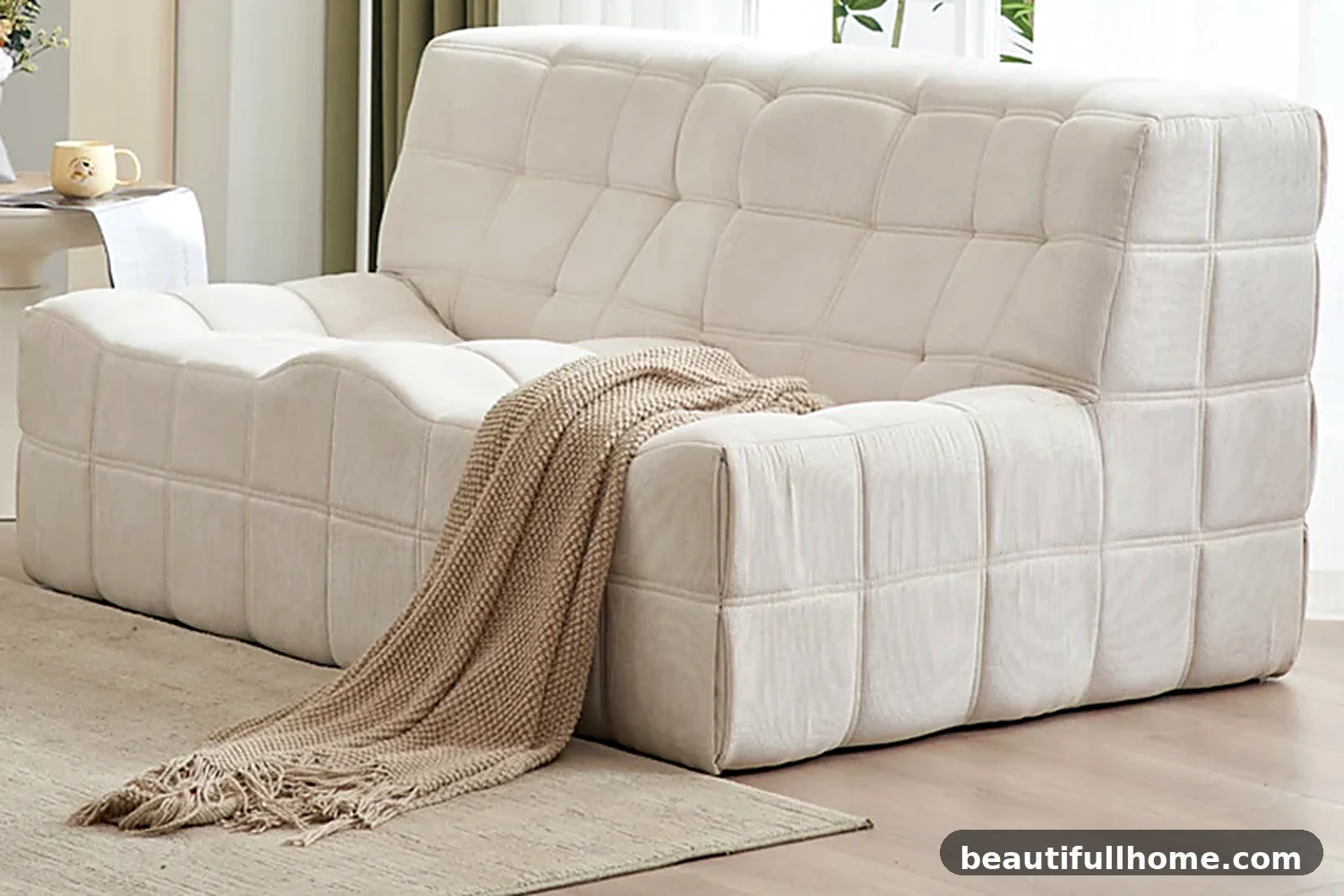
- A cloud couch: a deep, low, oversized cloud couch swallows a small room, so skip it entirely, because it eats the floor and the walkway in one piece.
- An oversized sectional: a sectional over 92 inches in a room with a wall under 11 ft blocks the walkway, so measure the shortest wall before you buy the sectional.
- Rolled arms: rolled arms eat up to 10 inches per side, so a 72-inch sofa with rolled arms seats like a 52-inch sofa, and track arms or armless win in a narrow room.
- A dark heavy sofa: a dark, low, blocky sofa on a dark rug disappears into the floor, so pick raised legs and a light colour, or a light rug under a dark sofa.
- Buying before measuring: a sofa bought without measuring the wall, the door and the stairs is a return, so run the 5-step checklist before you pay.
- A pull-out bar under $600: a cheap bar mechanism digs into the sleeper's back, so avoid it, and buy a real mattress sleeper instead.
- A sleeper you never use: a sleeper mechanism adds $200 or more and hurts daily comfort, so skip the sleeper if you host guests less than once a month.
- A matching 3+2 set: a three-seater plus a loveseat in matching fabric eats a small room, so buy the sofa and one different chair instead.
Which sofa idea should you pick? A quick chooser
- Your room is under 10 ft wide: loveseat, armless sofa, or two armchairs.
- Your room is under 120 sq ft: loveseat under 72 inches, or two armchairs.
- Your room has a corner to hug: compact sectional under 92 inches, reversible chaise.
- Your room is open plan: compact sectional, or an apartment sofa with the chaise clear of the dining table.
- You rent or live up the stairs: modular sofa, boxed pieces, no one-piece sofa.
- You host guests often: sleeper sofa with a real mattress, never a bar mechanism under $600.
- You have kids or pets: slipcovered sofa, performance fabric, washable covers.
- Your room is long and narrow: curved sofa, or an armless sofa that floats.
- You want hidden storage: storage sofa, $200-$400 premium, drawers for light things.
- Your budget is under $500: futon, budget loveseat, or two armchairs.
FAQs
What size sofa is best for a small living room?
An apartment sofa 72-84 inches wide is the best size for most small living rooms, with 72-78 inches the sweet spot. The sofa should be no wider than two-thirds of the wall it sits against, so a 10 ft wall takes a sofa up to 80 inches, and a room under 10 ft wide needs a loveseat 48-72 inches wide instead. Keep the depth under 36 inches and the seat height at 17-19 inches.
Is a sectional good for a small living room?
Yes, if it stays under 92 inches wide and the shortest wall is over 11 ft, because a compact L-shaped sectional with a reversible chaise seats four or five people in a corner. No, if the room is narrow, because the chaise blocks the path to the window, and no, if the door swing hits the chaise. In a narrow room, an apartment sofa plus one armchair seats the same people with more flexibility.
What sofa colour is best for a small living room?
Light colours, warm white, cream and pale grey, make a small room feel bigger, because they reflect light. Dark colours hide marks but swallow light, so use them only in a bright room with light walls and a light rug. A sofa in the same colour as the walls, colour drenching, makes the room feel calm, and a solid sofa with the pattern in one throw beats a printed sofa in a small room.
How do I get a sofa through a small door?
Measure the door, the stairs and the lift before you buy, because a standard door is 30-32 inches wide and a sofa's smallest dimension is usually 34-38 inches. A sofa with removable legs, a boxed sofa, or a modular sofa fits where a one-piece sofa cannot, and the delivery test is simple: the sofa's smallest dimension must be smaller than the narrowest doorway on the path.
What fabric is best for a small living room sofa?
Performance fabrics are the best for a small living room, because microfiber, performance velvet and tight-weave synthetics resist stains and pet hair. Plain polyester is the cheapest fabric, velvet is mid to high-end, and genuine leather is high-end. If the room has kids or pets, pick a performance fabric or a slipcovered sofa with washable covers, and avoid large prints, because they dominate a small room.
Conclusion
These sofa ideas for small living rooms work when you pick by the numbers instead of by the catalog photo: a sofa no wider than two-thirds of the wall, under 36 inches deep, with track arms or no arms at all, and raised legs so the floor shows underneath. All of these ideas use real sizes and real costs, so pick the sofa that fits your room: an apartment sofa for most small rooms, a loveseat for a room under 10 ft wide, a compact sectional under 92 inches for a corner, a modular sofa for a rental or a walk-up, and a slipcovered sofa for kids and pets. Then spend the money where it shows: the seat width, the fabric that survives daily life, and the delivery that actually gets the sofa through the door.
If you want more ideas for the same room, read our guides Small Apartment Living Room Ideas: 15 Rental-Friendly Ways, Small Living Room Layout: 7 Layouts With Measurements, Small Living Room Ideas With TV: 12 Smart Layouts, Small Farmhouse Living Room Ideas: 12 Cozy Looks, What Size Rug for Living Room, Small Living Room Paint Ideas: 12 Colors That Work and Very Small Living and Dining Room Ideas: 12 Layouts. Each one covers a different piece of the same room, so you can plan the sofa, the layout, the rug, the paint and the TV together.