What Size Rug for Living Room? Size Guide & Chart
Choosing the right rug size can change how your entire living room looks and feels. A rug that is too small can make your furniture look disconnected. A rug that is too large can cover too much of your floor.
The best living room rug should connect your seating area, balance your furniture, and leave enough visible flooring around the edges.
But how do you know which size actually fits your room?
This guide explains how to choose a rug based on your sofa type, room dimensions, furniture layout, and budget. It also covers sectionals, U-shaped sofas, curved seating, and placing rugs over carpet.
Quick Answer: What Size Rug for a Living Room?
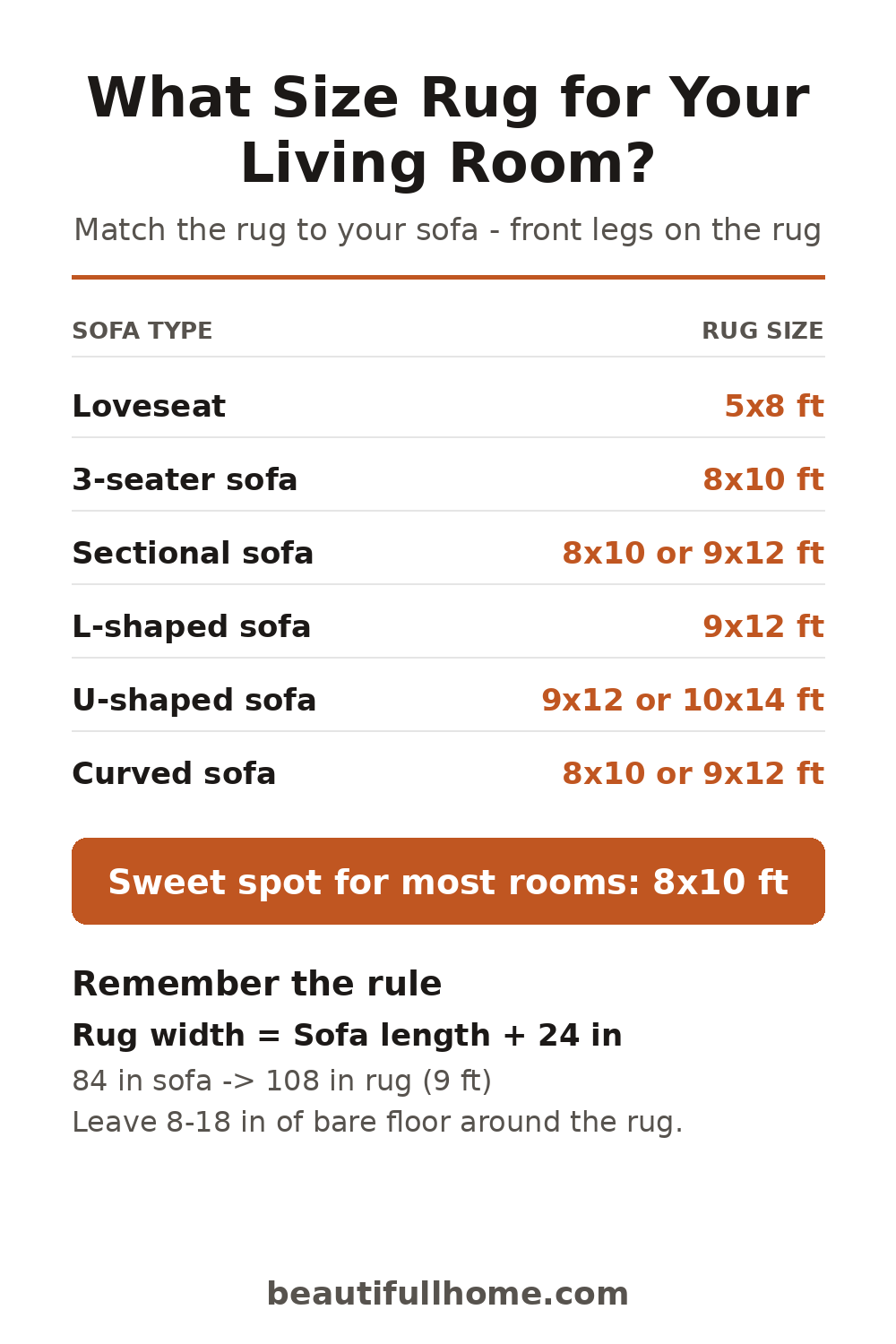
For most living rooms, an 8×10-foot rug is a good starting point. A 5×8 works for smaller seating areas, while a 9×12 suits larger rooms and sectional sofas.
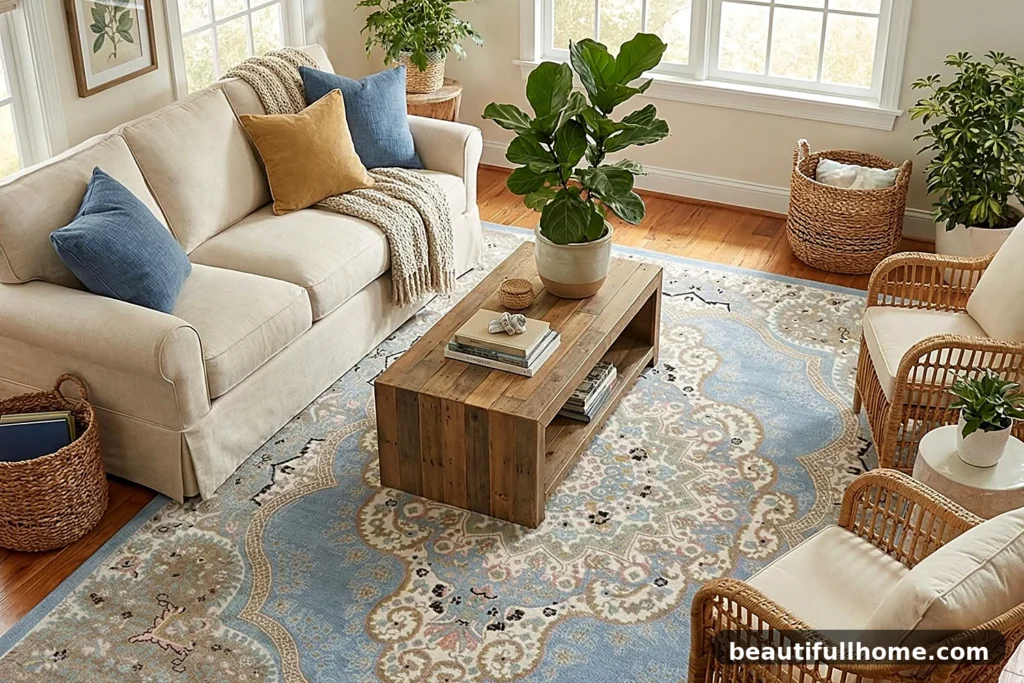
Your rug should usually extend 6-18 inches beyond each side of the sofa. Ideally, place the front legs of your main seating furniture on the rug.
Here is a quick reference:
| Living room setup | Recommended rug size |
|---|---|
| Small loveseat | 5×8 feet |
| Large loveseat | 6×9 feet |
| Standard 3-seater sofa | 8×10 feet |
| Small sectional | 8×10 feet |
| Large sectional | 9×12 feet |
| L-shaped sofa | 8×10 or 9×12 feet |
| U-shaped sofa | 9×12 or 10×14 feet |
| Curved sofa | 8×10 or 9×12 feet |
These are starting recommendations. Always compare the rug dimensions with your actual furniture measurements before purchasing.
What Are the Standard Living Room Rug Sizes?
Living room rugs come in several standard dimensions. The right option depends on how much floor space you want to cover and how your furniture is arranged.
| Rug size | Dimensions in inches | Best use |
|---|---|---|
| 5×8 | 60 x 96 | Small living rooms and loveseats |
| 6×9 | 72 x 108 | Compact seating areas |
| 8×10 | 96 x 120 | Average living rooms |
| 9×12 | 108 x 144 | Large living rooms and sectionals |
| 10×14 | 120 x 168 | Large or open-plan living spaces |
A 5×8 rug covers 40 square feet. An 8×10 covers 80 square feet, while a 9×12 covers 108 square feet.
Notice how much coverage you gain when moving from an 8×10 to a 9×12. The larger option adds 28 square feet of floor coverage.
For many living rooms, this extra space helps connect sofas, accent chairs, and coffee tables.
What Size Rug Should You Get for Different Sofa Types?
Your sofa is one of the most important factors when selecting a living room rug.
However, not every sofa has the same footprint. A loveseat needs less coverage than a large sectional. Curved and U-shaped sofas also need different layouts.
Use this sofa-specific sizing chart as your starting point.
| Sofa type | Sofa width (typical) | Recommended rug |
|---|---|---|
| Loveseat | 48-72 inches | 5×8 or 6×9 |
| 3-seater sofa | 72-90 inches | 8×10 |
| Sectional sofa | 100-120 inches | 8×10 or 9×12 |
| L-shaped sofa | 100-130 inches | 9×12 |
| U-shaped sofa | 120-160 inches | 9×12 or 10×14 |
| Curved sofa | 80-120 inches | 8×10 or 9×12 |
These sofa widths are common examples, not fixed furniture standards. Measure your actual sofa, including its full seating footprint.
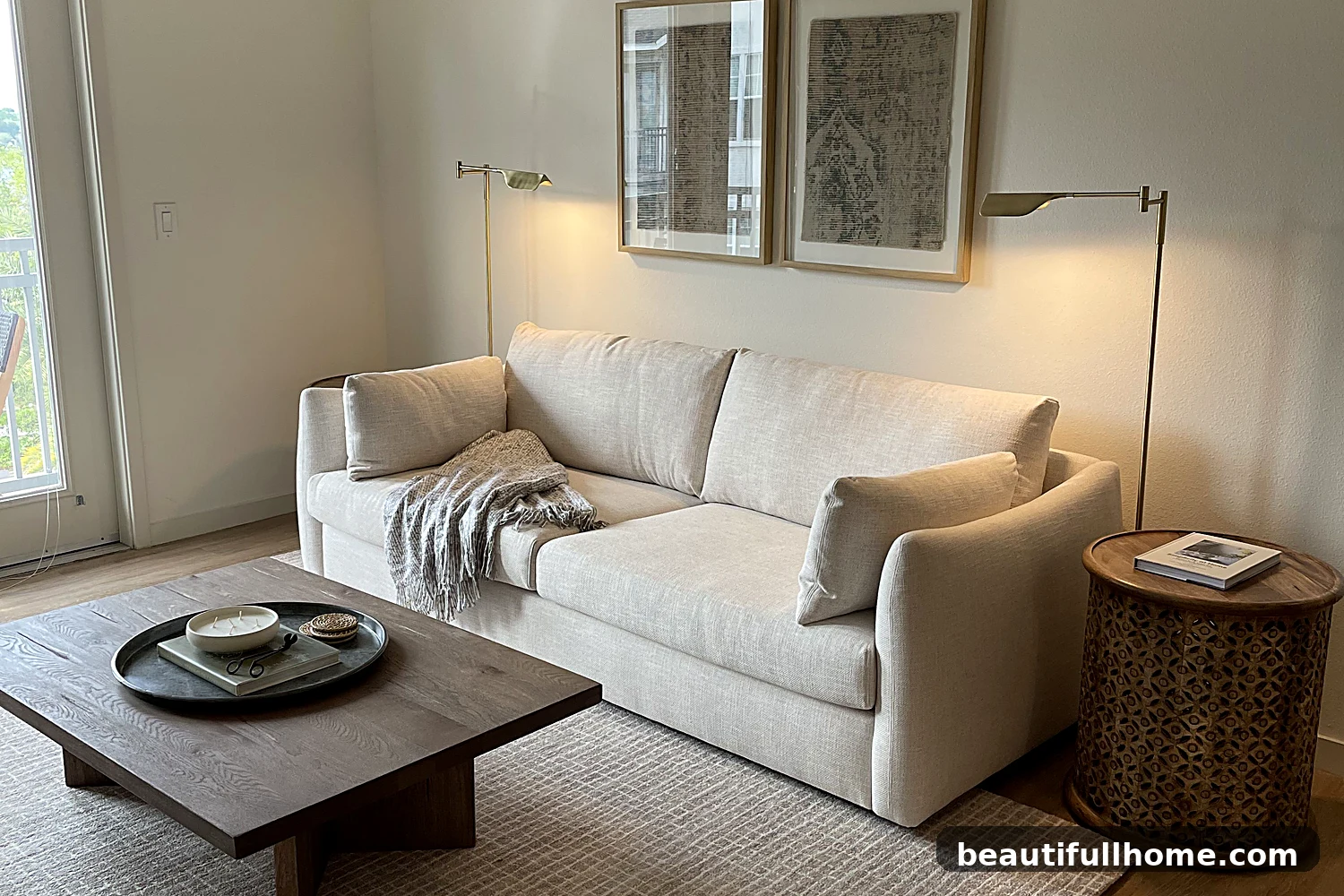
1. What Size Rug Works Best With a Loveseat?
A 5×8 rug usually works well with a loveseat. It provides enough space for the front sofa legs and a small coffee table.
For a loveseat measuring 60 inches wide, an 8-foot-wide rug gives you 18 inches of extra width on each side.
Choose a 5×8 if your seating area is compact. Consider a 6×9 if you also want to include an accent chair.
2. What Size Rug Should You Use With a 3-Seater Sofa?
An 8×10 rug is a practical choice for most standard three-seater sofas.
For example, imagine your sofa measures 84 inches wide. A 10-foot rug measures 120 inches across.
That leaves 18 inches on each side when centered.
This creates a balanced seating arrangement without making the rug look too narrow.
If your room is particularly small, a 6×9 may also work. Just make sure the coffee table and front sofa legs fit comfortably.
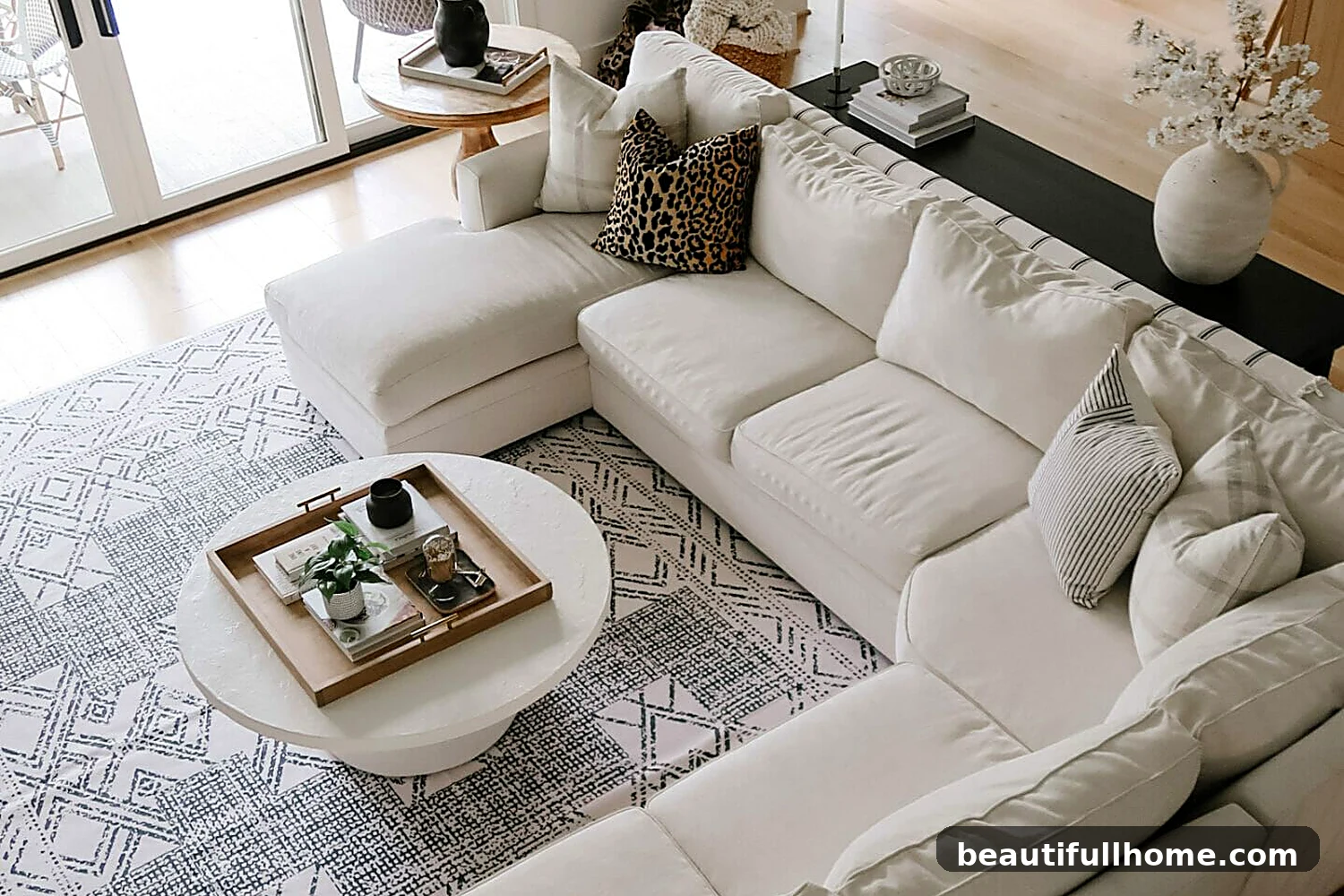
3. What Size Rug Is Best for a Sectional Sofa?
Sectional sofas need more floor coverage because they occupy a wider seating area.
An 8×10 rug can work with a compact sectional. A 9×12 is usually better for larger sectionals.
The rug should extend beneath the front legs of both sections. This helps connect the entire sofa instead of making each section look separate.
Avoid choosing a rug based only on the length of the longest sofa section. Measure the complete sectional footprint, including its return or chaise.
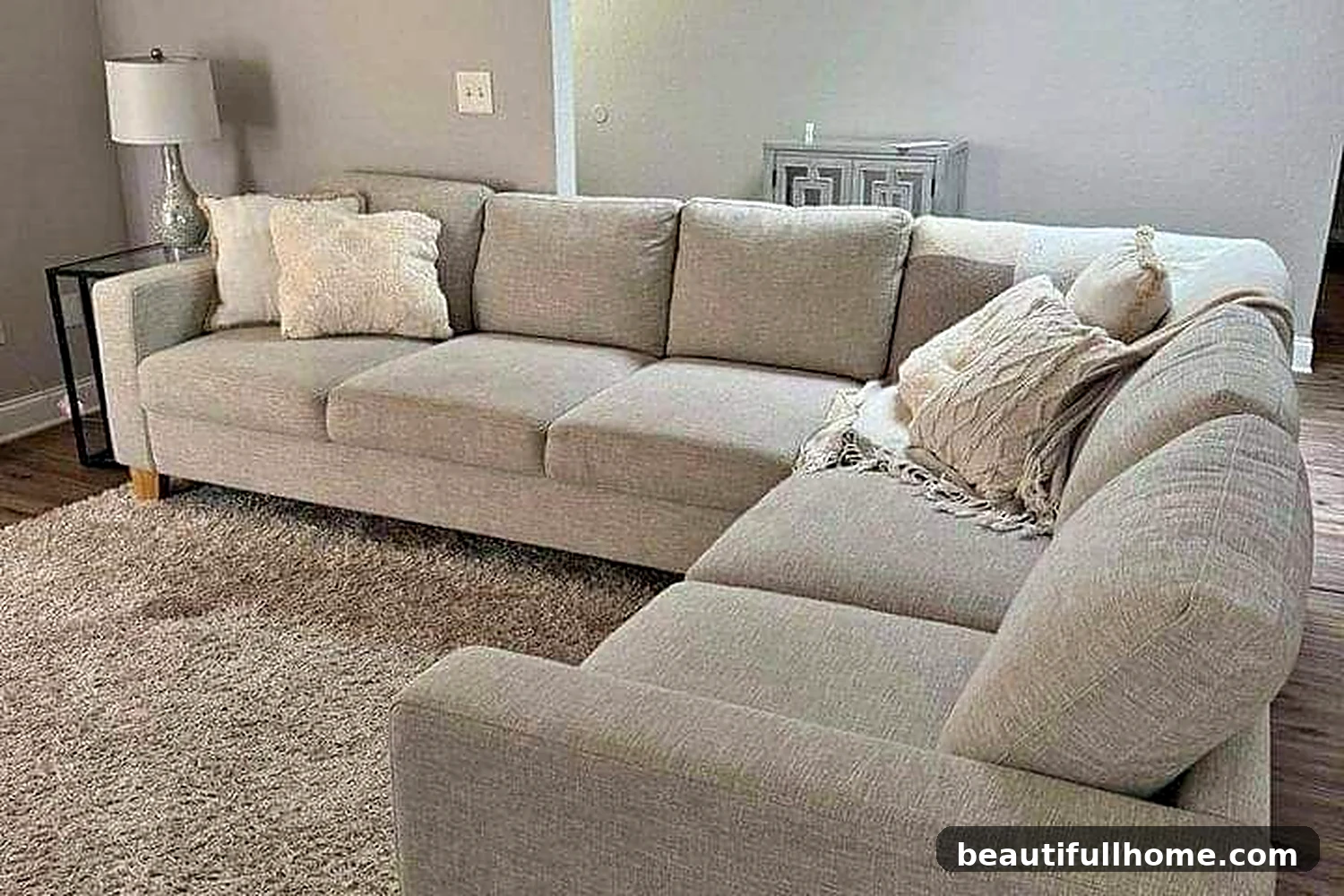
4. What Size Rug Fits an L-Shaped Sofa?
A 9×12 rug is often a good choice for an L-shaped sofa.
The rug should extend under the front legs of both sofa sections. It should also provide enough room for the coffee table.
For example, if your L-shaped sofa measures 110 inches along its longer side, a 12-foot rug gives you 34 inches of additional length.
You can distribute this extra space between the two ends.
For smaller L-shaped sofas, an 8×10 may provide enough coverage.
5. What Size Rug Should You Choose for a U-Shaped Sofa?
U-shaped sofas require more careful planning because they surround a central seating area.
A 9×12 rug is a useful starting point. A 10×14 may be more appropriate for oversized U-shaped furniture.
The rug should sit beneath the front legs of all three seating sections whenever possible.
It should also extend into the open center of the seating arrangement.
Measure the sofa's full outside width and depth. Then check that the rug fits inside the surrounding room without touching every wall.
A small rug in front of a large U-shaped sofa often makes the seating arrangement look unbalanced.
6. What Size Rug Works With a Curved Sofa?
Curved sofas need a little more attention because their shape does not follow straight furniture edges.
An 8×10 rectangular rug can work with many medium-sized curved sofas. A 9×12 provides more room for larger designs.
You can also consider a round or oval rug if the sofa has a circular seating arrangement.
The goal is to create a visual connection between the curved sofa, coffee table, and nearby chairs.
Do not choose a round rug simply because the sofa is curved. Compare the actual dimensions and make sure the rug provides enough usable space.
How Does the Sofa Length + 24 Inches Rule Work?
One simple way to estimate rug width is to use the sofa length plus 24 inches.
This means adding approximately 12 inches on each side of the sofa.
Formula:
Rug width = Sofa length + 24 inches
For example:
- Sofa length: 72 inches
- Extra space: 24 inches
- Recommended rug width: 96 inches (8 feet)
This gives you a rug that extends 12 inches beyond each sofa end.
Here are a few more examples:
| Sofa length | Suggested rug width |
|---|---|
| 60 inches | 84 inches |
| 72 inches | 96 inches |
| 84 inches | 108 inches |
| 90 inches | 114 inches |
| 96 inches | 120 inches |
This rule is especially useful for straight sofas.
However, it is not a complete sizing formula for sectionals or curved furniture. For those layouts, measure the full seating footprint and consider both rug dimensions.
Should All Sofa Legs Be on the Living Room Rug?
Not necessarily. There are three common ways to position a living room rug.
Option 1: Front Legs on the Rug
This is one of the most practical arrangements for everyday living rooms.
Place the front legs of your sofa and accent chairs on the rug. Keep the back legs on the bare floor.
This arrangement connects your seating furniture while leaving enough visible flooring around the rug.
It works particularly well with 8×10 rugs.
Option 2: All Furniture Legs on the Rug
This arrangement creates a more complete and unified seating area.
All sofa and chair legs sit on the rug. The coffee table also stays completely within the rug boundaries.
Choose a larger rug, such as a 9×12 or 10×14, if your room has enough space.
This layout works well in larger living rooms and open-plan spaces.
Option 3: Coffee Table Only on the Rug
This arrangement places the rug underneath the coffee table while leaving the sofa and chairs completely outside it.
It can work in very small rooms or compact seating areas.
However, the rug should still be large enough to look intentional. A tiny rug floating beneath a large coffee table can make the room feel disconnected.
My recommendation: Use the front-legs-on-the-rug arrangement for most living rooms. It provides a good balance between furniture coverage and visible flooring.
How Much Should a Rug Extend Beyond the Sofa?
A living room rug should generally extend 6-18 inches beyond each side of the sofa.
This creates a balanced appearance and prevents the rug from looking too narrow.
For example, if your sofa is 84 inches wide:
- 6 inches extra on each side = 96 inches total.
- 12 inches extra on each side = 108 inches total.
- 18 inches extra on each side = 120 inches total.
An 8×10 rug measures 120 inches across. It would provide 18 inches of extra width on both sides of an 84-inch sofa.
The exact amount depends on your furniture arrangement and available floor space.
How Much Bare Floor Should You Leave Around a Rug?
Leave approximately 8-18 inches of visible floor between the rug and the walls.
This border helps define the seating area and keeps the room from feeling overcrowded.
For a large living room, you may prefer a wider border. Smaller rooms often look better with a narrower gap.
Do not force an 8-inch border if it makes the furniture arrangement uncomfortable. Practical furniture placement should always come first.
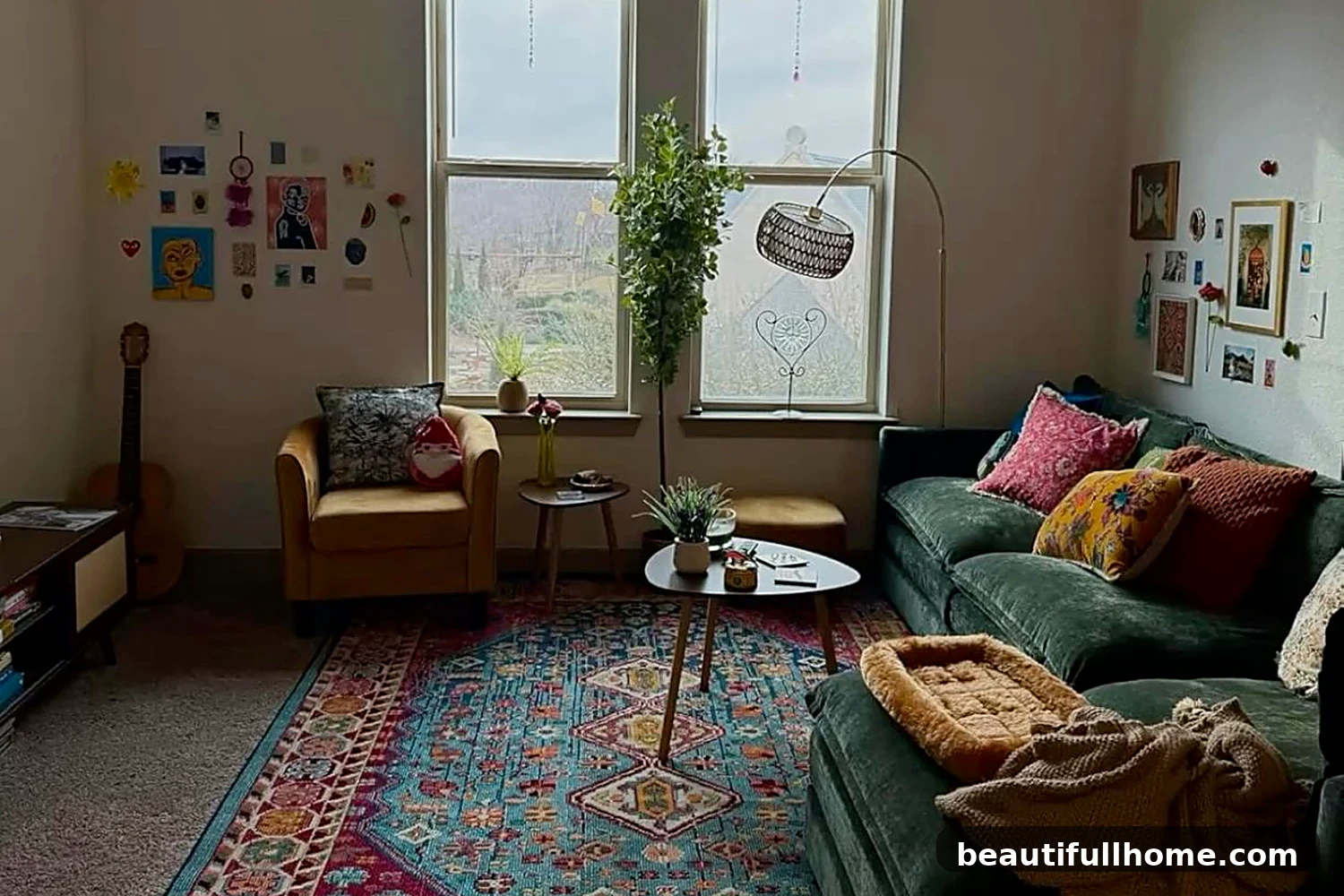
Can You Put an Area Rug Over Carpet?
Yes. You can place an area rug over wall-to-wall carpet.
This technique is useful when you want to define a seating area, introduce another texture, or add color without replacing your existing flooring.
However, choosing the right rug matters.
What Type of Rug Works Best Over Carpet?
Low-pile and flatweave rugs are generally better choices for carpeted floors.
They are easier to position and usually create fewer stability problems than thick, plush rugs.
Consider these options:
- Flatweave rugs: These have a thin construction and work well over many carpet types.
- Low-pile synthetic rugs: Polypropylene and polyester rugs are practical options for everyday living rooms.
- Low-pile wool rugs: Wool can provide a comfortable natural texture without adding too much height.
Avoid thick shag rugs over deep carpet. Combining two thick surfaces can make furniture unstable and create uneven walking areas.
How Thick Should a Rug Be Over Carpet?
A low-profile rug around 0.25 inches thick or less is a useful starting point.
The ideal thickness depends on your carpet pile and the rug's backing.
A thin rug is usually easier to keep flat than a thick, heavily cushioned option.
You should also check door clearance and furniture stability before choosing a thicker rug.
How Do You Stop an Area Rug From Sliding Over Carpet?
Rugs can shift over carpet because the two surfaces move against each other.
Here are four practical ways to reduce movement:
- Use a carpet-compatible rug pad: Choose a pad specifically designed for placing an area rug over carpet.
- Anchor the rug with furniture: Position the front legs of your sofa or chairs on the rug.
- Choose a heavier rug: A denser rug may move less than a very lightweight flatweave.
- Use suitable rug grippers: Select products specifically labeled for carpet-to-rug applications.
Avoid using ordinary rubber shelf liners or adhesive products unless the manufacturer confirms they are safe for both surfaces.
Some materials can damage, discolor, or leave residue on flooring.
How Can You Test a Rug Size Before Buying?
You do not need to purchase a rug to find out whether it fits your living room.
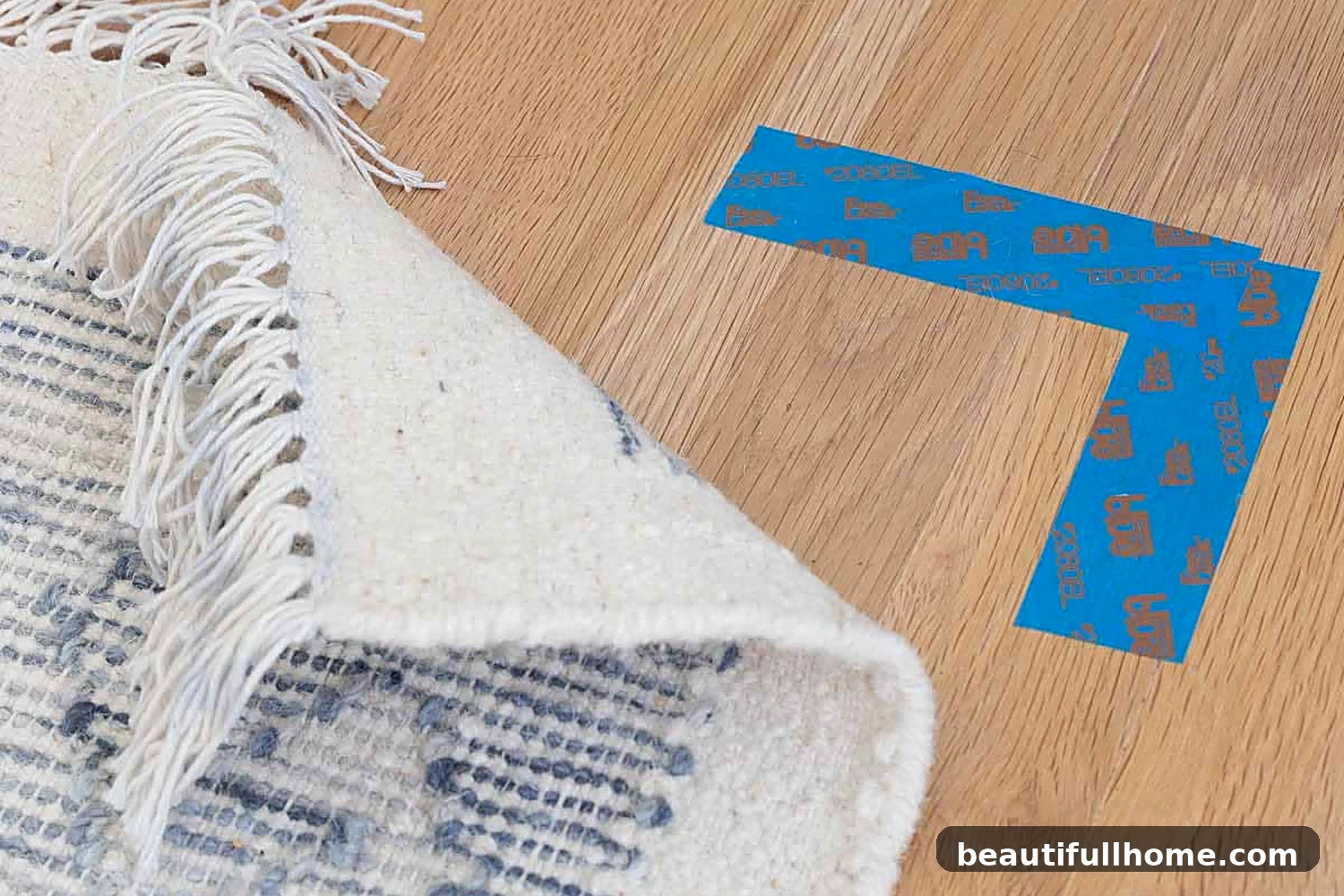
The painter's tape method lets you test different dimensions directly on your floor.
It is simple, inexpensive, and especially helpful when deciding between an 8×10 and a 9×12.
Follow These Five Steps
Step 1: Measure your living room.
Measure the available floor area around your sofa, chairs, coffee table, and other furniture.
Step 2: Choose two possible rug sizes.
For example, compare an 8×10 with a 9×12.
Step 3: Mark the rug boundaries.
Use painter's tape to outline the dimensions directly on your floor.
An 8×10 outline should measure 96 inches by 120 inches.
A 9×12 outline should measure 108 inches by 144 inches.
Step 4: Position your furniture.
Place the front legs of your sofa and chairs inside the taped boundary.
Check whether the coffee table fits comfortably.
Step 5: Walk around the layout.
Open nearby doors, walk through the room, and check the remaining floor space.
If the taped outline blocks a walkway or makes the room feel crowded, try a smaller size.
This method helps you make a more confident purchase without relying on product photographs alone.
How Much Does a Living Room Rug Cost in the US?
Rug prices vary according to size, material, construction, brand, and manufacturing method.
A machine-made synthetic rug can cost considerably less than a hand-knotted wool rug of the same dimensions.
The following ranges are practical shopping budgets for standard retail and online options in the United States. Premium handmade designs can cost much more.
What Is the Average Cost by Rug Size?
| Rug size | Budget range | Mid-range to premium |
|---|---|---|
| 5×8 feet | $60-$200 | $200-$900+ |
| 8×10 feet | $150-$450 | $450-$1,500+ |
| 9×12 feet | $250-$700 | $700-$2,500+ |
These are broad planning estimates, not guaranteed market prices. Construction and brand can create significant differences.
How Much Do Rugs Cost by Material?
| Material | 5×8 | 8×10 | 9×12 |
|---|---|---|---|
| Synthetic | $60-$250 | $150-$500 | $250-$700 |
| Cotton | $100-$300 | $200-$600 | $300-$900 |
| Jute | $120-$350 | $200-$650 | $300-$900 |
| Wool | $200-$600 | $400-$1,200 | $600-$2,000+ |
These ranges represent indicative shopping budgets for common machine-made, woven, and mid-range options. Hand-knotted wool and specialty natural-fiber rugs can exceed them.
Which Rug Material Offers the Best Value?
Synthetic: Polypropylene and polyester rugs are often affordable and practical for busy households. They are available in many colors and patterns.
Cotton: Cotton rugs are generally lightweight and comfortable. They can be a good choice for casual living rooms, although construction and washing instructions matter.
Jute: Jute provides a natural texture and warm appearance. However, it is less suitable for areas exposed to frequent moisture or heavy spills.
Wool: Wool offers a soft feel and natural durability. It generally costs more upfront but can be a long-term investment when properly maintained.
How Much Does a Rug Pad Cost?
A rug pad is an additional expense worth considering.
For many standard living room rugs, budget approximately $20-$150 for a suitable pad.
Larger, thicker, or specialty pads can cost more.
Choose a pad that matches your rug dimensions and flooring type. It should support the rug without making it excessively thick.
What Are the Most Common Living Room Rug Sizing Mistakes?
Even an attractive rug can look wrong when its dimensions do not match the furniture.
Avoid these common mistakes:
1. Choosing a rug that is too small.
A small rug underneath only the coffee table can make a large seating arrangement look disconnected.
2. Ignoring the sofa dimensions.
Always measure the complete sofa before purchasing a rug.
3. Leaving furniture legs outside the intended layout.
If you want a unified seating area, make sure the front legs of the main furniture pieces sit on the rug.
4. Covering almost the entire floor.
Leave some visible flooring around the rug. A border of 8-18 inches is a useful starting point.
5. Forgetting to measure walkways.
A rug should not block doorways or create awkward transitions between rooms.
6. Buying based on photographs alone.
Product images can make rugs look larger or smaller than they really are. Always check the listed dimensions.
Frequently Asked Questions
1. Is an 8×10 rug big enough for a living room?
An 8×10 rug is large enough for many average-sized living rooms. It can accommodate a standard three-seater sofa, a coffee table, and some front chair legs. However, larger sectionals may need a 9×12 rug.
2. Should a living room rug go under the sofa?
Yes, ideally. At least the front legs of your sofa should sit on the rug. This creates a connected seating arrangement. In larger rooms, you can place all sofa and chair legs on the rug.
3. Is a 5×8 rug too small for a living room?
Not always. A 5×8 rug can work well in a small living room with a loveseat or compact sofa. However, it may look too small beneath a large sectional or a wide three-seater sofa.
4. Should a living room rug be bigger than the sofa?
Generally, yes. A rug should extend approximately 6-18 inches beyond each side of the sofa. The sofa length plus 24 inches is a useful starting rule when choosing the rug width.
5. Can you use a 9×12 rug in a small living room?
You can, but it depends on your room dimensions and furniture arrangement. A 9×12 rug may overwhelm a small space if it leaves very little visible flooring. Use painter's tape to test the layout before purchasing.
Final Thoughts
The right living room rug size depends on your sofa, room dimensions, and furniture arrangement.
For most average living rooms, an 8×10 rug is a reliable starting point. Smaller seating areas can work with a 5×8, while larger sectionals and U-shaped sofas often need a 9×12 or bigger.
Measure your furniture, follow the sofa length plus 24 inches rule, and test your layout with painter's tape before buying.
A properly sized rug brings your furniture together and makes your living room feel more balanced, comfortable, and complete.
Pricing research note: The cost estimates are broad budgeting ranges, informed by 2026 market pricing guides and available rug listings. Actual prices vary by construction, retailer, and quality.