
How to Get Rid of Carpet Beetles in Car: Complete Guide
Quick answer: To get rid of carpet beetles in your car, remove all loose items, vacuum every hidden area with a crevice tool, and wash or heat-treat removable fabrics. Steam-clean suitable upholstery, treat difficult crevices carefully, and inspect the vehicle weekly for 4 to 8 weeks. Avoid bug bombs and never apply a pesticide to a surface unless the product label specifically permits that use.
Finding tiny hairy larvae, shed skins, or small holes in your car seats is frustrating, and it is easy to miss the cause at first. Carpet beetles can hide beneath seats, inside carpet edges, and around upholstery seams, where a quick clean will not reach them. Their larvae feed on natural materials, pet hair, dead insects, and the organic debris that collects in a car over time. This guide shows how to get rid of carpet beetles in car interiors step by step, with the temperatures, times, and checks that make the work effective. It covers identification, hiding spots, removal, steam and heat treatment, freezing, chemical safety, leather and fabric care, monitoring, prevention, costs, and the mistakes that let an infestation return.
How to Identify Carpet Beetles in Your Car
Correct identification helps you choose the right treatment and helps you avoid wasting time on the wrong pest. Carpet beetles are small insects in the Dermestidae family. The larvae cause most of the damage inside a vehicle, while the adults are often seen near light and may not feed on your seats at all. Adult beetles usually feed on pollen and nectar outdoors. They may enter a vehicle through an open door or window, and a female can then lay eggs near a suitable food source inside the car. If you find only one adult, do not assume that you have a large infestation, but do inspect the car carefully. If you find several larvae, shed skins, or fresh holes in the same area, treat that area as an active infestation.
What Do Carpet Beetle Larvae Look Like?
Carpet beetle larvae are usually about 4 to 8 mm long, although size varies by species and by stage of growth. Look for tan, golden-brown, or dark brown coloring, with visible bands across the body. The body is small, elongated, and oval or carrot shaped, and it is covered with fine hairs. Longer bristles or hair tufts are often visible near the rear. Larvae move slowly in dark spaces and may curl up when disturbed or move away from direct light. They often look like tiny fuzzy worms. The larvae are more important than the adults when you inspect a vehicle, because they are responsible for most feeding damage to natural fibers and to other suitable materials. Check seams, carpet edges, and dark corners first, because larvae prefer places where they are not disturbed.
What Do Adult Carpet Beetles Look Like?
Adult carpet beetles are generally about 2 to 5 mm long, depending on the species. They have compact, oval-shaped bodies. Their colors can include black, brown, white, yellow, or mixed patterns. You may notice adult beetles around car windows, on the dashboard near sunlight, along door panels, near open windows and doors, and around garage lights after parking. Adults are attracted to natural light and may gather near windows. Finding one adult does not automatically mean that your vehicle has an established infestation, because an adult may have flown in from outside and may not have laid eggs. Finding adults repeatedly in the same car, especially with larvae or shed skins nearby, is stronger evidence that beetles are living and breeding in the vehicle.
What Are the Other Signs of Carpet Beetles in a Car?
Larvae are not always visible during an inspection, so look for other evidence as well. First, look for shed larval skins. Carpet beetle larvae shed their outer skins as they grow. These dry, brownish, hairy shells can remain beneath seats or inside carpet fibers long after the larva has moved on. Second, look for small holes in upholstery. Look for irregular holes in wool, leather seats, and natural-fibre floor mats. The insects do not normally eat synthetic fibers themselves, but blended materials and accumulated organic debris can support an infestation. Third, look for fine insect droppings, called frass. Larval droppings are tiny, dry particles that may look like fine grains of pepper or colored dust near damaged materials. Fourth, notice a musty odour. A musty smell can occur when dirt, moisture, food waste, and organic debris accumulate, but odour alone cannot confirm carpet beetles. Fifth, watch for repeated larval sightings. Finding several live larvae in the same location is stronger evidence than finding a single dead insect or one old shed skin. Photograph what you find, note the date and the exact location in the car, and keep the note for your monitoring schedule.
Which Carpet Beetle Species Can Enter a Car?
Several carpet beetle species can appear around homes and vehicles. Their appearance and preferred food sources differ, but the removal steps in this guide work for all of them. Use the plain text rows below to compare the three species most often found in cars and homes.
| Species | Adult | Larva | Common food |
|---|---|---|---|
| Varied carpet beetle | small, with mixed white, yellow, brown, and dark patterns | banded, hairy, about 4 to 8 mm | natural fibers, pet hair, and organic debris. |
| Furniture carpet beetle | small and oval, often with pale markings | hairy and banded | upholstered furniture, animal products, and accumulated organic debris. |
| Black carpet beetle | dark, shiny, and elongated | brownish or black, elongated, and hairy | animal and plant materials, stored fabrics, and natural fibers. |
Species identification can be difficult without a close examination. If the insects do not match these descriptions, ask a pest identification specialist before you apply any treatment. Do not guess at the species if you are unsure, because a correct identification will save you from using the wrong method on the wrong pest.

Where Do Carpet Beetles Hide Inside a Car?
Carpet beetles prefer dark, quiet places where food particles, hair, and natural fibers collect. A quick vacuum of visible seats will not reach every hiding place. Inspect the entire cabin, and use a flashlight for every area below. Work through this checklist in order, and tick each spot off only after you have vacuumed and inspected it.
- Under seats. Look beneath every front and rear seat with a flashlight. Check the carpet, the seat bases, and the areas where the upholstery meets the floor. Pet hair and food crumbs can accumulate in these locations, and larvae can feed there without being seen.
- Seat tracks. Move adjustable seats forward and backward to expose hidden areas. Inspect the metal tracks, mounting points, and carpet underneath. Use a crevice attachment to remove loose debris without damaging electrical connections.
- Seat-belt retraction mechanisms. Seat-belt mechanisms can contain narrow spaces where dust and fibers accumulate. Inspect accessible belt openings and surrounding trim. Never dismantle a seat-belt retractor or interfere with its safety mechanism.
- Trunk liner. Remove removable trunk mats and inspect the spare tire compartment if it is accessible. Check for pet hair, stored fabric items, old packaging, and other organic debris. The trunk is one of the most commonly skipped areas, and it is a common place for a new infestation to restart.
- Headliner. Inspect the edges of the headliner, particularly around overhead trim and accessible seams. Do not pull down the headliner. It can be damaged easily, and some vehicles contain airbags behind interior trim.
- Floor-mat undersides. Remove every floor mat and inspect both sides. Pay particular attention to carpet-backed mats and natural-fibre materials. Shake removable mats outdoors before you clean them, and vacuum the carpet underneath them.
- Carpet-to-trim edges. Check where the carpet meets door sills, the center console, and lower dashboard panels. These narrow gaps can collect lint and hair. Use a flashlight and a narrow vacuum attachment.
Do not force tools into electrical openings, airbag areas, or enclosed mechanical components. Concentrate on accessible spaces and use a professional detailer when necessary. If you find larvae in only one area, still clean the whole car, because eggs and small larvae can be present in nearby areas that look clean.
How Do Carpet Beetles Get Into a Car?
Carpet beetles do not need to enter directly from the road. They can travel between your home, garage, belongings, and vehicle. Understanding their entry routes helps you prevent another infestation after you have cleaned the car.
Parking near an infested garage or home is a common route. Adult carpet beetles can fly through open doors and windows. If your garage has an existing infestation, beetles may enter your vehicle while it is parked there. A nearby infested carpet, stored clothing item, or upholstered item can also provide a source population that keeps sending adults into the car.
Transporting infested textiles is another common route. Carpet beetles can travel inside bags, blankets, clothing, rugs, and other textiles. For example, an infested wool blanket placed in your trunk may introduce larvae or eggs into the vehicle. The same risk applies to secondhand clothing, used rugs, pet bedding, and stored fabrics that have been kept in a garage or loft.
Leaving doors or windows open provides an easy entry route for adult beetles. This is more likely when you park near gardens, flowering plants, or areas where adult beetles are active in warm weather. Even a short stop with a window open can let an adult in, and that adult may lay eggs before you notice it.
Pet hair build-up creates food and shelter inside the car. Pet hair provides a potential food source for carpet beetle larvae. If you regularly transport dogs or cats, hair can collect beneath seats, inside carpet fibers, and around seat tracks. Food crumbs, dead insects, and natural-fibre debris can also support larvae. Regular vacuuming removes this food source and makes the car far less attractive to carpet beetles.

How to Get Rid of Carpet Beetles in Car: Step-by-Step Removal Plan
The most reliable approach to how to get rid of carpet beetles in car interiors combines physical removal, thorough cleaning, appropriate heat treatment, and continued inspection. Do not depend on insecticide alone. Removing the food sources and the hidden larvae is essential. Work through the steps below in order, and do not reinstall untreated items until you have finished the monitoring period.
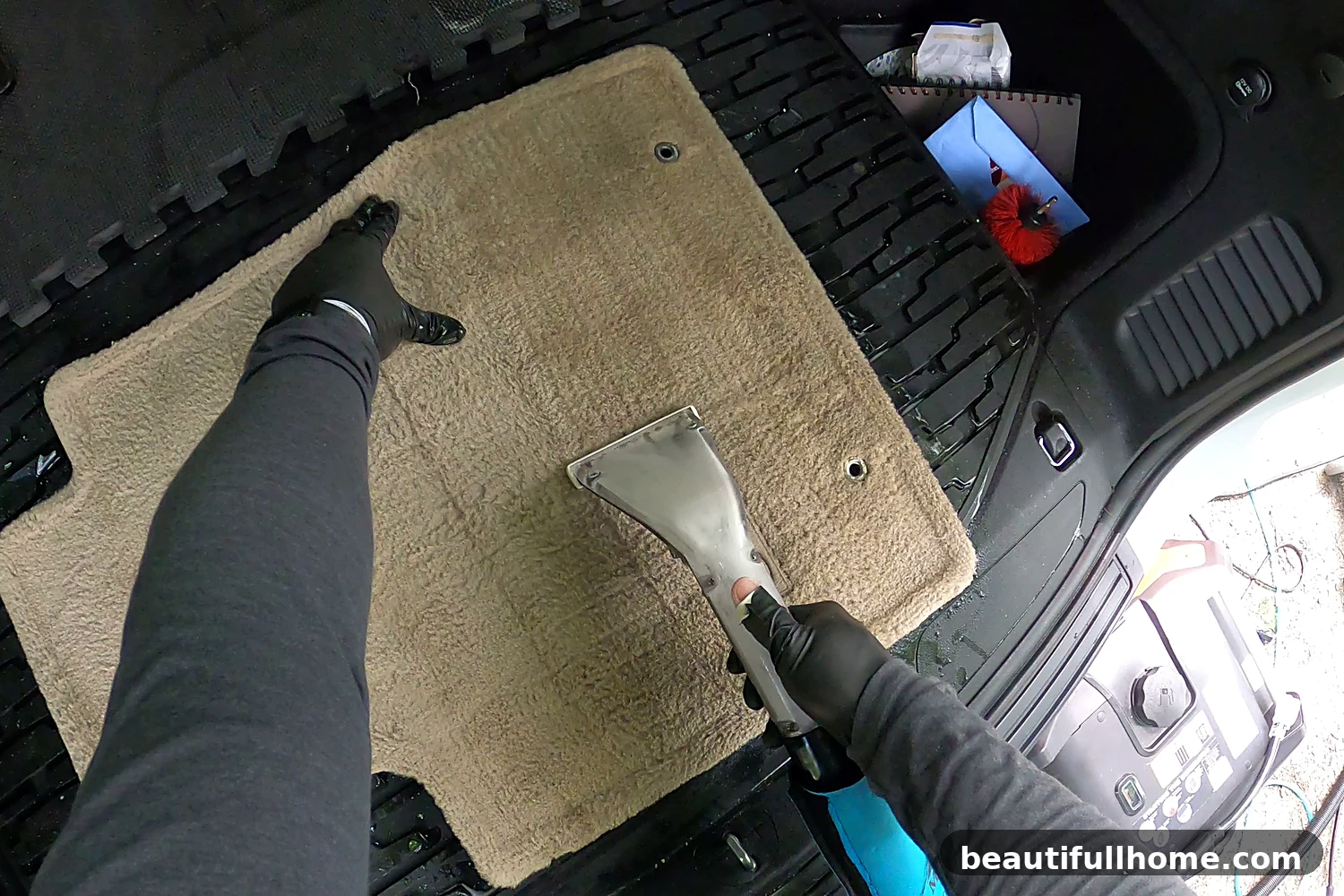
- Remove all items and bag fabric items for hot wash. Start by emptying the entire car. Remove floor mats, seat covers, blankets and towels, shopping bags, reusable grocery bags, child-seat accessories, removable fabric organizers, loose clothing, and pet blankets and accessories. Place potentially infested fabrics in sealed plastic bags before you carry them through your home. Wash washable items according to their care labels. Use a hot wash when the fabric permits it, followed by a suitable hot dryer cycle. Do not put leather, delicate fabrics, or heat-sensitive accessories through a treatment they cannot tolerate. Keep cleaned belongings separate from untreated items, and do not put anything back in the car until you have cleaned the interior.
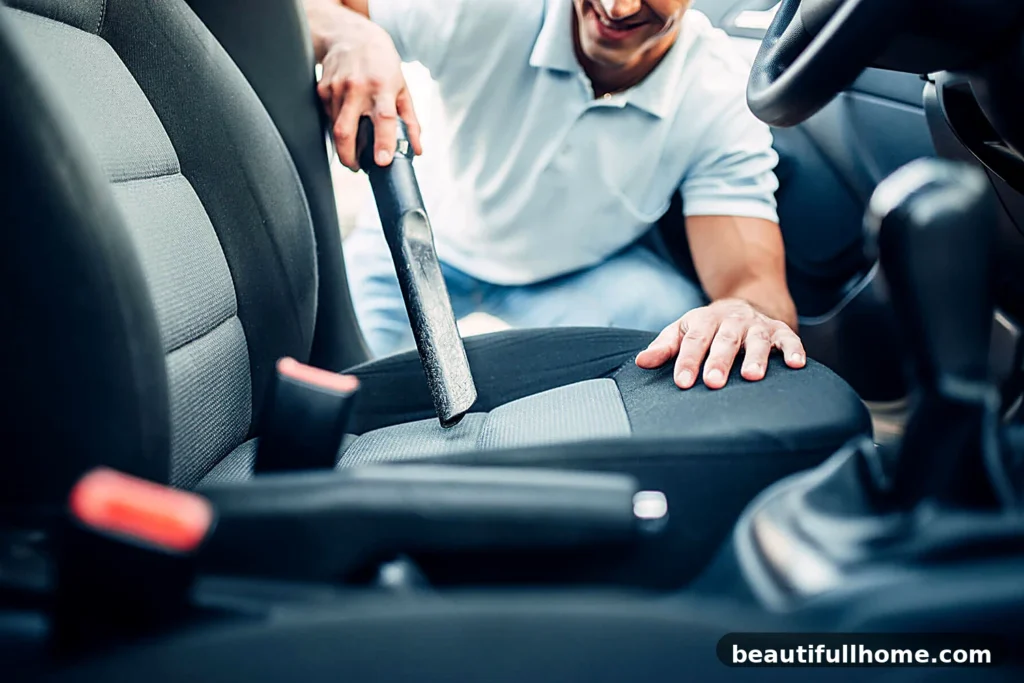
- Deep vacuum with a crevice tool. Vacuuming is one of the most important removal steps. Use a vacuum cleaner with a crevice attachment and a brush suitable for automotive upholstery. Vacuum the driver and passenger footwells, then move seats forward and vacuum underneath them. Move seats backward and clean the rear floor. Vacuum around seat tracks and mounting points, clean the front and rear seat seams, vacuum underneath removable floor mats, clean carpet edges and door sills, vacuum the trunk and spare tire compartment, inspect accessible trim gaps, and clean the seat-back pockets and storage compartments. Use a soft brush to loosen debris from upholstery seams before you vacuum. Pay particular attention to pet hair and lint, because these materials can remain trapped deep inside carpet fibers. Empty the vacuum outdoors immediately after cleaning. Seal disposable vacuum bags before you throw them away. If your vacuum uses a reusable collection container, empty and clean it outside the vehicle.
- Solar heat. Park in direct sun, windows closed, over 120F for 30+ minutes. Parking in direct sunlight can raise the temperature inside a closed vehicle, and heat over 120F for 30+ minutes can kill all stages of carpet beetles when the whole treated area reaches that temperature. Some car interiors can exceed 120F during hot weather, but actual temperatures depend on outside conditions, window glass, vehicle color, parking position, and ventilation. For this step, park outdoors in a suitable sunny location, close the windows, and monitor the interior temperature with a thermometer if you have one. Avoid leaving the vehicle unattended in unsafe conditions. Do not leave children, pets, or vulnerable people inside, and protect heat-sensitive electronics, medications, and belongings. A reading above 120F for 30 minutes at the dashboard does not guarantee that every egg, larva, or adult hidden inside upholstery has been killed, because temperature varies between the dashboard, seats, carpet, and enclosed crevices. Use solar heat as a useful part of the plan, not as your only removal method.

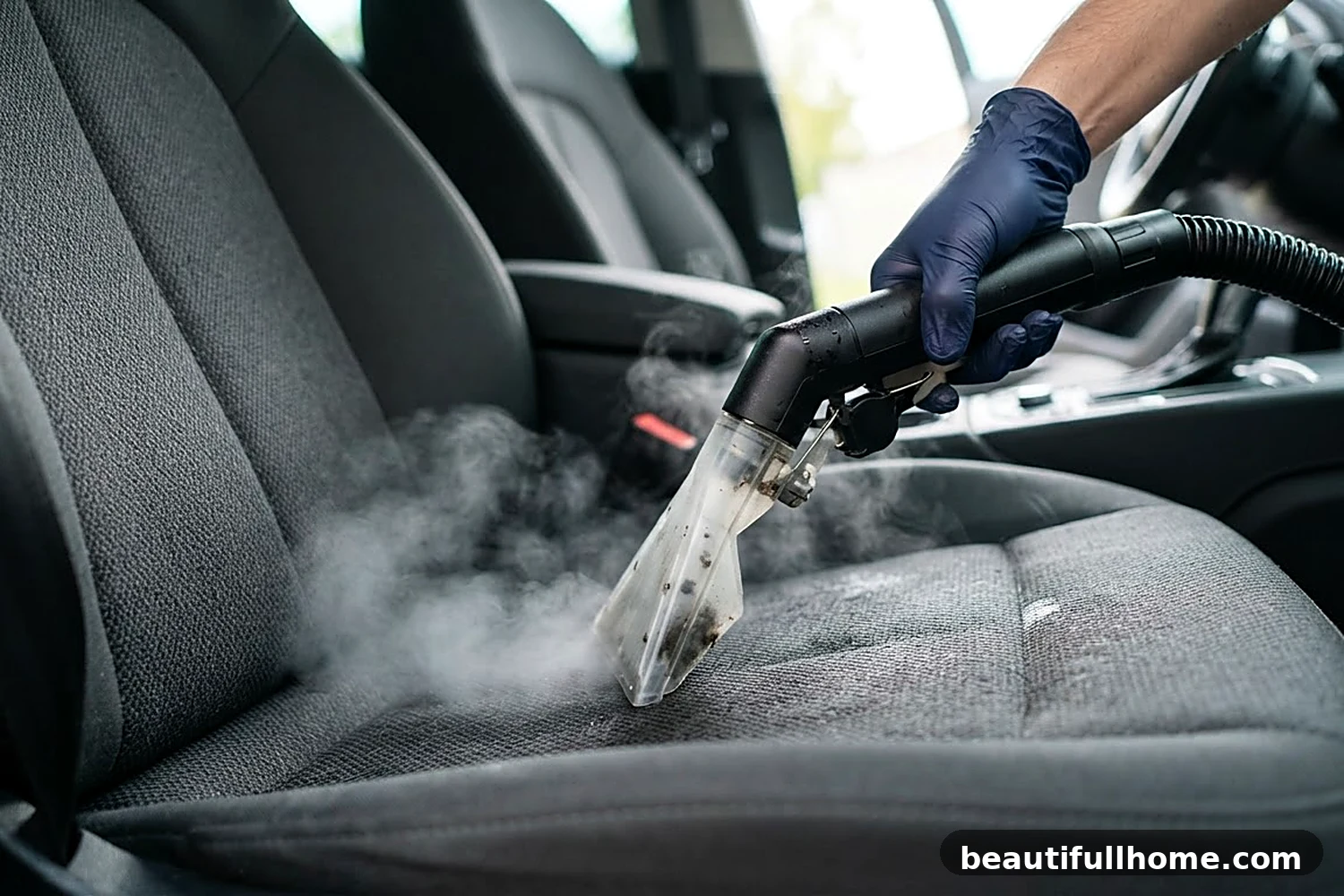
- Steam clean. Steam cleaning can help remove insects and organic debris from suitable surfaces. Use a steam cleaner designed for upholstery or automotive detailing. Follow its instructions and check the vehicle manufacturer's cleaning recommendations. For compatible fabric surfaces, use a controlled steam pass at a temperature of at least 160F at the treatment surface, with a slow pass of 15 to 20 seconds per sq ft where the equipment and material permit. These figures are practical treatment targets. Actual temperature at the fabric can differ from the machine's stated temperature, so move slowly and overlap each pass. Test an inconspicuous area first. Avoid soaking seat foam. Do not steam electrical switches or wiring. Keep steam away from airbags and seat sensors. Avoid delicate headliners. Allow treated areas to dry completely, because excess moisture can create mold, odour, and electrical problems. Use professional equipment if you are unsure about your upholstery.
- Freeze removable items. Freezing can kill carpet beetles when the item reaches a sufficiently low temperature for long enough. Freeze removable items such as floor mats and seat covers below 32F for 1 to 2 weeks. For best results, use a freezer maintained around 0F, rather than relying on a freezer set just below 32F. Place the removable item inside a sealed freezer bag, remove excess air where practical, put the bag in a freezer maintained at 0F or colder, leave it for 1 to 2 weeks, allow the item to return to room temperature while still sealed, and clean it before you return it to the vehicle. For thick or densely packed materials, the full 1 to 2 week period is a conservative planning period. Freezing is suitable for certain removable fabrics and accessories. It is not a practical treatment for an entire vehicle.
- Light diatomaceous earth dusting in crevices. Diatomaceous earth is a fine mineral dust that damages the protective outer layer of insects. It may help control crawling insects in suitable dry crevices, but it is not a substitute for vacuuming and it should not be spread throughout a vehicle. If you choose to use it, select a product specifically labeled for pest control, check that its label permits the intended application, apply only a very light amount in permitted, inaccessible crevices, and avoid visible upholstery, air vents, and passenger-contact surfaces. Keep dust away from electrical components, avoid creating airborne particles, and follow all respiratory and application precautions. Never use pool-grade diatomaceous earth for pest treatment. Even food-grade dust can irritate the lungs when inhaled. Do not apply it where passengers or pets may disturb or breathe in the material.
- Low-toxicity residual insecticide as crack-and-crevice only. Some infestations may require an additional pesticide treatment. Choose a product that specifically lists carpet beetles on its label. More importantly, confirm that its label permits application in the relevant vehicle or automotive interior setting. A pesticide approved for household carpets is not automatically approved for car upholstery. Where the label permits it, use a targeted crack-and-crevice application rather than spraying the entire cabin. Read the complete product label, apply only to permitted locations, use the specified application rate, keep children and pets away during treatment, and follow the stated re-entry and drying instructions. Never spray leather, vinyl, plastic, or other surfaces unless the label specifically permits it. Do not spray seat belts, steering wheels, pedals, touchscreens, or frequently handled surfaces. If the product label does not explicitly permit the intended vehicle use, do not use it inside the car.
- Clean again and check every hiding place. After the treatment and drying period, vacuum accessible areas again. Inspect seat seams, floor carpet, seat tracks, trunk lining, floor-mat undersides, door edges, and accessible trim gaps. Remove any remaining debris and dispose of vacuum contents outside. Do not reinstall untreated blankets, mats, or other potentially infested items. This second clean removes larvae that were missed in the first pass and removes dead insects and debris that could feed a new generation.
- Keep the vehicle clean and monitor for new activity. The first cleaning may remove visible larvae without eliminating every hidden egg or larva. Inspect the vehicle weekly for the next 4 to 8 weeks. Keep a simple record of where you find insects, shed skins, or damage. If live larvae continue appearing in the same location, investigate that area again. You may have missed a food source or an inaccessible infestation, and that area may need another vacuum, steam pass, or professional inspection.

How Should You Clean Different Car Upholstery Materials?
Not every car interior can tolerate the same cleaning method. Choose a treatment based on the upholstery material, and always test a small hidden area first.
Fabric Upholstery
Fabric upholstery can trap hair, lint, food particles, and larvae. Vacuum seams and crevices thoroughly, use a compatible automotive upholstery cleaner, and steam-clean only if the manufacturer permits it. Allow the seats to dry fully, and repeat inspections weekly. Avoid excessive moisture, because seat foam can retain water and develop mold. Fabric tolerates vacuuming, hot washing of removable covers where the label allows it, and steam cleaning at 160F or higher on compatible materials. It does not tolerate soaking, harsh solvents, or a pesticide sprayed across the whole seat surface.
Leather Upholstery
Leather needs more careful treatment. Although carpet beetles primarily feed on natural animal-based materials, damage to leather seats is not always caused by beetles feeding on the leather itself. They may instead be feeding on hair, debris, or other materials collected in seams, and the leather may show surface marks, pitting, or damage around those seams. Vacuum seams with a soft attachment, use a leather-safe cleaner, wipe surfaces according to manufacturer instructions, and apply an appropriate leather conditioner after cleaning if the manufacturer recommends it. Do not use aggressive steam, harsh solvents, or unapproved insecticides on leather. Do not spray leather with a general insecticide, and do not soak it. Heat and steam that are safe for fabric can dry out, crack, or stain leather, so keep steam away from leather unless a professional detailer confirms that the specific leather can tolerate it.
Synthetic Upholstery
Synthetic materials such as polyester and nylon are generally less attractive as a direct food source. However, carpet beetles may still hide around synthetic upholstery because pet hair, food crumbs, natural-fibre blends, and dust accumulate there. Vacuum the full seating area, clean according to the upholstery manufacturer's instructions, inspect seams and seat bases, and remove organic debris regularly. Synthetic upholstery often tolerates vacuuming, upholstery cleaning, and steam cleaning better than leather, but still test first and avoid soaking the foam underneath. Do not assume that synthetic seats make a vehicle immune to carpet beetles, because the food that supports larvae is often the debris on the seat, not the seat material itself.
Is It Safe to Spray Insecticide Inside a Car?
It depends on the exact product and its approved use, and in a small enclosed car cabin the answer is often no. A product labeled for carpet beetles may still prohibit use on automotive upholstery or inside vehicle cabins. Before you apply anything, verify the label. Never assume that a household insecticide is safe for every car interior. Use cleaning, vacuuming, heat, steam, and freezing first, and use a chemical only as a targeted crack-and-crevice treatment where the label clearly permits it.
Why Should You Avoid Bug Bombs in a Car?
You should avoid bug bombs in a car because they are not a reliable solution for insects hidden inside seat seams, carpet edges, and enclosed trim. NO foggers or bug bombs in a car. Foggers release pesticides throughout an enclosed area and may leave residues on seats, steering wheels, controls, and other frequently touched surfaces. They can stain interiors and contaminate ventilation, and they can expose passengers to unnecessary pesticide residues. A vehicle is not a substitute for a properly treated room. Bug bombs are designed for specific labeled spaces and applications, and a car cabin is a different, much smaller, and much more enclosed space. Use targeted cleaning and label-approved treatments instead.
How Should You Air Out a Vehicle After Treatment?
Air out the car before driving, and follow the pesticide label's ventilation and re-entry instructions exactly. Where the label permits ventilation, park outdoors in a secure location, open the vehicle's doors and windows, allow fresh air to circulate, keep children and pets away, and wait until the required drying and re-entry period has passed. Do not drive the vehicle until it is safe to occupy under the product instructions. Keep children and pets out until dry, even if the surface looks dry to the touch. If the label gives a longer waiting time, follow the longer time.
What Surfaces Should You Avoid Spraying?
Avoid spraying leather, plastic, and vinyl, and avoid spraying seat belts, steering wheels, pedals, touchscreens, and frequently handled surfaces, unless the product label specifically permits that use on that surface. Never spray leather, plastic, or vinyl without explicit label permission, because sprays can stain, dry out, or damage those materials and can leave residues where hands and skin make contact. If you are uncertain about chemical use, hire a qualified pest-control professional and ask whether the proposed treatment is specifically approved for a vehicle interior.
How Long Does It Take to Get Rid of Carpet Beetles in a Car?
A light infestation may respond to thorough cleaning and repeated vacuuming within a few days. A larger infestation can require several weeks of monitoring and additional treatment. Plan for 1 to 2 months of weekly checks, because eggs can hatch after the first clean and larvae can remain hidden in a seam or track. Use this practical 1 to 2 month weekly monitoring schedule, and keep a short written note each week.
| Week | What to do |
|---|---|
| Week 1 | Remove belongings, vacuum thoroughly, clean suitable upholstery, and treat removable infested items by hot wash, steam, solar heat, or freezing. Note every location where you found larvae, skins, or damage. |
| Week 2 | Inspect all previous hiding places. Vacuum again and check for live larvae or fresh damage. Pay special attention to seat tracks, carpet-to-trim edges, and the trunk. |
| Week 3 | Recheck seat seams, carpet edges, and the trunk. Repeat cleaning where necessary. Check floor-mat undersides and seat-belt openings. |
| Week 4 | Inspect for new activity and remove any remaining organic debris. If you find no live larvae for two weeks in a row, continue monitoring, because eggs may still hatch. |
| Week 5 | Continue weekly inspections and vacuuming. Check the headliner edges and the spare tire compartment again. |
| Week 6 | Continue weekly inspections and vacuuming. Look for fresh shed skins, which show that larvae are still active. |
| Week 7 | Complete the monitoring period if the last two weeks were clear, or repeat treatment if you still find live larvae. |
| Week 8 | Finish the 1 to 2 month schedule. If you find new live larvae, investigate the source rather than assuming that the infestation has ended. |
A clean inspection does not prove that every egg has been eliminated. Continue checking if the vehicle was heavily infested, and repeat the vacuum and steam steps for any area where live larvae reappear.
How Can You Prevent Carpet Beetles From Returning to Your Car?
Prevention depends on removing the materials that support larvae and on reducing opportunities for adult beetles to enter. Vacuum frequently, including the trunk and under the rear seats, every 1 to 2 weeks, and more often if you transport pets. Remove pet hair and food crumbs promptly, and use a handheld vacuum or detailing attachment to clean difficult areas. Inspect secondhand clothing and pet fur before loading it into the car, and shake out or bag used textiles before you put them in the trunk. Check entry points, including windows, body cracks, and ventilation openings, and maintain intact window seals and door weatherstripping. Do not block factory drainage channels or ventilation openings. Avoid parking near infested areas or vegetation where adult beetles are active, and keep windows and doors closed when the vehicle is parked in those areas. Remove trash promptly, and do not leave food wrappers, crumbs, or organic waste in the car overnight. Shake out floor mats outdoors at least once a week, and vacuum the carpet underneath them. Do not store natural-fibre items in the car, and do not leave wool blankets, fur accessories, natural-fibre bags, or dirty clothing inside your vehicle for extended periods. Keep your garage clean, inspect nearby rugs, stored clothing, pet bedding, and upholstery, vacuum garage floors, and remove lint, dead insects, and other organic debris. If you move used furniture, secondhand rugs, blankets, or stored fabrics, inspect the trunk and seating area afterward.
Can Carpet Beetles Spread From Your Car to Your House?
Yes, carpet beetles in a car can spread to the house. They hitchhike between garage, home, and car through infested belongings and adult beetles. For example, you may transport an infested blanket from your car into your bedroom. Larvae can then find suitable food sources in rugs, clothing, upholstery, and stored fabrics. Adult beetles can also fly from a car parked in a garage into the house through an open door. To reduce this risk, bag potentially infested fabrics before you carry them indoors, wash or otherwise treat removable items, inspect your garage and storage areas, vacuum nearby carpets and upholstered furniture, check pet bedding and stored blankets, and keep cleaned items separate from untreated belongings. If you also notice carpet beetles inside your home, investigate the source rather than treating only the vehicle. For a wider household treatment plan, read the site guide How to Get Rid of Carpet Beetles: A Complete Guide. That guide covers the house in detail, while this guide covers the car in detail, and using the two together gives you the best chance of stopping the cycle between home and vehicle.
How Much Does Professional Carpet Beetle Removal Cost?
Professional costs depend on the vehicle, infestation severity, cleaning requirements, and local labor rates. The figures below are broad US planning estimates, not guaranteed quotes. Ask for a written estimate before you authorize work, and confirm exactly what is included.
| Service | Cost | What it includes |
|---|---|---|
| Basic interior detailing | $100 to $250 | Usually includes vacuuming, surface cleaning, and basic interior detailing. Confirm whether the service includes deep crevice cleaning. |
| Deep interior detailing | $200 to $400 | May include detailed upholstery cleaning, carpet extraction, trunk cleaning, and hard-to-reach areas. |
| Specialized steam cleaning | $75 to $200 | The price depends on the number of seats, material, and equipment required. It may be included in a larger detailing package. |
| Professional pest-control inspection | $75 to $150 | Some companies offer an inspection or consultation for a separate fee. Others include it in the treatment price. |
| Professional pest treatment | $150 to $400 or more | The final price depends on the infestation, vehicle accessibility, treatment method, and whether follow-up visits are necessary. |
These services may be charged separately or combined. A detailer and a pest-control professional do different work, so you may need both if the infestation is large or if it is also present in your home.
When Should You Call a Professional Detailer?
A professional automotive detailer may be appropriate when larvae are hidden deep inside seat seams, when the carpet has accumulated significant pet hair, when you cannot safely reach the affected areas, when fabric upholstery needs professional extraction, or when the vehicle has delicate or expensive interior materials. Choose a detailer experienced with automotive upholstery and interior steam cleaning, and tell the detailer that you have found carpet beetles so that the detailer can focus on seams, tracks, and the trunk.
When Should You Call a Pest-Control Professional?
Contact a qualified pest-control professional when live larvae keep appearing after repeated cleaning, when the infestation extends into inaccessible interior spaces, when you find beetles in both your car and home, when you cannot identify the insect confidently, or when you need a pesticide treatment and are unsure which products are suitable for a vehicle. Ask whether the professional can inspect the vehicle and whether the proposed treatment is specifically approved for that application. A professional can also help you check whether the garage or house is the source that keeps reinfesting the car.
What Mistakes Should You Avoid When Removing Carpet Beetles?
Some cleaning mistakes can make the problem harder to control. Avoid each of the mistakes below.
- Using a bug bomb. Foggers do not reach hidden larvae, and they can stain interiors and contaminate ventilation.
- Spraying leather. Never spray leather, plastic, or vinyl unless the label specifically allows it, because sprays can damage those materials and leave residues on surfaces you touch every day.
- Skipping the trunk. The trunk liner, spare tire compartment, and stored fabrics are common hiding places, and skipping the trunk can leave a whole population untouched.
- Stopping after one clean. A single cleaning session may not remove every hidden egg or larva. Continue weekly inspections for 4 to 8 weeks.
- Forgetting the seat tracks. Seat tracks collect hair, crumbs, and larvae, and they are easy to miss if you do not move the seats forward and backward.
- Vacuuming only visible areas. Larvae often hide beneath seats, inside seams, and along carpet edges. Clean the entire interior.
- Spraying the entire cabin. Broad pesticide applications can create unnecessary exposure and may damage interior materials. Follow label-approved targeted treatments.
- Ignoring floor-mat undersides. Debris can remain trapped beneath removable mats. Inspect both sides and vacuum the carpet underneath.
- Returning untreated fabrics. An infested blanket or seat cover can reintroduce larvae after cleaning, so keep cleaned items separate until treatment is complete.
- Treating sunlight as a guaranteed solution. A hot dashboard does not mean that every hidden area has reached a lethal temperature, so combine solar heat with vacuuming and steam cleaning.
Frequently Asked Questions About Carpet Beetles in Cars
How Do Carpet Beetles Get Into a Car?
Carpet beetles get into a car through open doors and windows or inside infested bags, clothing, blankets, and other textiles. They may also enter when a vehicle is parked near an infested garage or home, and pet hair build-up inside the car can then give larvae a food source that helps them stay.
Can Carpet Beetles Live in a Car?
Yes, carpet beetles can live in a car. They can survive in vehicles when suitable food sources and hiding places are available. Pet hair, natural fibers, lint, dead insects, and food debris can support larvae, and dark seams, tracks, and carpet edges give them shelter.
What Does Carpet Beetle Damage Look Like in a Car?
Carpet beetle damage in a car may appear as small, irregular holes in susceptible natural materials, including wool, leather seats, and natural-fibre floor mats. You may also find shed larval skins, fine droppings that look like pepper grains, and damaged fabric near seams or carpet edges, along with a musty odour in a heavily affected car.
Can I Use a Bug Bomb or Fogger in My Car?
No, you should not use a bug bomb or fogger in your car. A bug bomb is not recommended for vehicle interiors, because it may leave pesticide residues on frequently touched surfaces, stain the interior, contaminate ventilation, and may not reach larvae hidden inside upholstery or trim. Use thorough cleaning and properly labeled targeted treatments instead.
Is It Safe to Spray Insecticide Inside a Car?
It is safe only when the product label specifically permits the intended vehicle application. Only use a pesticide when its label permits that use, and never spray unapproved products on seats, leather, plastic, vinyl, seat belts, steering wheels, or passenger-contact surfaces. Air out the car before driving, and keep children and pets out until dry.
Will Parking My Car in the Sun Kill Carpet Beetles?
Parking in the sun can help, but it is not a guaranteed treatment on its own. Sunlight can raise interior temperatures over 120F for 30+ minutes, and that heat can kill all stages when the whole area reaches that temperature, but shaded crevices, seat foam, and carpet edges may stay cooler. Combine solar heat with vacuuming, steam cleaning, and weekly monitoring.
How Long Does It Take to Get Rid of Carpet Beetles in a Car?
A light infestation may improve after one thorough cleaning. Larger infestations can require repeated cleaning and 4 to 8 weeks of monitoring. Continued sightings usually mean that a food source or hiding place remains, so repeat the vacuum and steam steps for that area and keep checking weekly for 1 to 2 months.
Do Carpet Beetles in a Car Spread to the House?
Yes, carpet beetles in a car can spread to the house. They can travel between your car, garage, and home through infested textiles and belongings. Bag and clean potentially infested items before you bring them indoors, inspect nearby rugs and stored fabrics, and treat the house as well if you find beetles there. See How to Get Rid of Carpet Beetles: A Complete Guide for the household plan.
Conclusion
Getting rid of carpet beetles in a car requires more than spraying an insecticide. Start by removing loose belongings, vacuuming hidden areas, and cleaning suitable upholstery. Use solar heat, steam, and freezing for removable items where they are appropriate, and use a chemical only as a targeted crack-and-crevice treatment where the label permits it. Avoid foggers, follow pesticide labels, and inspect your vehicle weekly for 4 to 8 weeks. Regular cleaning, pet-hair removal, careful storage, and a quick check after you transport textiles can help prevent another infestation and can stop carpet beetles from moving between your car and your home.
Note: Costs in this article are broad US planning estimates and vary by location and service provider.