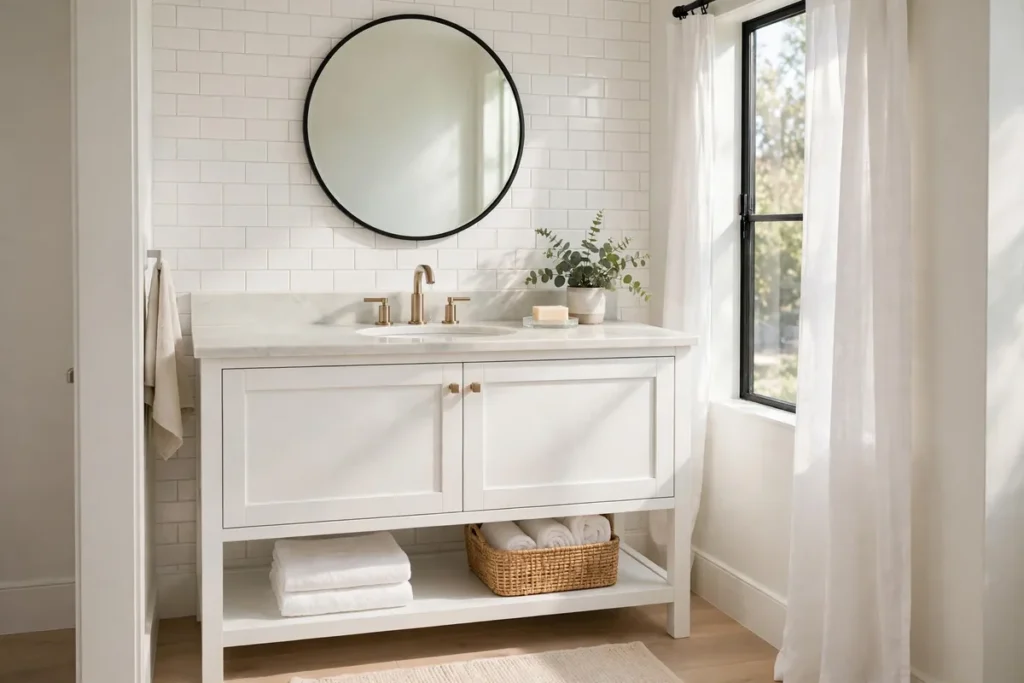
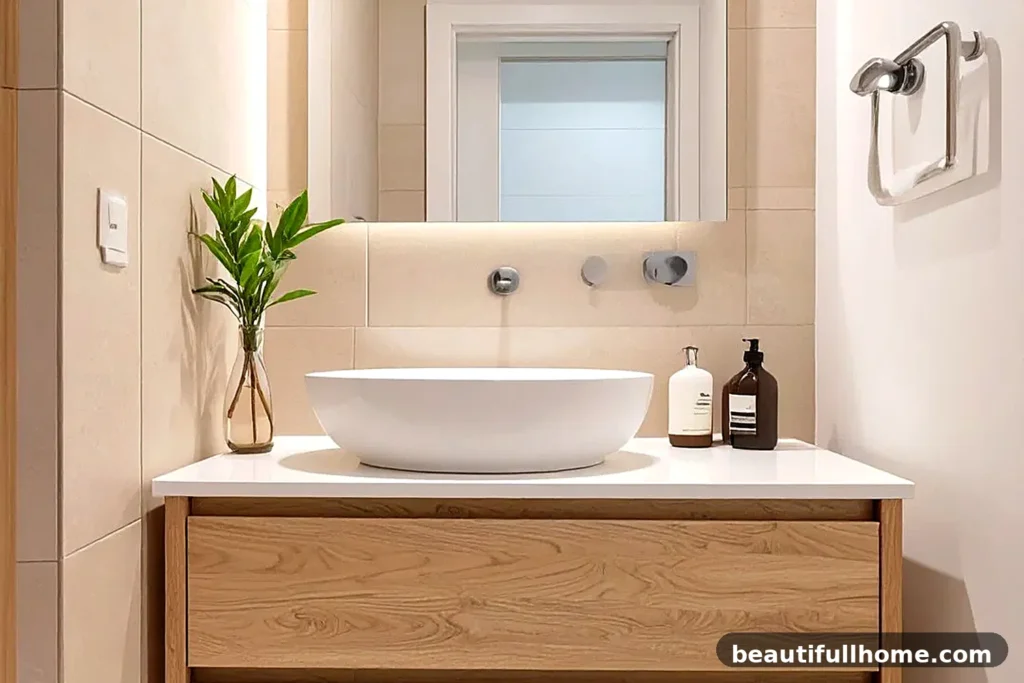
Small Bathroom Vanity Ideas: 12 Styles That Fit
Quick answer: The best small bathroom vanity is usually 24 to 30 inches wide, 18 to 21 inches deep and 32 to 36 inches high, with at least 21 inches of clear floor in front of it. A floating vanity makes a tiny bathroom feel bigger, a pedestal sink works when storage is not needed, and a narrow-depth cabinet is the best choice when you need drawers in a tight room.
A small bathroom does not mean a small vanity has to look cheap or hold nothing. The right vanity can give you storage, counter space and a finished look in a room that is barely bigger than a closet. This guide covers 12 small bathroom vanity ideas with the real sizes, costs and trade-offs for each one, so you can pick the style that fits your bathroom instead of guessing from photos alone.

What Size Vanity Fits a Small Bathroom?
Measure before you shop. A vanity that is one inch too wide can block a door, and a vanity that is too deep can eat the only walkway in the room. Use these numbers as your starting point.
The sweet spot for most small bathrooms is 24 to 30 inches wide, 32 to 36 inches high and 18 to 21 inches deep. A 24-inch vanity fits a powder room or a very small full bath. A 30-inch vanity suits a small ensuite or a shared family bathroom where one person uses the sink at a time. Go narrower than 24 inches only when the wall truly will not fit a standard unit, and go deeper than 21 inches only when you have a full 30 inches of clear floor in front of the vanity.
Clearance matters as much as the vanity itself. Building code asks for at least 21 inches of clear floor in front of a sink, and the National Kitchen and Bath Association recommends 30 inches for comfort. Measure from the front edge of the vanity to the nearest obstacle: the toilet, the shower door, the opposite wall, or the door swing. If the door swings into the vanity, you need a smaller vanity, a pocket door, or a door that swings out.
Measure your space in three steps. First, measure the wall where the vanity will go, from side wall to side wall, and subtract at least 1 inch on each side for fitting. Second, measure the depth from the wall to the nearest obstacle and subtract 21 inches for clearance. Third, check the plumbing: note where the drain and supply lines come out of the wall, because moving a drain is the most expensive part of a vanity swap. Write the three numbers down before you open a single shopping page.
12 Small Bathroom Vanity Ideas
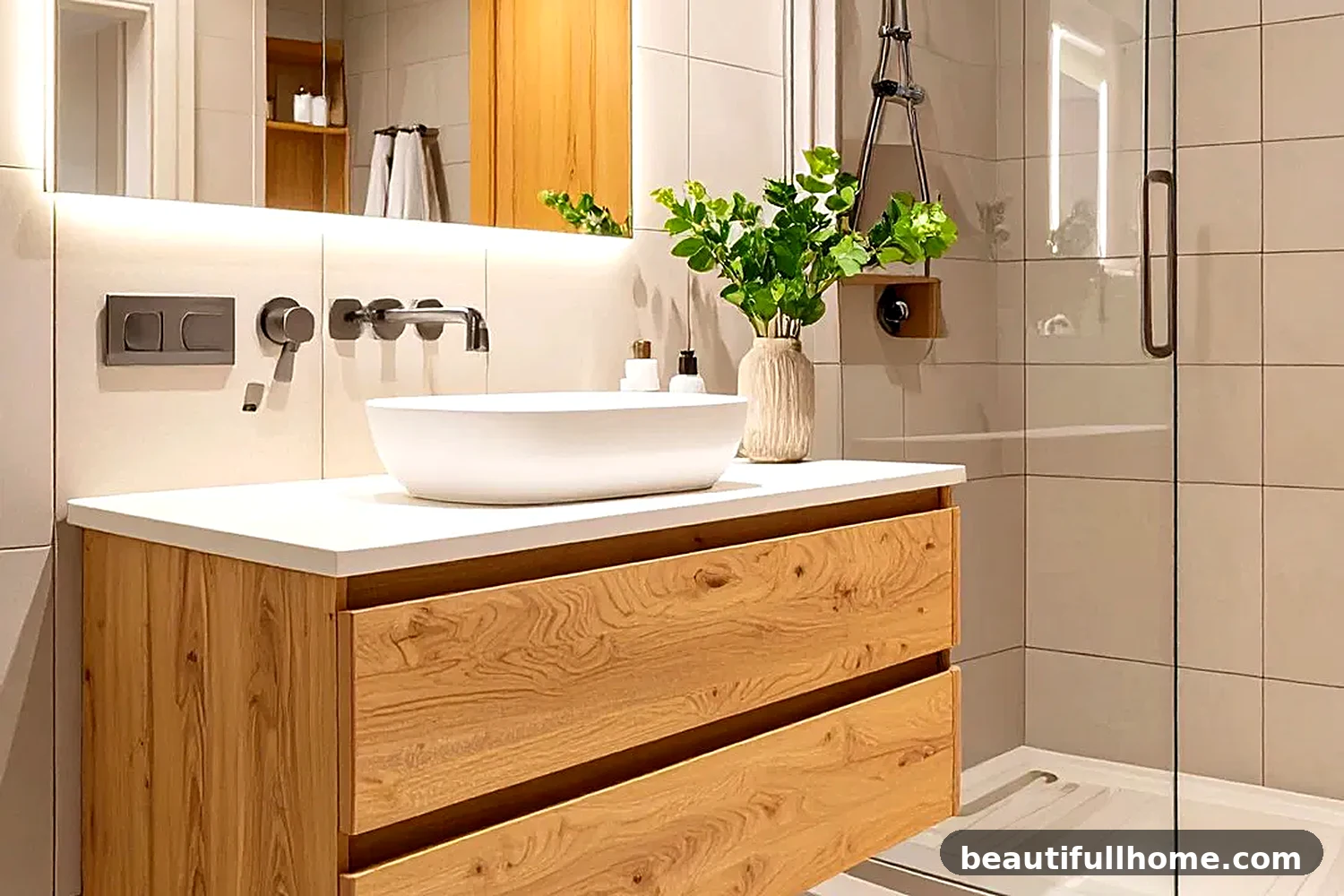
1. Floating Vanity
A floating vanity hangs on the wall with no cabinet touching the floor. The open space underneath makes the floor look bigger, which is why it is the most recommended style for tiny bathrooms. It also makes cleaning the floor easy, because there is no toe-kick to work around.
Best size: 24 to 36 inches wide, 18 to 19 inches deep, mounted so the counter sits 32 to 34 inches high. Best for: powder rooms, ensuites and any bathroom where the floor is a feature (patterned tile, wood-look tile). Typical cost: $200 to $800 for a premade unit, plus $150 to $400 for installation. Watch out: a floating vanity needs solid wall blocking behind the drywall to carry the weight, so check the wall before you buy. If the wall is not blocked, the installer must open it and add blocking, which adds cost.
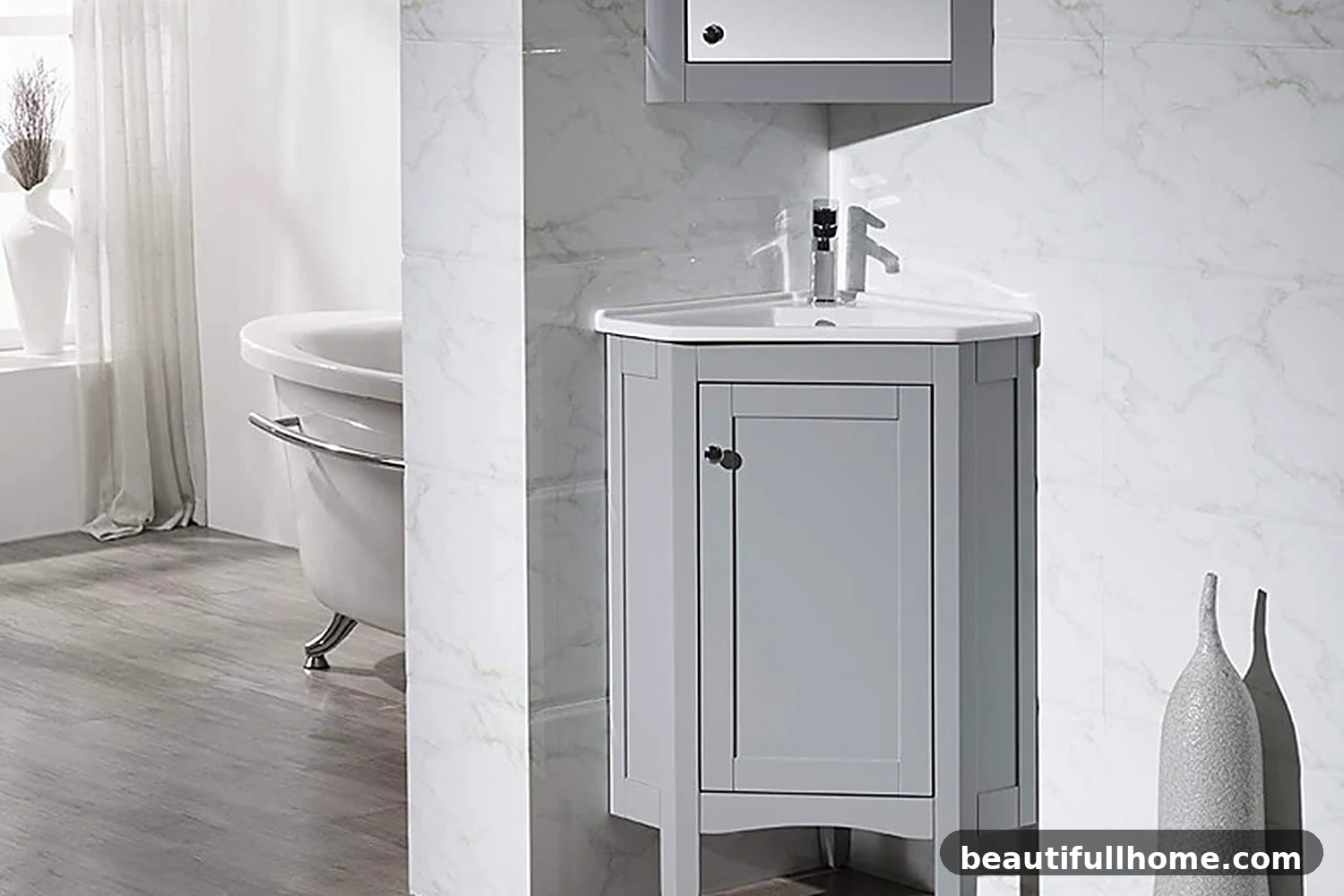
2. Corner Vanity
A corner vanity fits into a corner that would otherwise hold nothing. It turns dead space into a sink and a small amount of storage, and it frees the main wall for a toilet or a shower. The trade-off is a smaller basin and less counter space than a straight vanity of the same width.
Best size: 18 to 24 inches on each wall, 18 to 20 inches deep. Best for: very small bathrooms, bathrooms with an awkward corner, and powder rooms under a stair. Typical cost: $150 to $600 premade. Watch out: corner units often need custom plumbing because the drain sits in the corner, so get a plumber's opinion before you order.
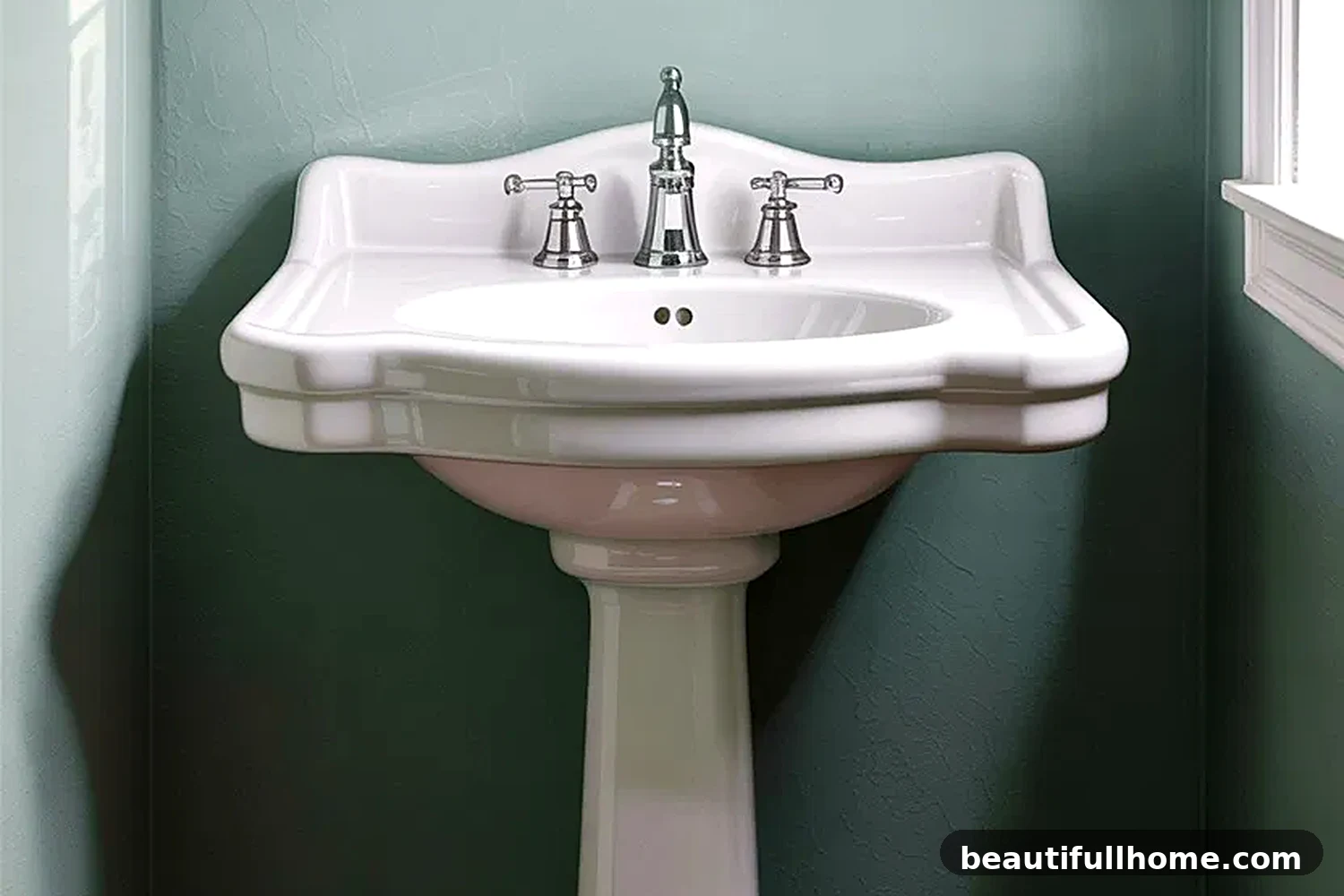
3. Pedestal Sink
A pedestal sink is a basin on a slim column with no cabinet at all. It takes up the least visual space of any option and suits bathrooms where the vanity is only used for hand washing. The cost is storage: there is nowhere to put a toothbrush, a hair dryer or cleaning supplies.
Best size: 18 to 24 inches wide, 16 to 20 inches deep. Best for: powder rooms, guest bathrooms, and bathrooms with a separate linen closet nearby. Typical cost: $100 to $400 for the sink, plus $150 to $300 for installation. Watch out: you will need somewhere else for storage. A medicine cabinet above the sink, a narrow side cabinet, or over-toilet shelving covers the gap. If you have no other storage, pick a cabinet vanity instead.
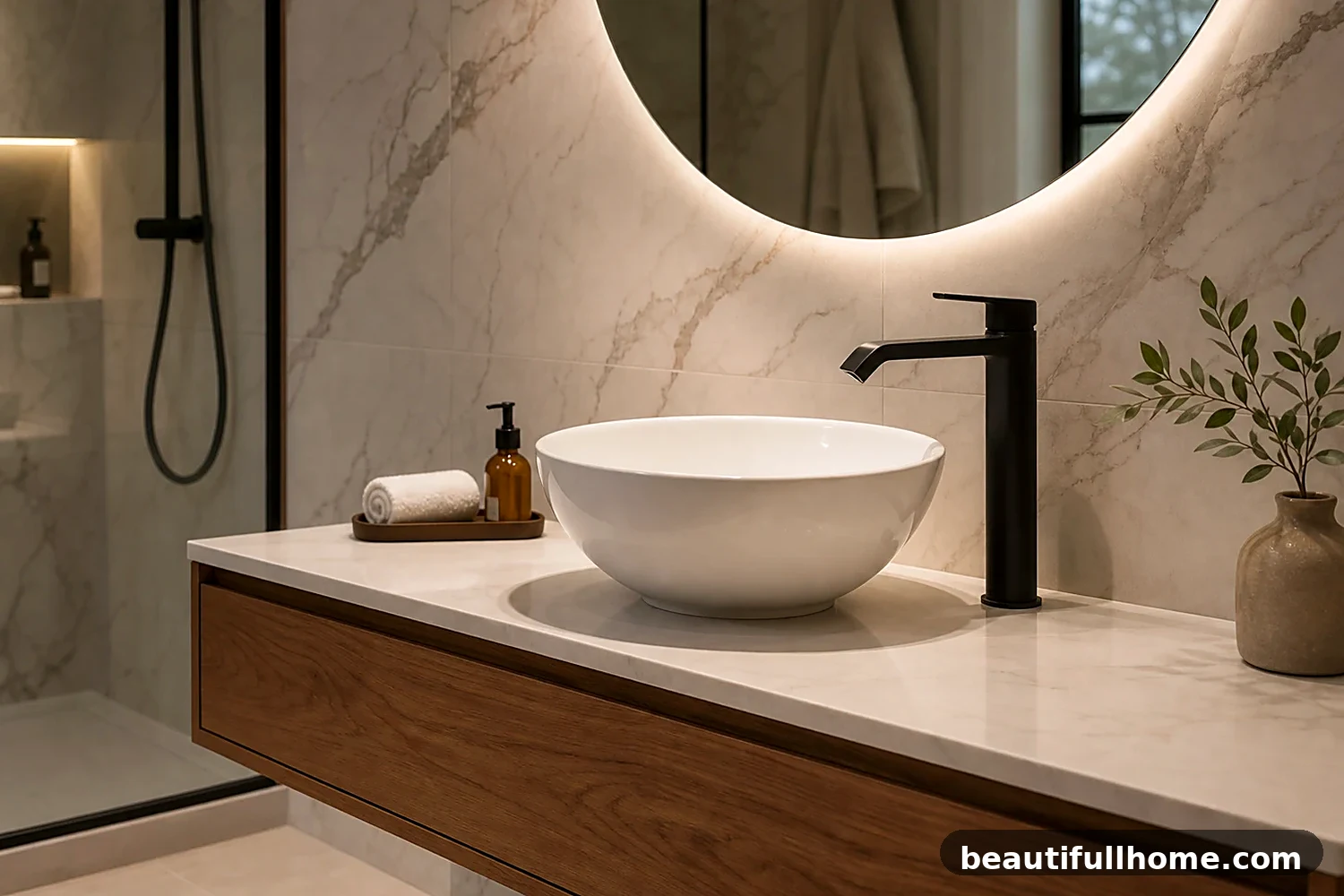
4. Vessel Sink Vanity
A vessel sink sits on top of the counter like a bowl instead of dropping into it. It looks striking and gives you a little more counter height, and the basin itself becomes the design feature. It works on a floating cabinet, a console frame or a repurposed piece of furniture.
Best size: cabinet 24 to 30 inches wide, 18 to 21 inches deep; vessel 16 to 20 inches across. Best for: powder rooms and ensuites where style matters more than counter space. Typical cost: $250 to $900 for the cabinet and vessel together. Watch out: a vessel sink needs a tall faucet or a wall-mounted faucet, and the counter must sit lower than usual (around 30 to 32 inches) so the rim of the bowl is at a comfortable height. Splashing is more common than with an undermount sink.
5. Narrow-Depth Vanity
A narrow-depth vanity is a full cabinet that is only 12 to 18 inches deep instead of the usual 21 inches. It gives you real drawers and a cabinet door in a room where a standard-depth vanity would block the walkway. It is the best compromise when you need storage but cannot afford the depth.
Best size: 24 to 30 inches wide, 12 to 18 inches deep, 32 to 34 inches high. Best for: small full bathrooms, galley-style bathrooms, and bathrooms where the door swings close to the vanity. Typical cost: $200 to $700 premade. Watch out: a 12-inch-deep vanity fits a small round or rectangular basin only, and the drawers will be shallow. Measure your faucet and basin together before you buy.
6. Wall-to-Wall Custom Vanity
A wall-to-wall vanity is built to fill the exact width of the wall, with no gaps on either side. It looks built-in, it gives you the maximum counter and storage for the wall, and it removes the awkward slivers of space that collect dust. It is the most expensive option on this list, but it is also the one that makes a small bathroom feel designed rather than assembled.
Best size: built to your wall, usually 30 to 48 inches wide, 18 to 21 inches deep. Best for: ensuites and small full bathrooms where the vanity wall is the main feature. Typical cost: $500 to $2,000 custom, plus installation. Watch out: the wall must be square, and the plumbing must line up with the new cabinet. Get the measurements done by the cabinet maker, not by eye.
7. Console Vanity
A console vanity is a basin on a slim metal frame with open legs, like a table. It takes up almost no visual space, it lets light and floor show through, and it suits bathrooms with a vintage or industrial look. Storage is limited to a lower shelf or a small basket underneath.
Best size: 24 to 30 inches wide, 18 to 20 inches deep. Best for: powder rooms, vintage-style bathrooms, and bathrooms with beautiful floors you want to show off. Typical cost: $200 to $700. Watch out: there is no closed storage, so pair it with a medicine cabinet or a wall shelf. The metal legs can also wobble on an uneven floor, so check the floor is level.
8. Repurposed Furniture Vanity
A repurposed furniture vanity turns an old dresser, sideboard or desk into a vanity by cutting a hole for the basin and the plumbing. It gives you a one-of-a-kind piece with real drawer storage, and it is often cheaper than a new cabinet of the same quality. It is also the most hands-on option: the furniture must be sealed against water, and the plumbing must be fitted by someone who knows what they are doing.
Best size: 24 to 36 inches wide, 16 to 20 inches deep (after cutting). Best for: character bathrooms, farmhouse and vintage styles, and anyone who wants a unique vanity on a budget. Typical cost: $100 to $500 for the furniture and conversion, plus $200 to $400 for plumbing. Watch out: unsealed wood swells and rots in a bathroom. Seal every surface, including the inside of the drawers, and use a vessel or drop-in basin so the countertop is easy to wipe.
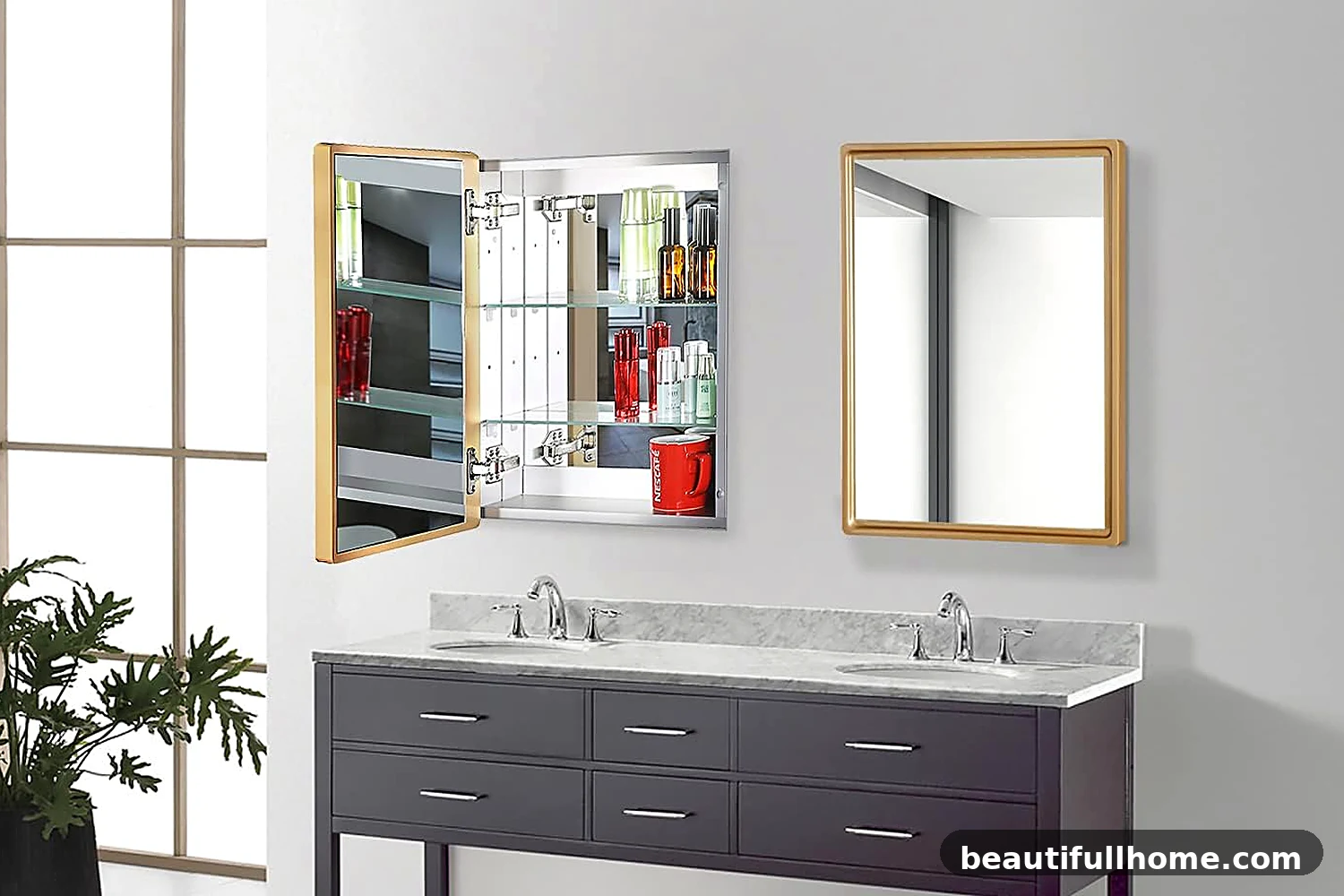
9. Mirrored-Door Vanity and Medicine Cabinet
A mirrored-door vanity hides storage behind a mirror, so the storage takes up no extra space at all. A recessed medicine cabinet sits inside the wall, while a surface-mounted one hangs on it. Either way, you get a place for toothbrushes, medicines and daily items without adding a cabinet to the floor.
Best size: mirror 20 to 30 inches wide, cabinet 4 to 6 inches deep (recessed) or 5 to 7 inches deep (surface-mounted). Best for: every small bathroom, especially ones with a pedestal sink or a console vanity. Typical cost: $80 to $400 for the cabinet, plus $100 to $250 for installation. Watch out: a recessed cabinet needs a wall without pipes or wires in the way, so check before you cut. Add an outlet inside the cabinet if you charge an electric toothbrush or a razor there.
10. Open Shelving Vanity
An open shelving vanity replaces closed cabinet doors with open shelves under the basin. It keeps the vanity light and airy, it lets you see everything at a glance, and it costs less than a cabinet with drawers. The trade-off is that everything is on display, so it only works if you keep the shelves tidy.
Best size: 24 to 30 inches wide, 18 to 20 inches deep, with 2 to 3 shelves. Best for: powder rooms, guest bathrooms, and anyone who likes a minimal look. Typical cost: $150 to $500. Watch out: open shelves collect dust and splashes. Use baskets or boxes for the messy items, and keep only the neat things visible.
11. Trough Sink Vanity
A trough sink is one long rectangular basin shared by two faucets, instead of two separate sinks. It gives two people room to use the vanity at once in the width of a single wide cabinet, which makes it a smart alternative to a double vanity in a small shared bathroom.
Best size: 36 to 48 inches wide, 18 to 21 inches deep, with two faucets. Best for: shared family bathrooms and Jack and Jill bathrooms where two people use the sink at the same time. Typical cost: $400 to $1,200 for the cabinet and trough. Watch out: a trough needs a wide wall and a drain in the centre, so it does not suit a narrow powder room. The shared basin also means less privacy than two separate sinks.
12. Round and Curved Vanity
A round or curved vanity has a curved front instead of sharp corners. The curve saves a few inches of walkway at the corners, it softens the look of a boxy bathroom, and it is easier to move past in a tight room. It is a niche choice, but it solves a real problem in bathrooms where the vanity sits next to a door or a toilet.
Best size: 24 to 30 inches wide, 18 to 20 inches deep at the centre, less at the corners. Best for: bathrooms with a tight door swing, bathrooms where the vanity faces the toilet, and curved or Art Deco styles. Typical cost: $300 to $900. Watch out: curved cabinets are harder to find premade, and the curved countertop can cost more than a straight one. The storage inside is also a little less than a square cabinet of the same width.
Which Vanity Is Right for Your Bathroom?
The best vanity depends on the bathroom, not on the photo you liked. Use this guide to match the vanity to the room.
Powder room (toilet + sink only, guests use it): a pedestal sink, a floating vanity or a vessel sink vanity. Storage is not the priority, because guests only wash their hands. Pick the style that looks best and fits the wall. A 24-inch floating vanity or a vessel sink on a slim cabinet is usually the right call.
Ensuite (attached to a bedroom, one or two people): a floating vanity or a narrow-depth cabinet, 24 to 30 inches wide. You need daily storage for two people, but the room is small. A floating vanity with two drawers, plus a mirrored medicine cabinet, covers it.
Shared family bathroom (kids, mornings, more than one user): a narrow-depth cabinet or a trough sink, 30 to 48 inches wide if the wall allows it. Storage matters more than style here, so prioritise drawers and a medicine cabinet. A trough sink lets two people use the vanity at once without needing a full double vanity.
Jack and Jill bathroom (shared between two bedrooms): a trough sink or a narrow double vanity, 36 to 48 inches wide. Two people need to use it at the same time, so a single small basin will cause arguments. If the wall will not fit 36 inches, use a single 30-inch vanity and add a second mirror and storage on the opposite wall.
Under-stair or attic bathroom (sloped ceiling, odd shape): a corner vanity or a pedestal sink. The ceiling limits where a tall cabinet can go, so a low, compact vanity that fits the usable wall is the answer. A corner vanity uses the one spot with full height.
Small Bathroom Vanity Types Compared
Use this table to compare the main types side by side before you buy.
| Type | Width | Depth | Storage | Cost | Best for |
|---|---|---|---|---|---|
| Floating vanity | 24-36 in | 18-19 in | drawers | $200-$800 | powder rooms, ensuites |
| Corner vanity | 18-24 in | 18-20 in | small cabinet | $150-$600 | very small bathrooms, awkward corners |
| Pedestal sink | 18-24 in | 16-20 in | none | $100-$400 | powder rooms, guest bathrooms |
| Vessel sink vanity | 24-30 in | 18-21 in | cabinet | $250-$900 | powder rooms, style-led ensuites |
| Narrow-depth vanity | 24-30 in | 12-18 in | drawers | $200-$700 | tight walkways, galley bathrooms |
| Wall-to-wall custom | 30-48 in | 18-21 in | drawers + cabinet | $500-$2,000 | ensuites, feature walls |
| Console vanity | 24-30 in | 18-20 in | open shelf | $200-$700 | vintage styles, beautiful floors |
| Repurposed furniture | 24-36 in | 16-20 in | drawers | $100-$500 | character bathrooms, budgets |
| Trough sink | 36-48 in | 18-21 in | cabinet | $400-$1,200 | shared bathrooms, Jack and Jill |
How Much Does a Small Vanity Cost?
A small vanity costs less than a full bathroom remodel, but the total depends on the vanity, the faucet, the mirror and the installation. Use these broad US planning estimates to set a budget.
A premade vanity (cabinet + basin, no faucet) usually costs $100 to $500. A custom vanity costs $500 to $2,000. A faucet adds $50 to $300, a mirror or medicine cabinet adds $80 to $400, and installation adds $150 to $400 for a straightforward swap. If the drain has to move, add $300 to $800 for plumbing. If the wall needs blocking for a floating vanity, add $150 to $400.
A realistic total for a small bathroom vanity swap is $500 to $1,500 with a premade unit and no plumbing moves, or $1,500 to $3,500 with a custom unit or a drain move. Get a written quote before you order, and confirm exactly what is included: removal of the old vanity, the new faucet and drain, and the mirror.
Installation Realities to Know Before You Buy
A vanity is not just furniture. It connects to water and drains, and it has to survive daily splashes. These are the realities the ideas lists skip.
A floating vanity needs wall blocking. The cabinet hangs on the wall, so the wall must have solid wood blocking behind the drywall to carry the weight. If the wall is not blocked, the installer must open it, add blocking and patch it. Check this before you buy, not after.
A vessel sink needs a tall faucet. The basin sits above the counter, so a standard faucet will not reach over the rim. You need a tall vessel faucet or a wall-mounted faucet, and the counter must sit lower than usual so the rim of the bowl is at a comfortable height.
Moving a drain is the most expensive change. If the new vanity is wider, narrower or in a different spot than the old one, the drain and supply lines may need to move. That means opening the wall or the floor, and it can double the installation cost. Pick a vanity whose drain lines up with the existing plumbing whenever you can.
Door swings and drawers fight for the same space. A vanity drawer that opens into a door swing, a toilet or a shower door is useless. Check the swing of every door and the pull of every drawer on paper before you order. The same applies to the toilet: you need at least 15 inches from the centre of the toilet to the side wall or vanity, and 21 inches of clear floor in front of it.
In-drawer outlets are worth asking about. An outlet inside a drawer lets you charge an electric toothbrush or plug in a hair dryer without cables across the counter. It costs more upfront, but it keeps the counter clear, which is the whole point of a small bathroom.
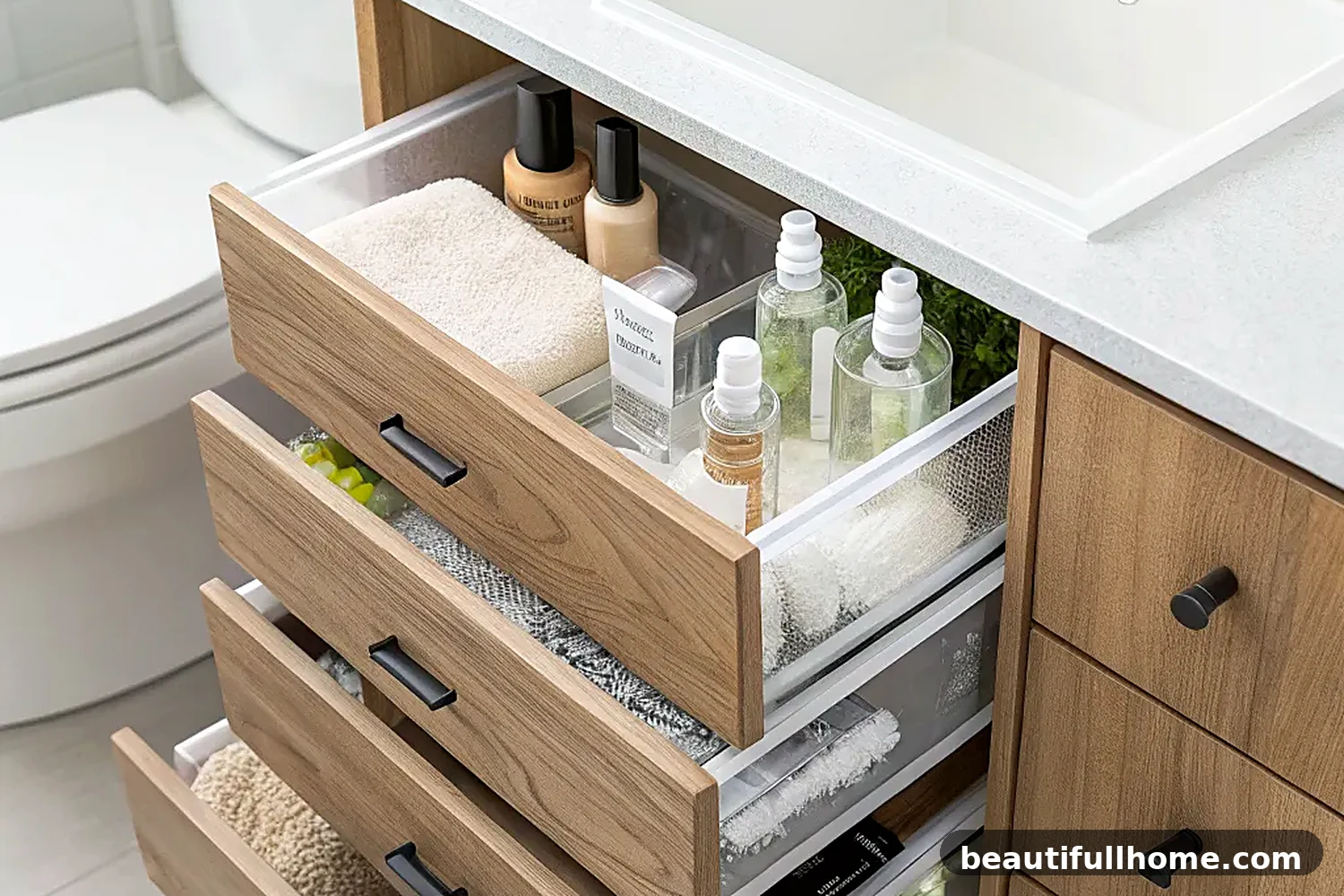
How to Add Storage to a Small Vanity
A small vanity can still hold everything you use every day if the storage is organised. The trick is to give every item a home.
Drawer stacks beat cabinet doors in a small vanity. Drawers let you see everything at a glance, while a deep cabinet hides things at the back. Use the top drawer for daily items (toothbrush, toothpaste, deodorant), the middle drawer for hair tools, and the bottom drawer for spares and cleaning supplies.
Pull-out hair-tool holders keep hot tools safe. A heat-resistant pull-out caddy inside a drawer holds a hair dryer and straightener without melting anything, and it keeps the counter clear. If your vanity has no pull-out, a heat-resistant mat inside a drawer does the same job.
Toe-kick drawers use the space under the cabinet. A shallow drawer in the toe-kick (the recessed space at the bottom of the cabinet) holds flat items like spare toothbrush heads, cotton pads and small bottles. It is a small amount of space, but it is space you already own.
A mirrored medicine cabinet with an outlet is the best storage per inch in a small bathroom. It holds daily items at eye level, it hides them behind a mirror, and an outlet inside lets you charge a toothbrush. Add a narrow side cabinet or over-toilet shelving for the items that do not fit in the medicine cabinet.
What goes where: daily items in the top drawer and medicine cabinet; hair tools in a pull-out or a heat-resistant mat; spares and bulk items in the bottom drawer or over-toilet shelving; cleaning supplies under the sink or in a narrow side cabinet, never on the counter.
Renter-Friendly Vanity Ideas (No Plumbing Changes)
If you rent, you cannot move plumbing or replace the vanity cabinet. But you can still change how the vanity looks and works without touching a pipe.
Swap the mirror. A larger mirror, a round mirror or a mirrored medicine cabinet changes the whole look of the vanity area, and most landlords allow it because it is reversible. A bigger mirror also makes the bathroom feel larger.
Change the faucet and the hardware. A new faucet, new drawer pulls and new cabinet knobs can make an old vanity look new. Keep the old parts in a box so you can put them back when you move out.
Add over-toilet storage. A shelf unit or a cabinet over the toilet gives you storage without touching the vanity at all. It holds towels, spares and decorative items, and it frees the vanity counter.
Use a rolling cart or a narrow side table. A slim cart beside the vanity holds daily items and rolls away when you need the floor space. It is not built-in storage, but it is storage you can take with you.
Add a wall shelf above the vanity. One or two shelves above the vanity hold baskets for daily items. Use closed baskets for the messy things and open baskets for towels, so the shelves look tidy.
Small Bathroom Vanity Shopping Checklist
Use this checklist before you order, so you do not buy a vanity that does not fit.
- Measure the wall width and subtract 1 inch on each side for fitting.
- Measure the depth from the wall to the nearest obstacle and subtract 21 inches for clearance.
- Note where the drain and supply lines come out of the wall.
- Check the door swing and the toilet clearance (15 inches from toilet centre to the side).
- Decide how much storage you need (daily items, hair tools, spares) and pick a vanity type that holds them.
- Check the wall blocking if you want a floating vanity.
- Pick the faucet and mirror at the same time as the vanity, so the heights and styles match.
- Confirm the total cost in writing (vanity, faucet, mirror, installation, and any plumbing).
- Confirm the delivery and return policy before you order, because a vanity that does not fit is expensive to send back.
Frequently Asked Questions About Small Bathroom Vanities
What is the best vanity for a very tiny bathroom?
A floating vanity or a pedestal sink. A floating vanity 24 inches wide makes the floor look bigger and gives you a drawer, while a pedestal sink takes up the least visual space of all. Pick the floating vanity if you need storage, and the pedestal sink if you have storage elsewhere (a linen closet or over-toilet shelving).
How can I add storage to a pedestal sink?
Add a mirrored medicine cabinet above the sink, a narrow side cabinet beside it, or over-toilet shelving behind you. A medicine cabinet holds daily items at eye level, a side cabinet holds spares, and over-toilet shelving holds towels and bulk items. Together they replace the storage a cabinet vanity would have given you.
Should I use a dark colour on my small bathroom vanity?
Yes, if the rest of the bathroom is light. A dark vanity (charcoal, navy, deep green) with a light counter and light walls creates contrast and makes the vanity look like a deliberate feature. A dark vanity in an already dark bathroom will make the room feel smaller, so keep the walls and the floor light if you choose a dark cabinet.
Is a vessel sink a good idea for a small bathroom?
Yes, for a powder room or an ensuite where style matters, and no, for a busy family bathroom. A vessel sink looks striking and frees a little counter height, but it splashes more than an undermount sink, it needs a tall faucet, and it gives you less usable counter space. If two people use the sink every morning, an undermount or drop-in basin is more practical.
How much does a small vanity cost?
A premade small vanity usually costs $100 to $500, and a custom one costs $500 to $2,000. A faucet adds $50 to $300, a mirror adds $80 to $400, and installation adds $150 to $400 for a straightforward swap. A realistic total is $500 to $1,500 with a premade unit and no plumbing moves, or $1,500 to $3,500 with a custom unit or a drain move.
What can I use instead of a vanity in a bathroom?
A pedestal sink, a wall-mounted sink, a console table with a basin, or a repurposed piece of furniture. A pedestal sink is the simplest swap. A wall-mounted sink with a shelf underneath gives you a little storage. A console table suits a vintage look. If you rent, a rolling cart beside the existing sink adds storage without replacing anything.
Should your vanity go wall-to-wall in a bathroom?
Yes, if the wall is the right width and the plumbing lines up. A wall-to-wall vanity looks built-in, it gives you the maximum counter and storage for the wall, and it removes the gaps that collect dust. It costs more than a premade unit, and the wall must be square, so get the measurements done by the cabinet maker. If the wall is not square or the drain is in an awkward spot, a standard vanity with a small filler panel is the safer choice.
What is the best vanity style for a small Jack and Jill bathroom?
A trough sink or a narrow double vanity, 36 to 48 inches wide. Two people need to use the sink at the same time, so a single small basin will not work. A trough sink gives two faucets in the width of one wide cabinet, which is the most space-efficient double setup. If the wall will not fit 36 inches, use a single 30-inch vanity and add a second mirror and storage on the opposite wall.
Conclusion
The best small bathroom vanity is the one that fits your wall, your plumbing and your daily routine, not the one that looks best in a photo. Start with the measurements: 24 to 30 inches wide, 18 to 21 inches deep, 32 to 36 inches high, with at least 21 inches of clear floor in front. Then pick the type that matches your bathroom: a floating vanity for a powder room, a narrow-depth cabinet for a tight walkway, a pedestal sink when storage lives elsewhere, or a trough sink when two people share the room. Add a mirrored medicine cabinet for storage, check the plumbing before you order, and get the total cost in writing. If you are planning a full vanity remodel, read the site guide How to Remodel Vanity | 15 Modern Bathroom Vanity Ideas 2026 for the step-by-step process. That guide covers the remodel, while this guide helps you choose the vanity itself, and using the two together gives you the best chance of a bathroom that looks good and works every day.
Note: Costs in this article are broad US planning estimates and vary by location and service provider.